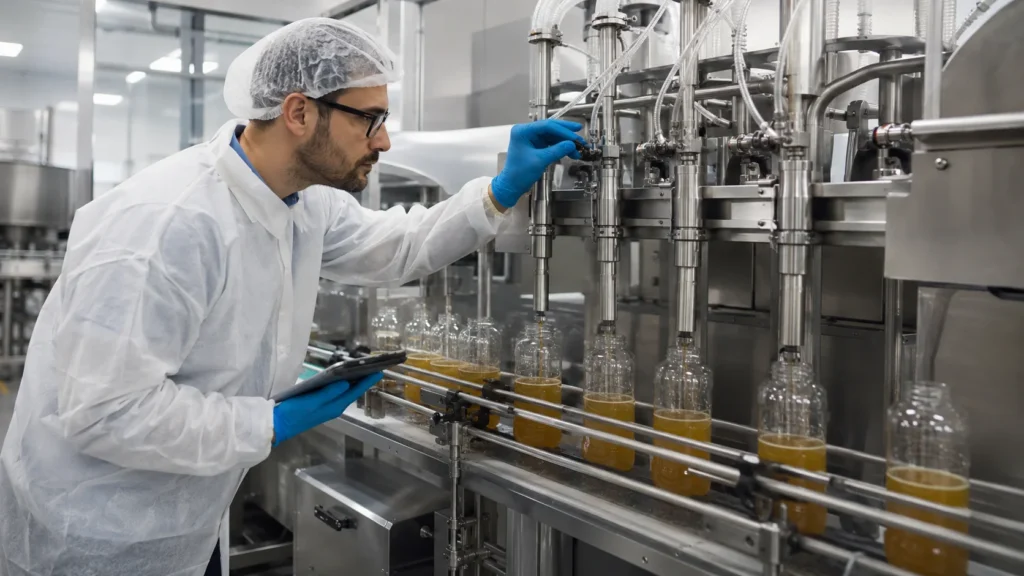
Filling machine leakage problems are a daily headache for many production teams. A few drops here and there may look harmless, but over a full shift they cause sticky floors, contaminated labels, rejected packs, and lost product. Worse, they slow down your line and frustrate your operators.
In this guide, we will look at why leakage and dripping happen, how to stop filling machine leakage on different types of equipment, and what to check before the problem grows into a major breakdown.
Why Leakage and Dripping Hurt Your Production Line
Leakage is not just a cleaning issue. It affects the entire packaging operation in several ways:
- Sticky residue contaminates labels and cap threads
- Slippery floors create safety risks for operators
- Frequent stoppages reduce overall line efficiency
- Product loss eats directly into your profit margin
- Quality audits flag dripping as a hygiene concern
For food, pharma, cosmetic, and chemical producers, even minor dripping can lead to failed inspections. That is why preventing leakage should be a core part of your maintenance strategy.
Main Causes of Filling Machine Leakage Problems
To fix the issue, you first need to identify the root cause. Leakage rarely comes from one single point. Usually, several small issues stack up.
1. Worn or Damaged Seals and O-Rings
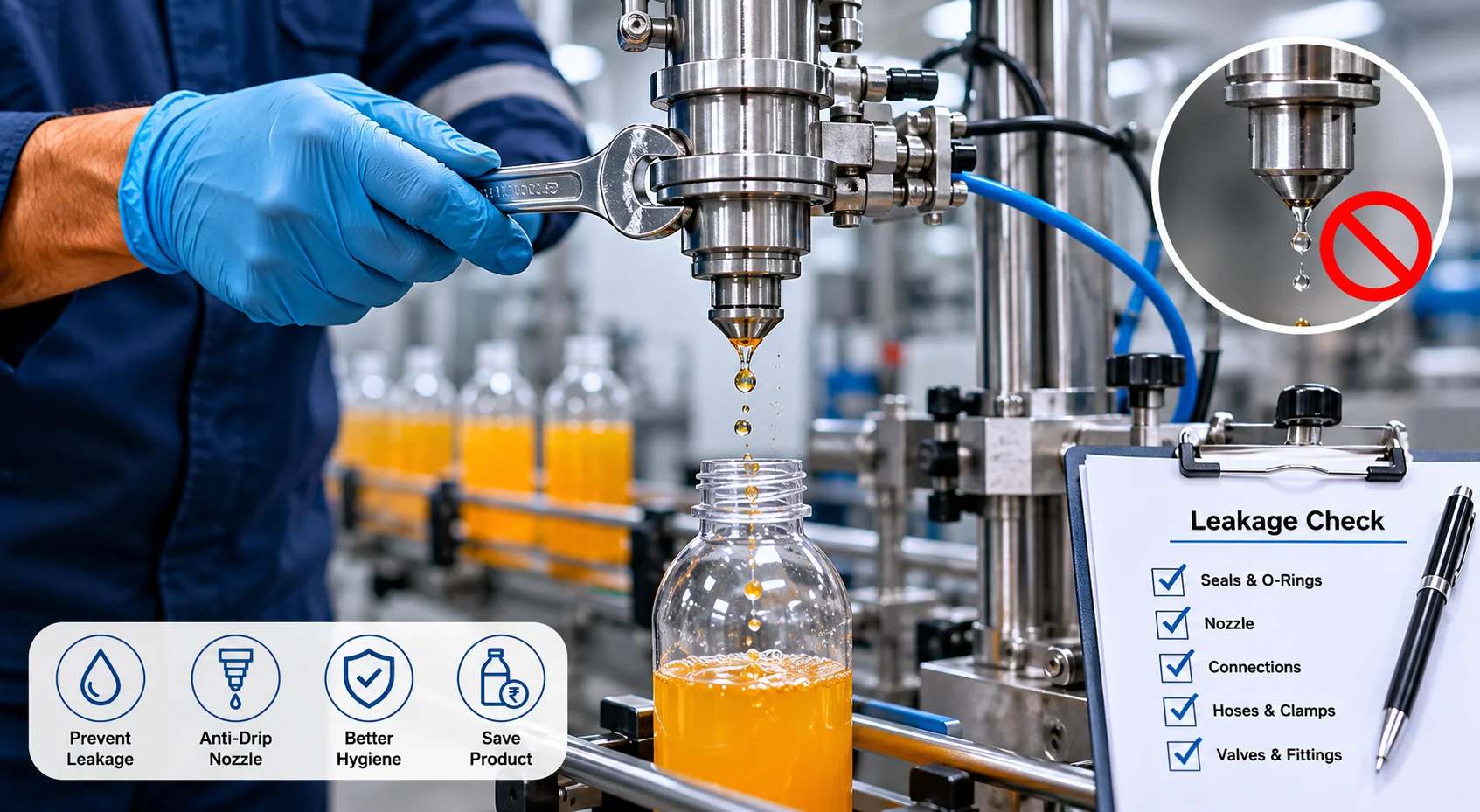
Seals are the first line of defense against leakage. Over time, they harden, crack, or lose elasticity due to heat, chemicals, and pressure. Once a seal fails, product seeps from joints, pistons, or valves.
2. Incorrect Nozzle Selection
Nozzles are designed for specific product behaviors. A standard open nozzle on a thin liquid will almost always drip. Without a proper shut-off or anti-drip feature, you will see constant dripping problems.
3. Air Pockets and Foaming
Trapped air in the product line causes pressure spikes. When the cycle ends, that pressure pushes extra product out of the nozzle, creating drips and splashes.
4. Loose Fittings and Connections
Vibration during long production runs slowly loosens clamps, hose connections, and valve fittings. Over time, these small gaps turn into steady leaks.
5. Incorrect Fill Speed for the Product
Running a thick product at high speed can cause splashing and tail-end dripping. Running a thin product too slowly can cause air to enter the nozzle. Either extreme creates leakage.
6. Damaged Pistons or Diaphragms
In piston and diaphragm fillers, internal wear lets product bypass the sealing surfaces. This shows up as leakage at the nozzle even when the cycle is not active.
How to Stop Filling Machine Leakage Step by Step
A structured approach works better than random fixes. Here is a practical checklist for production managers and maintenance teams.
Step 1: Audit the Whole Product Path
Trace the product from the tank to the nozzle. Check every:
- Hose and clamp
- Valve and fitting
- Pump or piston housing
- Sensor port
- Nozzle tip
Mark any spot where you see drips, residue buildup, or moisture.
Step 2: Replace Worn Seals on a Schedule
Do not wait for seals to fail. Replace them based on running hours, not just visible damage. Use seals that match your product type, especially for hot, acidic, or oily liquids. For complex setups, the piston filling machines often benefit from premium-grade seals that handle high cycle counts.
Step 3: Choose the Right Nozzle for Your Product
Nozzle choice is critical for solving anti drip filling nozzle problems.
- For thin liquids: use diving or bottom-up nozzles with positive shut-off
- For foaming products: use submerged nozzles to reduce air contact
- For sticky or thick products: use anti-drip cut-off nozzles
- For powders and granules: use auger or vibratory nozzles with clean cut-off
A correctly matched nozzle prevents product dripping during filling on almost any product.
Step 4: Manage Pressure and Air in the System
To control liquid filling machine leakage causes related to air and pressure:
- Bleed air from hoses and pumps before each run
- Keep the supply tank at a stable level
- Use back-suction or snuff-back features where available
- Avoid sudden valve opening and closing
A smooth, stable flow almost always means fewer drips.
Step 5: Tighten and Inspect All Connections
Build a daily checklist that includes:
- Clamp tightness on all hoses
- Visual check of valve seats
- Inspection of nozzle threads
- Drip tray inspection for new leaks
Catching a loose fitting on day one is far cheaper than cleaning up a major spill on day five.
Step 6: Match the Machine to the Product Type
Many leakage issues come from using the wrong machine for the job. A thin solvent should not run on a machine designed for thick paste, and a fine powder cannot be handled by a liquid filler.
- For thin to medium liquids, a properly configured liquid filling machine is ideal.
- For dense creams, gels, and pastes, a viscous liquid filling machine offers better seal performance and less dripping.
- For dry products, a powder filling machine or granule filling machine provides clean, controlled discharge without leakage.
Step 7: Upgrade to Automation for Tighter Control
Manual and semi-automatic machines depend heavily on operator skill. An automatic filling machine uses servo-driven valves, precise timing, and integrated sensors that close the nozzle at exactly the right moment. This drastically reduces dripping and tail-end leakage.
Daily Habits That Prevent Filling Machine Dripping Problems
Beyond mechanical fixes, simple operator habits go a long way:
- Start every shift with a 5-minute leak inspection
- Clean nozzles between product changeovers
- Avoid forcing the machine beyond its rated speed
- Report unusual drips before they become spills
- Keep spare seals, gaskets, and O-rings on the shop floor
When leakage prevention becomes part of the daily routine, problems are caught early and downtime drops sharply.
Quick Diagnostic Guide for Common Leakage Issues
Here is a fast reference for production teams:
- Drip after each cycle: nozzle issue or missing anti-drip feature
- Constant drip even when idle: worn piston, valve, or seal
- Leak at hose joints: loose clamp or damaged gasket
- Foaming and splashing: wrong fill speed or air in the line
- Leak only with hot product: seal material not rated for temperature
Use this list during shift handovers so problems do not get passed from one team to the next.
FAQs
Q1: What are the most common filling machine leakage problems?
The most common issues are nozzle dripping, seal failure, loose fittings, and piston wear. Each one shows up differently, but all of them lead to product loss and downtime.
Q2: How do I stop nozzle leakage on a liquid filling machine?
Use the right nozzle type for your product, check the shut-off mechanism, and ensure proper pressure control. Anti-drip nozzles and snuff-back features are highly effective.
Q3: Why does my filling machine drip even when it is not running?
This usually points to internal leakage, such as a worn piston, damaged valve, or failed seal. The product slowly seeps through the nozzle under gravity or residual pressure.
Q4: Can leakage problems affect filling accuracy?
Yes. Every drop lost outside the container is a fill that is slightly short inside. Persistent leakage leads to underfilled packs, quality complaints, and regulatory risks.
Q5: How often should I service my filling machine to prevent leakage?
A monthly inspection plus a deeper service every quarter works well for most lines. High-speed or 24/7 operations may need more frequent checks based on running hours.
Talk to Our Experts About a Leak-Free Filling Line
Filling machine leakage problems rarely fix themselves. They grow quietly until they hit your production targets, your hygiene standards, or your bottom line. The good news is that with the right machine setup, the right nozzles, and a solid maintenance plan, most leaks can be eliminated.
If your team is dealing with constant dripping, sticky floors, or inconsistent fills, our engineers can help. We design and supply custom filling solutions for liquids, viscous products, powders, and granules, and we back them with reliable packaging machine service for long-term performance.
Reach out today to discuss your current challenges, your accuracy targets, and your production needs. Let our specialists help you build a cleaner, faster, and more profitable filling line.