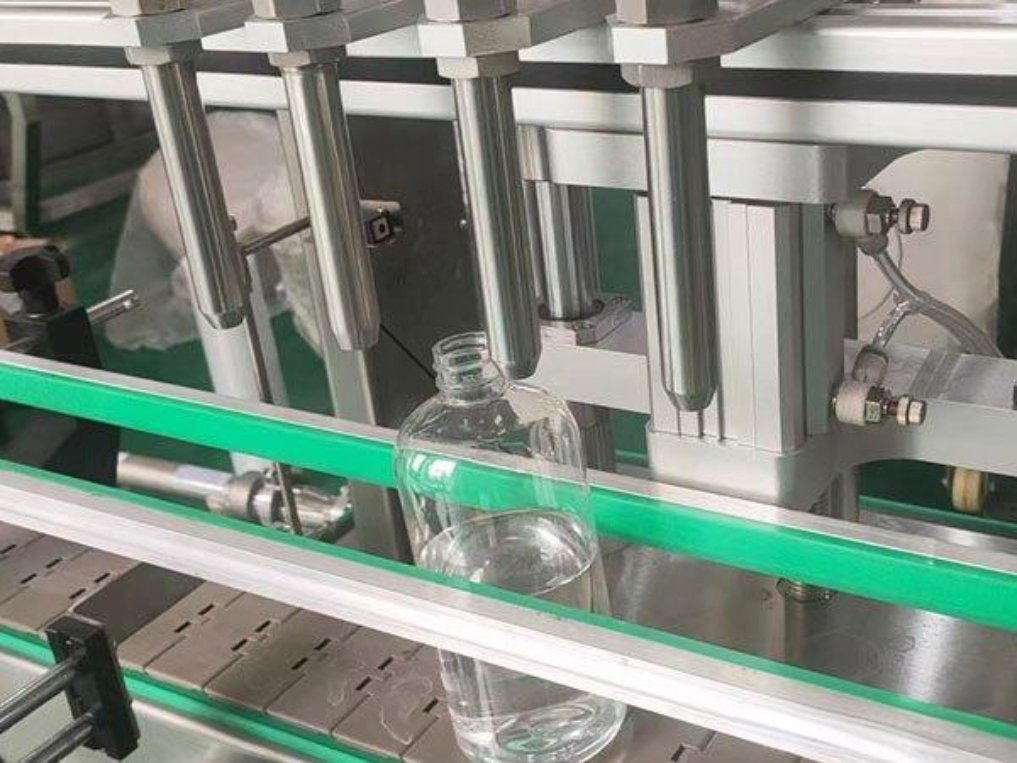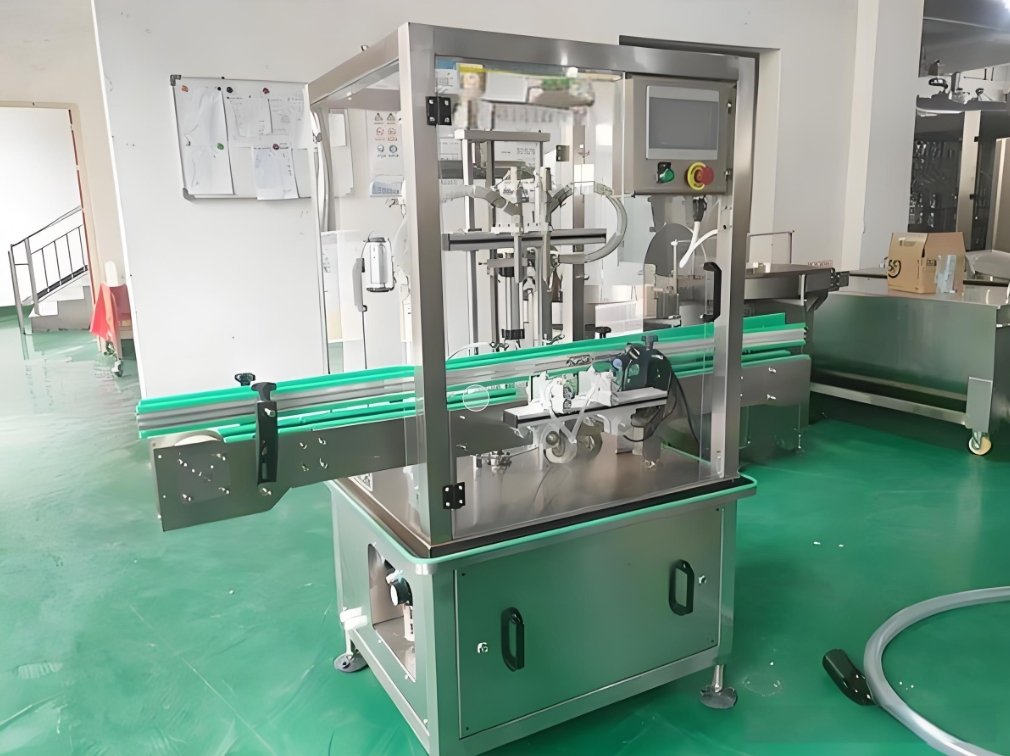
A viscous liquid filling machine is designed to measure and dispense thick, slow-flowing products such as honey, sauces, creams, gels, lotions, pastes, lubricants, adhesives, and liquid detergents. Unlike a standard gravity-based liquid filling machine, a viscous filler uses controlled mechanical force to move the product cleanly and accurately into each container.
The correct machine configuration depends on more than product thickness. Temperature, suspended particles, air content, container opening, fill volume, production speed, and cleaning requirements can all affect performance. For example, a chunky food product may require a different sauce filling machine configuration than a smooth cosmetic cream, even when both products appear equally thick.
Therefore, reliable viscous product filling begins with product testing and machine selection. It continues with correct nozzle setup, air removal, speed control, calibration, cleaning, and preventive maintenance.
Quick answer: A viscous liquid filling machine normally uses a piston, positive-displacement pump, lobe pump, gear pump, screw pump, or weight-based dosing system to force a measured quantity of thick product through a controlled nozzle. The most suitable system depends on viscosity, particulates, temperature, fill size, accuracy requirements, and production volume.
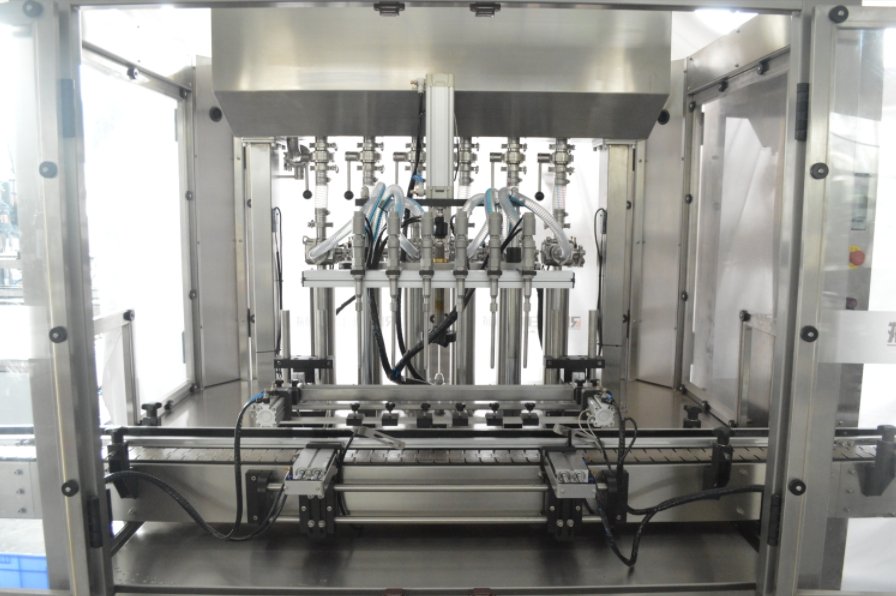
What Is a Viscous Liquid Filling Machine?
A viscous liquid filling machine is a packaging machine engineered for products that resist flowing freely. As viscosity increases, the product usually moves more slowly and requires greater force to travel through the hopper, valves, tubing, and filling nozzle.
Water and other free-flowing liquids may move effectively through a gravity filler. However, honey, ketchup, lotion, petroleum jelly, heavy shampoo, grease, adhesive, and similar products often require positive displacement or another mechanically assisted filling method.
A well-configured viscous liquid filler should:
Deliver repeatable fill quantities.
Prevent excessive dripping and stringing.
Minimize trapped air and empty spaces.
Maintain a stable product flow.
Handle the product without damaging its texture.
Support efficient cleaning and product changeover.
Match the container opening and fill volume.
Integrate with conveyors, cappers, labelers, and inspection systems when required.
How Does a Viscous Filling Machine Work?
Although machine designs differ, most viscous filling systems follow four basic stages.
1. Product feeding
The product enters a hopper, supply tank, transfer system, or sanitary pipeline. An agitator may keep the formulation uniform, while a heated jacket may maintain the required operating temperature.
2. Product measurement
The machine measures the required quantity through piston displacement, pump rotation, time control, flow measurement, or container weight.
3. Product dispensing
The measured product is pushed through the product pathway and filling nozzle. The machine may use one nozzle or multiple filling heads depending on the required output.
4. Flow cutoff
A positive shut-off valve, anti-drip nozzle, suck-back setting, or mechanical cutoff stops the product cleanly. Correct cutoff control is especially important for sticky products that may form strings between the nozzle and container.
The complete cycle must remain stable from the first container to the last. Changes in product temperature, density, air content, hopper level, or pressure can otherwise cause inconsistent results.
Main Components of a Viscous Liquid Filling Machine
Understanding the main components helps operators identify the source of filling problems.
Product hopper or supply tank
The hopper holds the product before filling. Depending on the formulation, it may include:
An agitator.
A heating jacket.
Temperature sensors.
Level sensors.
A sealed lid.
Vacuum or pressure assistance.
Sanitary fittings.
The hopper should be sized according to production speed and product behavior. An oversized hopper may increase cleaning time, while an undersized hopper may interrupt production frequently.
Piston or pumping system
The piston or pump creates the force required to move the product. Machine selection should account for product thickness, particles, shear sensitivity, temperature, required accuracy, and cleaning method.
Valves and product pathways
Valves control product direction during the draw and dispense cycles. The internal pathway should be wide enough for the product and any suspended particles. Unnecessary bends, narrow passages, or long suction lines can restrict flow.
Filling nozzles
The nozzle determines how the product enters the container. Different filling machine nozzle types are used to control dripping, foaming, splashing, stringing, and air pockets.
Container-handling system
Guides, sensors, indexing mechanisms, conveyors, and bottle stops position each container accurately beneath the nozzle. Poor container alignment can cause spills even when the dosing system is properly calibrated.
Control system
Automatic machines may use a PLC, touchscreen, recipe storage, servo control, sensors, alarms, and production counters. The controls should allow operators to adjust fill quantity, nozzle timing, conveyor speed, diving height, and product cutoff.
Types of Viscous Liquid Filling Machines
No single filling system is ideal for every thick product.
| Machine type | Best suited to | Important considerations |
|---|---|---|
| Piston filler | Sauces, creams, gels, honey, lotion and products with soft particulates | Accurate volumetric dosing and wide product pathways |
| Servo piston filler | Frequent changeovers and applications requiring precise electronic control | Higher investment but easier recipe adjustment |
| Gear-pump filler | Smooth oils, syrups, soaps and moderately viscous liquids without large particles | Pump material and product compatibility must be verified |
| Rotary-lobe pump filler | Shear-sensitive products, sauces and products containing soft particulates | Gentle handling and wide flow paths |
| Progressive-cavity or screw-pump filler | Heavy pastes, adhesives, grease and dense formulations | Effective for difficult-to-pump products |
| Net-weight filler | Large containers or products sold and controlled by weight | Filling is monitored using a scale rather than volume alone |
| Benchtop or semi-automatic piston filler | Small batches, product development and low-volume production | Requires more operator involvement |
| Automatic multi-head filler | Continuous, higher-volume production | Requires stable container feeding and line integration |
A piston filler is frequently the most practical starting point for common thick liquids. Nevertheless, product testing should determine the final machine choice.
Best Practices for Viscous Product Filling
1. Measure the product under actual filling conditions
Do not select a high viscosity filling machine based only on how the product looks at room temperature.
Record the product’s characteristics at its actual processing temperature:
Viscosity.
Density.
Product temperature.
Particle size.
Air content.
Foaming tendency.
Shear sensitivity.
Stickiness.
Tendency to separate.
Cleaning requirements.
A formulation may become much thinner when heated or thicker after standing. Therefore, the machine must be evaluated under realistic production conditions.
2. Send the supplier a representative product sample
A real filling test is more reliable than choosing equipment from a product description alone. The sample should represent the final formulation, including normal particles, fibers, oils, air content, and temperature behavior.
The test should use the intended container whenever possible. This allows the supplier to evaluate:
Filling speed.
Nozzle size.
Dripping or stringing.
Required pressure.
Air-pocket formation.
Product damage.
Container stability.
Cleaning difficulty.
Fill repeatability.
Request a video and test report before approving the machine configuration.
3. Choose product-contact materials carefully
The hopper, cylinder, pump, valves, tubing, seals, gaskets, and nozzles must be compatible with the formulation.
Stainless-steel grade, elastomer type, surface finish, corrosion resistance, temperature rating, and cleaning chemicals should all be reviewed. Food, cosmetic, chemical, and pharmaceutical products may require different materials and documentation.
Do not assume that one standard construction is suitable for every application.
4. Control product temperature consistently
Temperature can significantly change product flow. When an approved formulation becomes easier to fill at a controlled temperature, a jacketed hopper, heated hose, heated product path, or heated nozzle may improve consistency.
However, heating should only be used when:
The formulation is designed for that temperature.
Product quality will not be damaged.
Temperature can be controlled throughout the pathway.
Operators can work safely.
The finished package tolerates the fill temperature.
Heating only the hopper while allowing the hose or nozzle to cool may create an unstable flow. Temperature should remain consistent from the supply tank to the filling point.
5. Maintain a uniform product in the hopper
Some viscous products separate, settle, skin over, or develop uneven temperature zones. A correctly selected agitator can keep the product uniform.
The agitator should not introduce excessive air or damage shear-sensitive formulations. Its speed and blade design must match the product.
Maintain a suitable hopper level as well. Large changes in product head or feeding conditions may affect the performance of some systems.
6. Select the correct nozzle diameter and cutoff
A nozzle that is too narrow can create excessive pressure, slow filling, product damage, clogging, or heating caused by friction. A nozzle that is too large may be difficult to control and may not fit the container opening.
Common options include:
Wide-bore nozzles for thick products.
Positive shut-off nozzles for sticky products.
Diving nozzles for bottom-up filling.
Heated nozzles for temperature-sensitive flow control.
Nozzles with suck-back control.
Large-port nozzles for products containing particles.
The nozzle should enter or approach the container without touching it unnecessarily.
7. Prime the machine and remove trapped air
Air inside the hopper, cylinder, pump, valves, or product lines can cause short fills and inconsistent weights.
Before full production:
Fill the product pathway completely.
Run several test cycles.
Check for visible bubbles.
Inspect suction connections for leaks.
Confirm that the hopper contains enough product.
Recalibrate only after the system is fully primed.
Air can also be introduced during upstream mixing or transfer. In that case, the filling machine alone may not solve the problem. The product preparation process may need to be adjusted.
8. Use controlled filling speeds
The fastest possible machine setting is not always the best production setting.
Many thick products benefit from a two-stage fill:
A faster initial stage moves most of the required volume.
A slower finishing stage improves cutoff and final accuracy.
Excessive speed can cause pressure spikes, splashing, container movement, trapped air, product stringing, or inaccurate cutoff. Extremely slow filling, however, may reduce production unnecessarily.
Run controlled trials to find the best balance between accuracy and output.
9. Use bottom-up filling when necessary
Bottom-up filling places the nozzle near the bottom of the container at the beginning of the cycle. The nozzle then rises as the product level increases.
This method can help:
Reduce air pockets.
Limit splashing.
Improve the appearance of transparent packages.
Control foaming.
Prevent the product from folding over itself.
Fill narrow or deep containers more cleanly.
Nozzle movement should be synchronized with the product level. If the nozzle rises too quickly, air may enter the fill. If it rises too slowly, the nozzle may become submerged too deeply.
10. Calibrate using actual production product
Do not calibrate the machine with water when the production material is honey, cream, paste, or another high-viscosity product. The flow behavior will be different.
Use the real product at the real filling temperature and verify multiple consecutive containers.
A practical calibration process includes:
Prime the system.
Fill several test containers.
Weigh each filled container.
Subtract the empty container weight.
Compare results with the target.
Adjust the fill setting.
Repeat the test.
Record the approved parameters.
Check the beginning, middle, and end of a production run. Also recalibrate after changing the product, container, fill volume, temperature, nozzle, pump, or piston setting.
11. Stabilize container handling
A viscous product may enter the container with enough force to move a lightweight bottle or jar.
Use guides, bottle stops, neck supports, indexing systems, or container-lifting platforms when necessary. Container dimensions should also remain consistent.
For flexible containers, excessive nozzle pressure may deform the package. In these cases, slower filling, bottom-up filling, or additional container support may be required.
12. Control dripping and product stringing
Sticky products may continue flowing after the fill cycle ends. Common solutions include:
Positive shut-off nozzles.
Suck-back control.
Reduced final filling speed.
Shorter product pathways.
Correct nozzle temperature.
Correct valve timing.
Proper seal maintenance.
Positioning the nozzle closer to the product surface.
Persistent dripping may indicate worn seals, incorrect timing, pressure instability, product buildup, or an unsuitable nozzle. Consult the detailed guide to filling machine leakage problems when leakage continues after basic adjustments.
Common Viscous Filling Problems and Solutions
| Problem | Likely causes | Corrective actions |
|---|---|---|
| Inconsistent fill quantity | Air in the system, unstable temperature, worn seals, changing product level or poor calibration | Prime the system, stabilize temperature, inspect seals and recalibrate |
| Dripping after filling | Incorrect nozzle, worn cutoff seal, excessive pressure or poor timing | Adjust cutoff, use an anti-drip nozzle and replace damaged seals |
| Product strings between nozzle and container | Sticky formulation, nozzle too high, poor suck-back setting or product too cool | Lower the nozzle, adjust suck-back and stabilize temperature |
| Air pockets in containers | Product falling from excessive height, unprimed system or fast filling | Use bottom-up filling, remove trapped air and reduce speed |
| Nozzle clogging | Nozzle too narrow, particles too large, product cooling or dried buildup | Increase the flow-path diameter, control temperature and clean more frequently |
| Slow production | Undersized nozzle, restricted suction line, inadequate pump or unsuitable machine | Review the complete product pathway and machine capacity |
| Product separation | Insufficient agitation or inconsistent hopper temperature | Use controlled agitation and uniform heating |
| Container movement | Filling force too high or guides incorrectly adjusted | Reduce speed and improve container support |
| Excessive product damage | Pump creates too much shear or passages are too restrictive | Use gentler product handling and wider pathways |
| Frequent seal failure | Chemical incompatibility, high pressure, abrasive product or poor installation | Review seal material, pressure and maintenance procedures |
For broader mechanical and operational issues, use the filling machine troubleshooting guide.
Cleaning and Changeover Best Practices
Viscous products often remain inside cylinders, pumps, hoses, valves, corners, and nozzle assemblies. Poor cleaning can create contamination risks, product mixing, inaccurate filling, and premature component wear.
A suitable cleaning procedure should:
Follow the product manufacturer’s safety information.
Isolate electrical, pneumatic, hydraulic, and thermal energy.
Drain as much remaining product as possible.
Disassemble approved product-contact components.
Use compatible cleaning agents.
Inspect seals and hidden product pathways.
Rinse and dry components when required.
Reassemble components correctly.
Prime the machine before restarting.
Document the completed cleaning process.
Quick-release fittings, removable hoppers, tool-free product pathways, clean-in-place capability, and recipe-controlled changeovers can reduce downtime. However, the correct cleaning design depends on the industry and formulation.
Preventive Maintenance Schedule
Before every production run
Inspect the hopper, pump, cylinder, hose, valves and nozzles.
Confirm that guards and emergency stops work.
Check the correct recipe and filling parameters.
Verify temperature settings.
Prime the product pathway.
Run and weigh test containers.
During production
Monitor fill quantity.
Inspect for leaks and drips.
Watch the hopper level and temperature.
Check for unusual noise, vibration or pressure.
Examine containers for air pockets and deformation.
Record rejected fills and stoppages.
After production
Remove product residue.
Complete the approved cleaning procedure.
Inspect nozzles, seals and gaskets.
Check for loose fittings.
Record any faults or replacement parts required.
Weekly or according to operating hours
Inspect pneumatic and electrical connections.
Check piston, pump and valve wear.
Verify sensor alignment.
Lubricate approved components where required.
Test emergency and safety systems.
Review calibration records.
The maintenance interval should be adjusted according to production hours, product abrasiveness, temperature, cleaning chemicals, and manufacturer recommendations.
Applications of Viscous Liquid Filling Machines
Food and beverage products
Common applications include honey, ketchup, mayonnaise, mustard, syrups, jams, salsa, dressings, chocolate products, nut spreads, dairy-based fillings, and cooking sauces.
Food products containing seeds, fruit pieces, herbs, or vegetable particles require sufficiently wide passages and gentle handling.
Cosmetics and personal-care products
A high viscosity liquid filling machine may fill creams, lotions, conditioners, shampoos, hair gels, body butter, scrubs, masks, balms, and similar formulations.
Cosmetic applications may prioritize clean cutoff, attractive container appearance, fast product changeover, and easy sanitation.
Pharmaceutical and healthcare products
Possible applications include ointments, gels, medicated creams, syrups, and other approved liquid or semi-solid formulations.
Pharmaceutical applications require appropriate validation, documentation, product-contact materials, cleaning procedures, batch controls, and regulatory review. Machine suitability should be confirmed for the specific process rather than assumed from a general machine description.
Chemicals and industrial products
Viscous product fillers may handle lubricants, greases, adhesives, sealants, coatings, detergents, resins, polishes, waxes, and other industrial formulations.
Chemical compatibility, ventilation, electrical classification, operator protection, corrosion resistance, and product safety data must be reviewed before machine selection.
How to Choose the Right Viscous Liquid Filling Machine
Before requesting a quotation, prepare the following information:
Product name and formulation type.
Viscosity at the actual filling temperature.
Product density.
Normal operating temperature.
Particle type and maximum particle size.
Whether the product foams, separates or traps air.
Whether the formulation is shear-sensitive.
Target fill volume or fill-weight range.
Container material, dimensions and opening diameter.
Required containers per minute or hour.
Number of products and container formats.
Required filling accuracy.
Cleaning and changeover expectations.
Available floor space.
Electrical and compressed-air supply.
Required capping, labeling or conveyor integration.
Applicable safety, hygiene and documentation requirements.
This information allows the manufacturer to recommend the correct piston size, pump type, nozzle diameter, hopper design, number of filling heads, heating system, controls, and automation level.
Semi-Automatic or Automatic Viscous Filling Machine?
A semi-automatic viscous filler is normally suitable when:
Production volumes are relatively low.
Operators can load and remove containers manually.
The business fills several products in small batches.
Available space or initial budget is limited.
The machine is being used for product development.
An automatic viscous filling machine is usually more suitable when:
Production is continuous.
Higher output is required.
Consistency between shifts is important.
Containers move through an integrated conveyor line.
Filling, capping, labeling and inspection must work together.
Labor dependence must be reduced.
Automation should be selected according to actual production demand. Purchasing an oversized line can create unnecessary cost and cleaning complexity, while undersized equipment may become a bottleneck.
What U.S. Buyers Should Confirm Before Ordering
When sourcing a viscous liquid filling machine for a facility in the United States, confirm every technical requirement in writing.
Review:
Required voltage, phase and frequency.
Plug and electrical-panel configuration.
Control-component brands.
Machine guarding and emergency stops.
Required NEMA enclosure rating.
Whether UL, ETL or other certification is required for the facility.
Product-contact material certificates.
Manuals and electrical drawings in English.
Recommended spare-parts package.
Remote and on-site commissioning options.
Operator training.
Warranty terms.
Delivery terms and import responsibilities.
Availability of replacement seals, sensors, valves and controls.
Response time for technical support.
Do not assume that an imported machine automatically meets every facility, insurance, state, customer, or industry requirement. Provide the supplier with the complete specification before manufacturing begins.
Frequently Asked Questions
Which filling machine is best for viscous liquids?
A piston filling machine is often the best general-purpose choice for creams, gels, sauces, honey, lotions, and other thick products. However, lobe pumps, gear pumps, progressive-cavity pumps, servo systems, and net-weight fillers may be better for particular formulations or container sizes.
How do I choose the right viscous liquid filling machine?
Start with the product’s viscosity at filling temperature, density, particles, shear sensitivity, fill volume, container opening, required speed, accuracy, and cleaning requirements. A representative product and container test should be completed before final selection.
Can a viscous liquid filler handle products containing particles?
Yes, when the product pathway, valve, pump and nozzle are designed for the particles. Large-port piston fillers and rotary-lobe systems are commonly considered for sauces, jams, salsa, and other products containing soft pieces.
Is a heated hopper always necessary?
No. A heated hopper is only appropriate when the approved formulation must remain warm to flow correctly. Heating can damage some products, so temperature requirements should come from the formulation and production process.
How can dripping be prevented?
Use a suitable positive shut-off or anti-drip nozzle, stabilize product temperature, reduce the final filling speed, adjust valve timing, maintain seals, and use suck-back control when appropriate.
Why does a viscous filling machine produce short fills?
Common causes include trapped air, an incomplete prime, product temperature changes, worn seals, suction restrictions, low hopper level, incorrect calibration, or air entering through a loose connection.
Is a benchtop piston filling machine suitable for viscous liquids?
It can be suitable for laboratory production, startups, samples, and small batches, provided its cylinder, valve and nozzle can handle the product’s viscosity and particles. It may not provide sufficient output for continuous commercial production.
Can one machine fill both thin and thick liquids?
Some piston and pump systems can handle a broad product range. Nevertheless, different products may require separate nozzles, seals, hoses, pump settings, piston sizes, heating, or cleaning procedures. Product testing is required.
Get a Viscous Filling Machine Recommendation
The right viscous product filling system should be selected around your product—not forced to work with an unsuitable formulation.
Foshan Popper Machinery provides semi-automatic and automatic filling solutions for thick liquids, sauces, creams, gels, pastes, oils, detergents, cosmetics, food products, and industrial formulations. We can also support filling-line integration, installation guidance, product testing, operator training, spare parts, and after-sales service.
To receive a machine recommendation, send us:
Your product name.
Viscosity and filling temperature.
Fill quantity.
Container photos and dimensions.
Container opening diameter.
Required production speed.
Information about particles, foam or separation.
Your electrical requirements.
A sample video or product sample when available.
Request a machine recommendation and our team will review the application before recommending a configuration.