The best manual capsule filling machine is not simply the tray with the most holes or the lowest price. It is the machine that matches your capsule size, batch volume, formulation, cleaning needs, operator skill, and expected production growth. For home users and laboratories, a compact 100-hole filler may be enough. Pharmacies, research teams, and small supplement businesses may need a larger, more durable system with faster loading, easier tamping, and reliable capsule alignment.
Manual capsule fillers remain useful because they require no complex controls, occupy little space, and allow small batches without the cost of an automatic production line. However, their output and fill consistency depend heavily on the operator and the behavior of the powder.
This guide explains how to compare manual machines, what features matter, which mistakes to avoid, and when it is time to move to a semi-automatic or fully automatic capsule filling machine.
Quick Answer: Which Manual Capsule Filler Is Best?
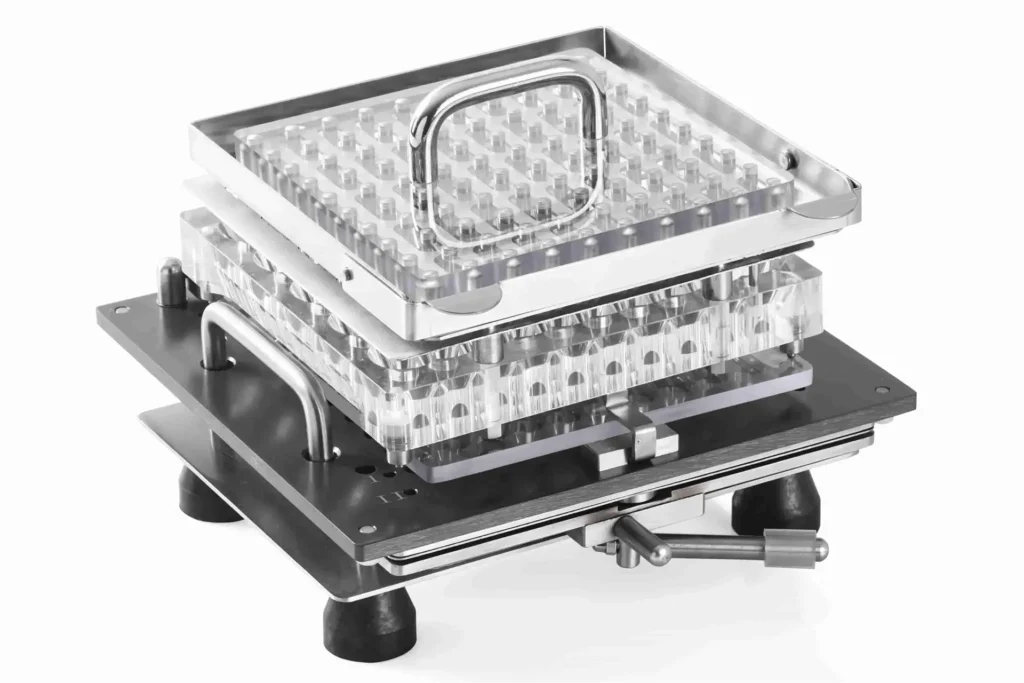
For most first-time buyers, the best choice is a rigid, size-specific capsule board with 100 or more holes, accurate cap-and-body alignment, a powder spreader, tamping tools, a locking plate, and product-contact surfaces that can be cleaned thoroughly.
Choose according to your real application:
| User or production need | Recommended configuration | Main reason |
|---|---|---|
| Home use or personal batches | 24–100-hole manual filler | Compact, inexpensive and easy to store |
| Laboratory or formulation trials | 100-hole size-specific machine | Suitable for controlled test batches |
| Compounding or pharmacy work | Durable 100–200-hole system | Better construction for repeated use |
| Small supplement startup | 200–400-hole manual system or semi-automatic machine | Greater batch capacity before full automation |
| Multiple capsule sizes | Separate tooling for each size | Better fit and alignment |
| Frequent commercial production | Semi-automatic system | Less operator fatigue and more stable output |
A manual machine is suitable when batches are small and sufficient labor is available. When demand reaches several thousand capsules per day, compare the manual option with a semi-automatic machine before purchasing.
What Is a Manual Capsule Filling Machine?
A manual capsule filler is a mechanical device that holds two-piece hard capsules in aligned rows while an operator separates, fills, tamps, closes, and ejects them.
A typical set includes:
Capsule-loading plate
Cap plate
Body plate
Powder guard or spill frame
Powder spreader
One or more tamping tools
Locking or closing plate
Ejection plate
Cleaning brushes or accessories
Most manual fillers are designed for hard gelatin or HPMC capsules. They are not softgel manufacturing machines. Softgels require a separate encapsulation process that forms and seals the shell around a liquid or semi-solid formulation.
The best manual capsule filling machine should hold every capsule body and cap securely without crushing, misaligning, or releasing them during filling.
How Does a Manual Capsule Filling Machine Work?
The exact sequence varies by design, but the basic process is straightforward.
1. Prepare the capsules and formulation
Confirm that the machine tooling matches the capsule size. Check the empty capsules for dents, splits, deformation, or irregular dimensions.
Prepare the powder through the approved formulation and handling process. Powders with poor flow may require formulation development before they can be filled consistently.
A manual machine cannot correct serious problems involving:
Powder density
Moisture
Static electricity
Clumping
Ingredient separation
Poor flowability
2. Load the empty capsules
Place the empty two-piece capsules inside the loading plate. Shake or sweep them gently until the required holes are filled.
Some machines include a loading tray that helps capsules enter the correct position. Other systems require more manual placement.
An effective loading system should reduce the number of capsules that must be repositioned individually.
3. Separate the caps and bodies
Fit the relevant plates together and operate the machine’s separation mechanism. The capsule caps remain inside one plate while the longer capsule bodies remain inside another.
Correct alignment is essential. If the plates flex or the holes are poorly machined, capsules may:
Remain joined
Tilt inside the plate
Split during separation
Fall from the holder
Become difficult to close
4. Add and spread the powder
Position the powder guard around the body plate. Add the formulation and use the spreader to distribute it across the open capsule bodies.
Avoid aggressive sweeping that creates excessive dust or pushes powder outside the filling area.
The formulation should reach all capsule bodies as evenly as possible.
5. Tamp the powder
Use the tamping tool to compress the powder into the capsule bodies. Add more powder and repeat the process when the formulation and target dose require additional tamping.
Tamping pressure should be controlled and repeatable.
Excessive pressure may damage capsule bodies or create inconsistent powder compaction. Insufficient tamping may leave the capsules underfilled.
6. Rejoin and lock the capsules
Remove excess powder, position the cap plate above the capsule bodies, and use the closing mechanism to press the two sections together.
Inspect finished capsules for:
Complete locking
Damaged shells
Loose caps
Dented capsules
Product trapped at the join
Uneven capsule length
7. Eject and inspect the batch
Use the ejection plate or release mechanism to remove the filled capsules.
Check the batch for:
Finished appearance
Closure quality
Average fill weight
Variation between capsules
Broken shells
Powder leakage
The inspection method should follow the operation’s established quality procedure.
Important Features to Compare
Capsule-size compatibility
Manual fillers are commonly designed for one capsule size at a time. Sizes 00 and 0 are frequently used in supplement production, but the correct capsule size depends on formulation volume, bulk density, dose, and product requirements.
Do not assume one capsule board can fill every size accurately.
A poorly fitted universal plate can create:
Alignment problems
Capsule movement
Separation failures
Incomplete locking
Shell damage
When several sizes are required, dedicated size-specific tooling is generally more dependable.
Number of holes
Common manual-machine configurations include:
24 holes
50 holes
100 holes
200 holes
300 holes
400 holes
More holes can increase batch capacity, but larger machines also require:
More powder per batch
A larger clean workspace
Longer loading time
More inspection time
Greater operator reach
More uniform spreading
More consistent tamping
Stronger plates that resist flexing
The best manual capsule filling machine is the one an operator can load, fill, close, inspect, and clean consistently—not automatically the machine with the greatest number of holes.
Build quality and rigidity
Manual machines may use stainless steel, aluminum, acrylic, engineering plastic, or a combination of materials.
Evaluate:
Plate rigidity
Hole precision
Smooth edges
Corrosion resistance
Product compatibility
Cleaning-agent compatibility
Machine weight
Portability
Spare-part availability
A rigid structure helps maintain alignment during separation, tamping, and closing. Smooth surfaces and removable parts make powder removal easier.
Loading efficiency
A suitable loading system should help capsules enter the holes correctly without requiring the operator to position every capsule individually.
Ask the supplier to show a complete loading cycle.
A demonstration that begins after all capsules have already been loaded does not prove that the machine is efficient during normal operation.
Separation and locking performance
The machine should separate capsule caps and bodies cleanly and close them without excessive force.
During testing, watch for:
Capsules that remain joined
Split or dented shells
Caps that fall from the plate
Incomplete locking
Uneven closing pressure
Capsules stuck in the holes
Consistent separation and closure are more important than decorative features.
Tamping tools and depth control
Tamping affects how much powder fits inside each capsule.
The tamping tool should:
Align with every capsule row
Enter the bodies evenly
Apply reasonably uniform pressure
Avoid damaging capsule shells
Be easy to clean
Some systems offer adjustable tamping depth. This can improve repeatability, but the formulation still requires testing because different powders compact differently.
Cleaning and product changeover
Powder may remain inside holes, plate joints, corners, and sliding mechanisms.
Choose a machine that can be dismantled and cleaned without damaging its alignment. Review the detailed capsule filling machine cleaning instructions before selecting equipment for repeated production use.
How to Choose the Best Manual Capsule Filling Machine
1. Define the required batch size
Calculate how many capsules you need per batch, day, and month.
Include the time required for:
Capsule loading
Powder preparation
Powder spreading
Tamping
Capsule closing
Finished-product inspection
Machine cleaning
A 100-hole machine does not automatically produce 100 acceptable capsules every few minutes. Real output depends on the operator, formulation, capsule quality, workspace, and number of tamping cycles.
2. Confirm the capsule size
Choose the capsule size before ordering the machine.
The supplier should confirm that the:
Loading plate
Body plate
Cap plate
Separation mechanism
Closing plate
Ejection system
are manufactured for that exact capsule size.
When several sizes are required, request the price and availability of each tooling set.
3. Test the actual formulation
Powder behavior can determine whether manual filling is practical.
Evaluate:
Bulk density
Flowability
Moisture sensitivity
Static electricity
Particle size
Tendency to separate
Tamping behavior
Target fill weight
A formulation that bridges, clumps, or separates may require additional development.
Do not choose a machine solely from a demonstration using an easy, free-flowing powder.
4. Set a realistic accuracy requirement
Manual equipment can support controlled small-batch production, but it does not automatically provide the consistency of a correctly configured automatic dosing system.
Accuracy is influenced by:
Powder distribution
Tamping pressure
Number of tamping cycles
Operator technique
Capsule variation
Powder density
Humidity
Static
Material lost during spreading
The best manual capsule filling machine should help the operator repeat the same process, but finished capsules still require appropriate weight checks.
5. Review cleaning requirements
Consider how frequently products will change and whether cross-contamination is a concern.
Ask:
Can every product-contact area be reached?
Can plates be removed without damaging the machine?
Are there hidden spaces that trap powder?
Are the materials compatible with the cleaning method?
How long does complete cleaning take?
How long do parts require to dry?
Are replacement brushes and plates available?
For frequent product changes, a smaller and easily dismantled machine may be more valuable than a larger board.
6. Evaluate operator comfort
Manual capsule production involves repetitive loading, spreading, tamping, closing, and ejection.
Evaluate:
Working height
Plate weight
Handle pressure
Operator reach
Number of movements per batch
Ease of capsule release
Bench-space requirements
A machine that creates operator fatigue can reduce both output and consistency over a full production shift.
7. Compare total cost
Do not evaluate the purchase price alone.
Include:
Capsule-size tooling
Shipping
Spare plates
Tamping tools
Cleaning accessories
Replacement components
Powder waste
Labor time
Inspection time
Future upgrade costs
The capsule filling machine price guide explains the main cost differences between manual, semi-automatic, and fully automatic machines.
Manual Capsule Filler Capacity: 100 vs. 200 vs. 400 Holes
100-hole machine
A 100-hole machine is often the strongest starting point for home use, laboratories, formulation testing, and small production batches.
Its advantages include:
Compact dimensions
Easier handling
Lower powder requirement per batch
Faster cleaning
Lower initial investment
Simple visual inspection
200-hole machine
A 200-hole system may suit users who already understand the manual process and need larger batches without moving immediately to automation.
However, it requires more bench space and a more consistent spreading and tamping method.
300- or 400-hole machine
Large manual boards increase the number of capsules completed in one cycle, but they also increase operator effort and the risk of uneven powder distribution.
Before purchasing a large board, compare it with a capsule filling machine for small business. A semi-automatic system may offer a better long-term workflow when production is frequent.
Best Manual Capsule Filling Machine for Home Use
For home or personal use, prioritize simplicity and exact capsule-size compatibility.
A practical machine should include:
24 to 100 holes
Clear operating instructions
Stable plates
Powder guard
Spreader
Tamping tool
Closing plate
Easy capsule release
Easy-to-clean surfaces
The best manual capsule filling machine for home use should not be larger or more complicated than the intended batch requires.
It should also be used in a clean and organized workspace with suitable weighing and inspection equipment.
Best Manual Capsule Filling Machine for Small Businesses
A small business should choose equipment according to confirmed demand rather than only the lowest initial price.
A manual machine can remain practical when:
Batches are small
Products change frequently
Production is not performed every day
Sufficient labor is available
The business is validating market demand
Initial capital must remain low
However, manual production becomes a bottleneck when order volume grows.
When a team spends several hours per day loading, tamping, and closing capsules, compare the manual process with semi-automatic equipment.
The broader best capsule filling machine guide compares manual, semi-automatic, and fully automatic equipment in detail.
Common Buying Mistakes
Avoid these errors:
Purchasing tooling for the wrong capsule size.
Choosing the largest board without testing the operator workflow.
Assuming every formulation flows and tamps identically.
Relying on advertised output without timing a complete batch.
Ignoring cleaning and cross-contamination risks.
Buying flexible plates that lose alignment.
Failing to inspect capsule locking and shell damage.
Operating without fill-weight checks.
Selecting manual equipment for established high-volume demand.
Buying from a supplier without spare parts or clear instructions.
Review common capsule filling machine problems before ordering. This will help you evaluate alignment, separation, filling, closure, cleaning, and maintenance risks.
Manual vs. Semi-Automatic Capsule Filling
| Factor | Manual machine | Semi-automatic machine |
|---|---|---|
| Purchase cost | Lower | Higher |
| Electricity | Usually not required | Normally required |
| Operator involvement | High | Moderate |
| Batch output | Low | Medium |
| Fill repeatability | Strongly operator-dependent | More mechanically controlled |
| Cleaning complexity | Usually simple | More components to clean |
| Best use | Trials and small batches | Recurring commercial production |
| Growth capacity | Limited | Better for scaling |
The best manual capsule filling machine is appropriate when flexibility and low investment are more important than high output.
Once labor becomes the main production constraint, semi-automatic equipment is generally the better investment.
Manual Capsule Filler Inspection Checklist
Before accepting a machine, test it with your actual capsule size and normal formulation.
Confirm that:
All holes are clean and correctly aligned.
Capsules load without excessive manual correction.
Caps and bodies separate consistently.
Plates remain rigid during tamping.
Powder spreads across the complete board.
The tamping tool enters every row correctly.
Capsules close to a consistent locked length.
Finished capsules eject without damage.
Product-contact areas can be accessed.
Parts can be removed and cleaned.
Instructions and spare-part information are available.
Ask the supplier to demonstrate the full process from capsule loading to finished-product ejection—not only a completed batch.
Frequently Asked Questions
What is the best manual capsule filling machine for beginners?
A rigid 100-hole, size-specific machine with a loading tray, powder guard, spreader, tamping tool, closing plate, and ejection system is normally the most practical starting point.
How many capsules can a manual filler produce?
Capacity depends on the number of holes and the time required to load, fill, tamp, close, inspect, and clean each batch. Theoretical hole count should not be treated as guaranteed hourly production.
Can one manual machine fill capsule sizes 00 and 0?
Separate size-specific plates or tooling are normally required. Confirm compatibility before ordering instead of assuming one board will fit both sizes accurately.
Can a manual capsule machine fill liquids?
Standard manual powder boards are not generally designed to dose and seal liquids. Liquid-filled hard capsules require an appropriate liquid-dosing and capsule-sealing system.
How accurate is a manual capsule filling machine?
Accuracy depends heavily on powder behavior, spreading, tamping pressure, operator technique, capsule quality, and weight-control procedures. Multiple capsules from each batch should be inspected.
Is a manual filler suitable for commercial production?
It can support low-volume or early-stage production where allowed by the operation’s quality and regulatory requirements. For frequent or higher-volume production, semi-automatic or automatic equipment is generally more efficient.
How should a manual capsule filler be cleaned?
Remove the remaining powder, dismantle approved components, clean them through a compatible documented process, dry them completely, inspect every hole, and reassemble the machine correctly.
When should I upgrade from a manual capsule filler?
Upgrade when manual labor limits output, fill variation becomes difficult to control, cleaning consumes too much production time, or confirmed demand justifies a semi-automatic machine.
Get a Capsule Filling Machine Recommendation
The best manual capsule filling machine should match your capsule size, formulation, batch target, cleaning process, workspace, and future production plan. Choosing the best manual capsule filling machine also requires a realistic comparison with semi-automatic equipment before purchase.
Foshan Popper Machinery supplies manual, semi-automatic, and fully automatic capsule filling solutions for research, supplement, nutraceutical, and pharmaceutical applications.
Contact the technical team with your capsule size, formulation type, target fill weight, batch volume, required output, destination country, and preferred automation level. The team can recommend suitable tooling and help determine whether manual equipment remains the right production choice.