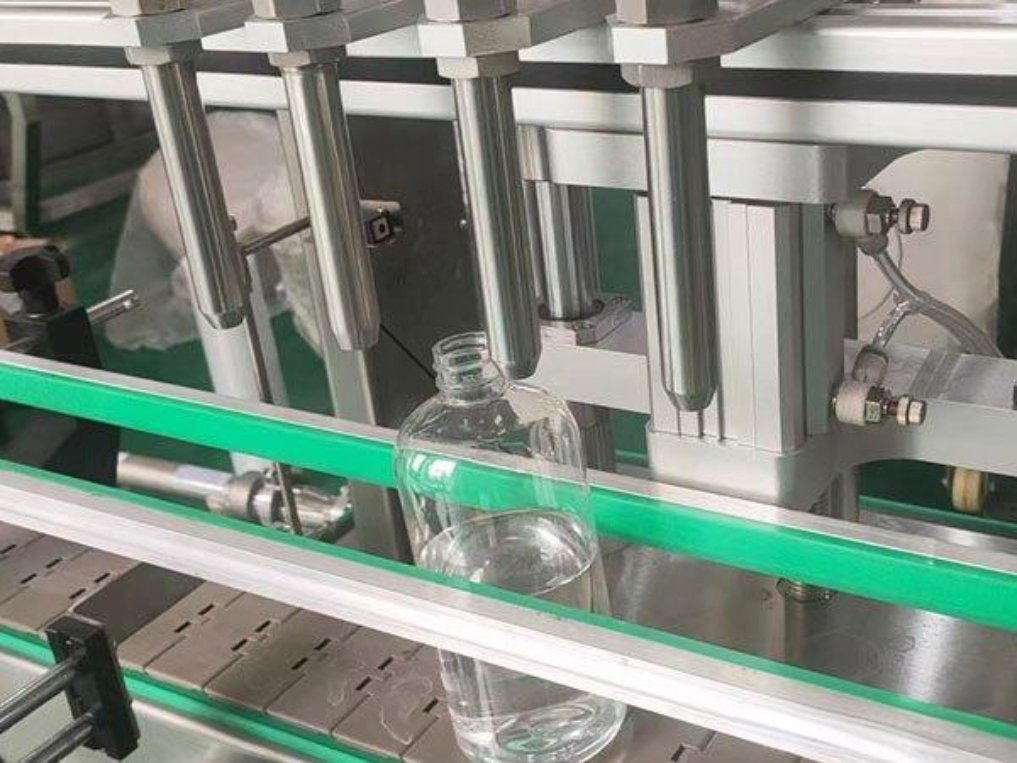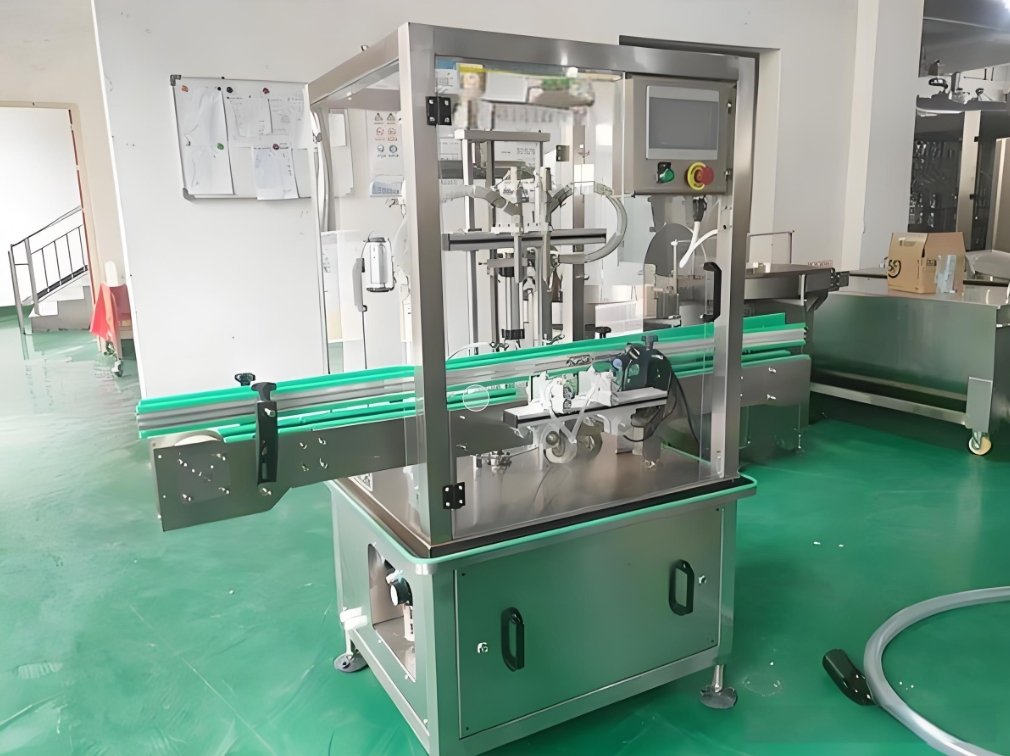
If you fill honey, sauces, creams, gels, adhesives, or any product that resists pouring, a standard liquid filler will fight you the whole way. A viscous liquid filling machines is built for exactly this problem: it moves thick product into containers accurately and cleanly, without the dripping, foaming, and short-fills that thinner-product machines struggle with. This guide explains how these machines work, the main types, and how to choose the right one for your product and production volume.
What is a viscous liquid filling machine?
Quick answer A viscous liquid filling machine is a packaging machine that measures and dispenses thick, slow-flowing products, such as sauces, creams, gels, pastes, and heavy oils, into bottles, jars, tubs, or pouches. Instead of relying on gravity, it uses positive force, usually a piston or a pump, to push a precise volume of product through a nozzle into each container. |
The defining word is viscosity, a fluid’s resistance to flow. Water flows freely; peanut butter does not. The higher the viscosity, the more force a machine needs to move the product at a consistent rate, and the more carefully the fill has to be controlled so the line does not slow down, drip between cycles, or trap air.
How does a viscous liquid filling machine work?
Most viscous fillers follow the same four-stage cycle, whatever the drive type:
- Draw. Product is pulled from a hopper or supply tank into a measuring chamber (a piston cylinder or pump cavity).
- Measure. The chamber captures a fixed volume. Fill size is set by stroke length, pump rotation, or a servo-controlled program.
- Dispense. The captured volume is forced out through a nozzle into the container.
- Cut off. A nozzle valve or shut-off closes cleanly to stop flow and prevent drips before the next container arrives.
Because the volume is captured mechanically rather than timed by gravity, viscous fillers stay accurate even when product temperature or thickness shifts slightly during a run. That is the main reason they beat gravity and overflow fillers for thick products.
What counts as a “viscous” liquid?
Viscosity is measured in centipoise (cP). Water sits at about 1 cP. As a practical rule, once a product climbs past roughly 1,000 cP it starts to need a viscous-specific filler. The table below gives a working reference, not a strict cutoff, since temperature and particulates also matter.
| Flow behaviour | Typical products | Filler approach |
| Thin / free-flowing | Water, juice, light oil | Gravity or overflow filler |
| Medium | Shampoo, light syrup, liquid soap | Piston or pump filler |
| Thick | Honey, ketchup, conditioner, gels | Piston or rotary lobe pump |
| Very thick / paste | Peanut butter, grease, caulk, balm | Servo piston, heated head |
| Thick with particulates | Salsa, jam with fruit, chunky sauces | Large-port piston, lobe pump |
Two product traits change the machine choice as much as viscosity itself: particulates (chunks need wide flow paths and gentle handling so they are not crushed) and shear sensitivity (some creams and gels break down or thin out if pumped too aggressively).
Types of viscous liquid filling machines
There are five common designs. The right one depends on viscosity, particulates, accuracy needs, and how gentle the product handling must be.
1. Piston (positive-displacement) filler
Best for: medium to very thick products, including those with small particulates. A piston draws a set volume into a cylinder, then pushes it out. It is the workhorse of viscous filling: highly accurate, tolerant of thick product, and easy to adjust by changing stroke length. Larger cylinders handle chunkier products.
2. Rotary lobe or gear pump filler
Best for: continuous high-volume runs of thick, smooth products. Pump fillers move product with rotating lobes or gears and meter the fill by controlling rotations. They run smoothly at high speed but are less suited to large particulates, which can jam the pump.
3. Peristaltic filler
Best for: sterile, small-volume, or shear-sensitive products. Product only ever touches a flexible tube, so cleaning and product changeover are simple. Common in cosmetics, pharma, and lab settings. Less common for high-speed, high-volume lines.
4. Gravity-pressure (overflow) filler
Best for: the thinner end of “viscous,” where a level fill matters more than an exact volume. It fills to a set height for a uniform look in clear bottles, but it loses accuracy as product thickens, so it sits at the lower-viscosity boundary.
5. Servo-driven filler
Best for: precision, fast changeovers, and recipe-based production. A servo motor controls the piston or pump electronically, so fill volumes are set on a screen and saved as presets. This adds cost but pays back on lines that switch products often or need tight fill tolerances.
How to choose the right viscous liquid filling machine
Match the machine to your product and your line, not to a spec sheet in isolation. Work through these factors in order:
- Product viscosity and behaviour. Measure or estimate viscosity, and note whether the product has particulates or is shear-sensitive. This narrows the type immediately.
- Container range. Fill volume, neck diameter, and bottle shape decide nozzle size and how many fill heads you need.
- Required accuracy. Tighter tolerances point toward piston or servo designs over gravity.
- Throughput. Containers per minute determines manual vs semi-automatic vs fully automatic, and the number of fill heads.
- Temperature. Products that must stay warm to flow (balms, some chocolates, certain adhesives) need a heated or jacketed fill system.
- Cleaning and changeover. If you run many products or work in food or pharma, prioritise tool-free strip-down or clean-in-place (CIP).
- Material and compliance. Food, cosmetic, and pharmaceutical products usually require stainless-steel contact parts and the right certifications.
Why the nozzle matters more than buyers expect
With thick product, the nozzle is where most fill-quality problems start or stop. A good viscous filler uses an anti-drip nozzle with a positive shut-off, and often a bottom-up “dive” fill, where the nozzle descends into the container and rises as it fills. That reduces splashing, foaming, and stringing, and keeps container threads clean so caps seal properly.
Cleaning, changeover, and product loss
Thick product clings to every surface it touches, so cleaning is a real running cost, not an afterthought. When you compare machines, look at how the fill path comes apart, whether it supports CIP, and how much product is stranded in the system at the end of a run. On frequent-changeover lines, a peristaltic or quick-strip piston design can save more in labour and wasted product than its higher purchase price.
Common viscous filling problems and how to avoid them
| Symptom | Likely cause | Practical fix |
| Dripping between fills | Worn or open nozzle shut-off | Service or fit a positive anti-drip nozzle |
| Inconsistent fill volume | Air drawn into the chamber | Check seals, slow the draw, keep the hopper topped up |
| Foaming / splashing | Fill too fast or nozzle too high | Use bottom-up fill, slow the dispense, lower the nozzle |
| Product spillage | Nozzle misaligned or cycle mistimed | Re-centre nozzles, sync fill timing to container indexing |
| Crushed particulates | Flow path too narrow or pump too aggressive | Switch to a large-port piston or lobe pump |
For a full walkthrough of line-wide faults, see our companion guide on common filling-machine problems and how to fix them [internal link].
How much does a viscous liquid filling machine cost?
Price varies too widely to quote a single figure, because it is driven by the factors below rather than by the product alone. Use this as a checklist when you compare quotes, and ask each supplier to break the cost out the same way.
- Automation level. Manual tabletop units are the lowest cost; fully automatic, multi-head lines are the highest.
- Number of fill heads. More heads raise throughput and price together.
- Drive type. Servo control and heated systems add cost over mechanical pistons.
- Materials and compliance. Pharma- and food-grade builds cost more than general-purpose ones.
- Integration. Capping, labelling, and conveyors bought as one line change the total picture.
The lowest sticker price is rarely the lowest running cost. Cleaning time, product waste, changeover speed, and spare-part availability often matter more over a machine’s life than the purchase price.
Manual vs semi-automatic vs automatic
| Type | Best for | Trade-off |
| Manual / tabletop | Startups, small batches, R&D | Operator-paced, lowest output |
| Semi-automatic | Growing brands, varied SKUs | Operator places bottles; good flexibility |
| Fully automatic | High-volume, single or few SKUs | Highest output; higher cost and footprint |
A practical path for a scaling brand is to start semi-automatic, prove the product and demand, then move to a fully automatic line once volume is steady.
| Talk to an applications engineer Not sure which filler fits your product? Share your product type, target container, and required output, and our engineering team will recommend a configuration. Contact Foshan Popper Machinery at |
Frequently asked questions
What is the best type of filler for thick liquids?
For most thick products a piston (positive-displacement) filler is the best all-round choice because it stays accurate, handles small particulates, and adjusts easily. For very high-volume smooth products, a rotary lobe pump filler is often better.
Can a viscous filling machine handle products with chunks?
Yes, if it is built for it. Use a large-port piston filler or a lobe pump with a wide flow path so chunks pass through without being crushed or jamming the machine.
What is the difference between a liquid filler and a viscous liquid filler?
A standard liquid filler usually relies on gravity or timed flow, which works for thin products. A viscous filler uses positive force (a piston or pump) to move thick product accurately, and adds anti-drip nozzles to control clinging and stringing.
Do I need a heated filling machine?
Only if your product must stay warm to flow, such as balms, certain chocolates, or some adhesives. A heated or jacketed fill system keeps viscosity stable through the run.
How accurate are viscous filling machines?
Piston and servo-driven fillers are highly repeatable because they capture a fixed volume mechanically rather than timing the flow. Accuracy depends on keeping air out of the system and maintaining the nozzle shut-off.
What is a compact viscous liquid filling machine?
A compact viscous filler is a smaller-footprint unit, often a single-head tabletop or bench model, suited to small batches, startups, and product development where floor space and budget are limited.
Contact us
Foshan Popper Machinery is a filling and packaging machinery manufacturer based in Foshan, Guangdong, China, supplying viscous, liquid, powder, and capsule filling systems to producers worldwide. Whether you are buying your first semi-automatic filler or scaling to a full automatic line, our engineers will help you match the right viscous liquid filling machine to your product, containers, and output target.
To get an accurate recommendation and quote, tell us:
- Your product and roughly how thick it is (for example honey, sauce, cream, gel, or paste).
- Container type and fill size (bottle, jar, tube, tub, or pouch, and the volume per container).
- Target output you need (containers per minute or per day).
- Automation level you have in mind (manual, semi-automatic, or fully automatic).
- Any compliance needs (food, cosmetic, or pharmaceutical requirements).
Send these details and our team will reply with a suitable configuration, pricing, and lead time, usually within one business day. Every machine ships with installation guidance, operator training resources, spare-part support, and after-sales service.
Start your enquiry on our contact page, or reach us directly using the details below.