
Labeling Machines
We manufacture labeling machines at our own factory in Foshan, China, for round bottles, flat containers, boxes, and trays. Send us your container and label samples, and our engineers will specify the right machine for your application.

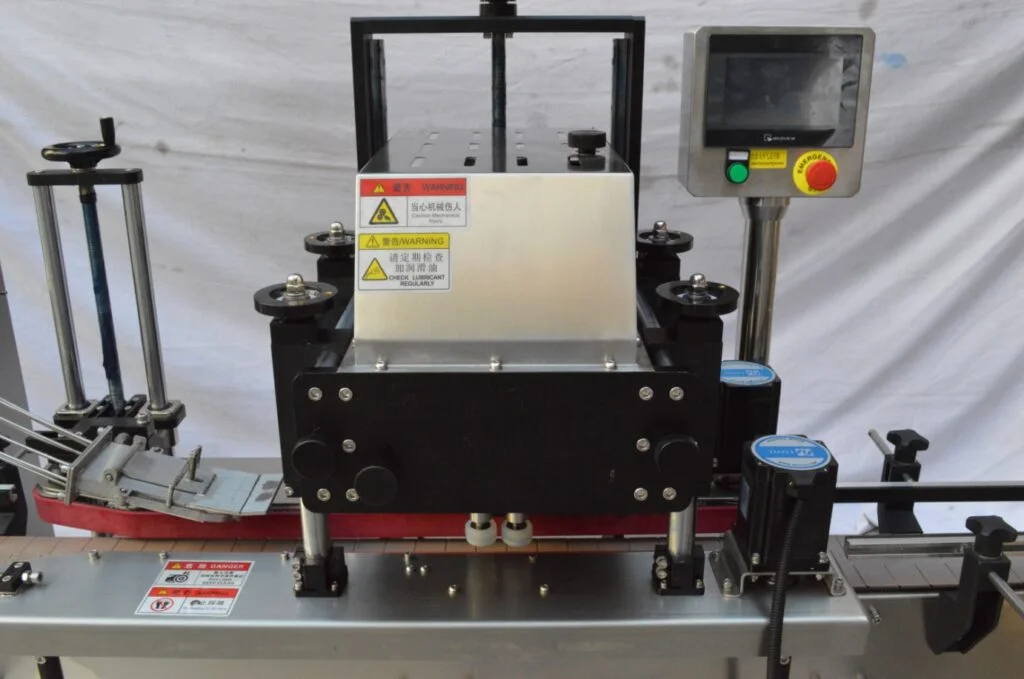
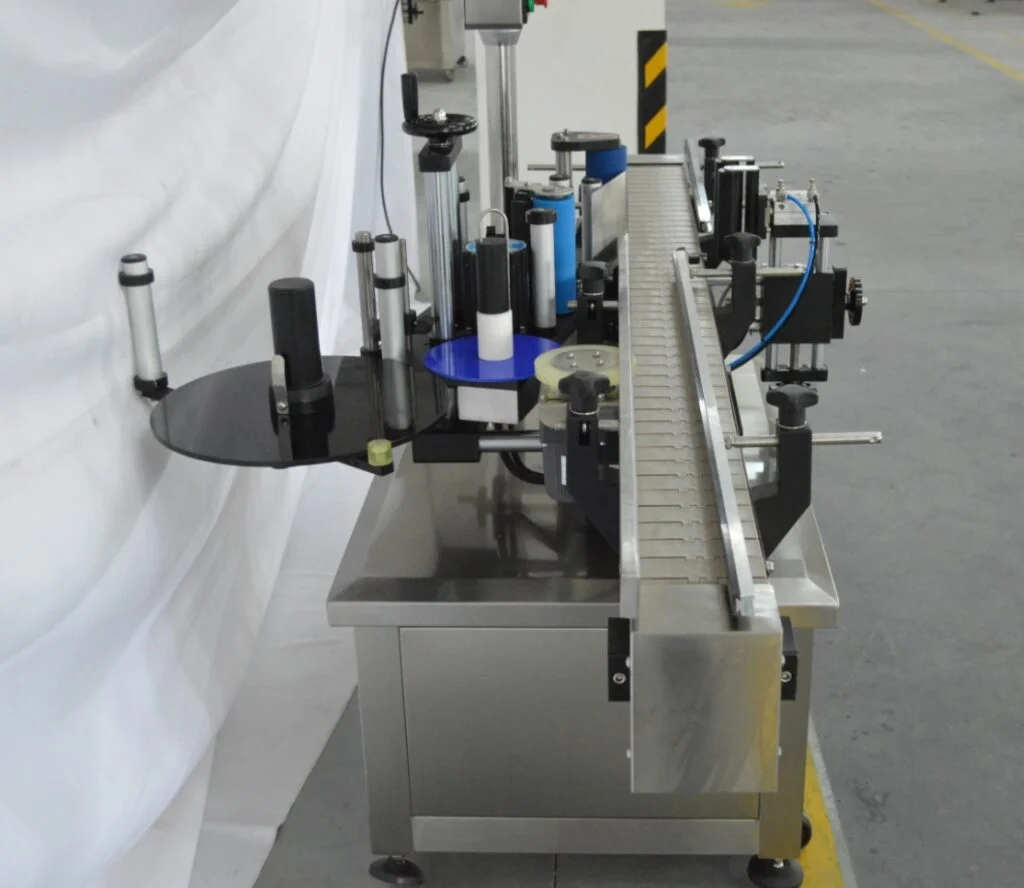
Labeling Machines We Build
Which machine you need is decided by container shape and by how many faces carry a label. We build four types and match the machine to the container you actually run.
Round Bottle Labeling Machine
For cylindrical containers, our bottle labeling machines wrap one label around the bottle with accurate seam alignment. Ideal for water, sauce, oil, cosmetic bottles, jars.
Single Side Labeling Machine
For flat, oval, and square containers, our labeling machines apply one label accurately to a single face. Ideal for boxes, pouches, flat bottles, trays, and packs.
Two Side Labeling Machine
Our labeling machines for bottles apply front and back labels in one pass with accurate alignment. Ideal for flat and oval bottles requiring separate front and back labels.
Labeling Machines
What You Get on a Popper Labeling Machine
These are build features on the machines we ship, not a list of what labeling machines do in general.
- Clear Label Sensing : Photoelectric sensors set for your label stock, including transparent film where standard sensors miss the gap.
- Servo Label Feed : Placement holds across a full run instead of drifting, and on two side machines both applicators register to the same container position.
- Change Parts Included : Guide rails, pressing belts and spacing wheels supplied for every container format you run, not just the first one.
- Recipe Storage : Save settings per container and per label, so changeover is a selection rather than a recalibration.
- Built to Integrate : Conveyor height, container pitch and control signals matched to the filling and capping machines either side.
- Tested on Your Container : We run your container and label at rated output before shipment and send you the result.
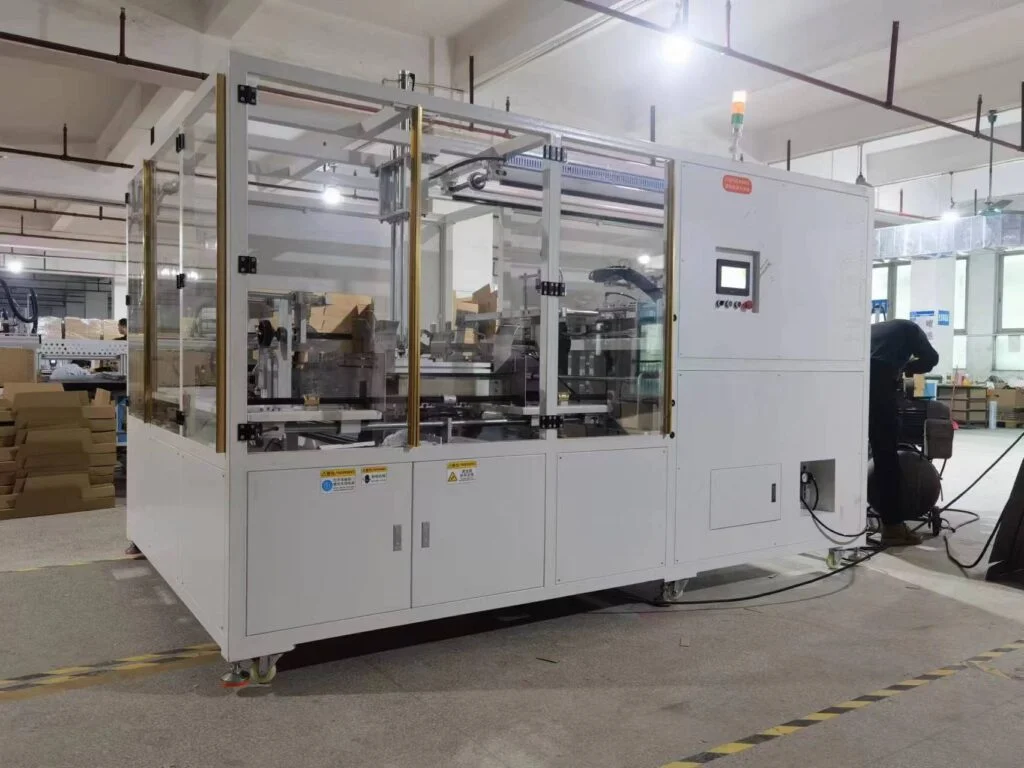
Industries and Containers We Label
Container shape decides the machine. Industry decides the label stock, the compliance requirements and how fast the line has to run.
| Sector | Containers | Machine we usually build |
|---|---|---|
Food and beverage |
Water, juice and sauce bottles,
jars, tins, trays |
Round bottle for cylindrical,
top and bottom for trays |
Pharmaceutical |
Vials, ampoules, bottles,
cartons |
Round bottle or two side,
depending on artwork |
Cosmetics and
personal care |
Cylindrical and oval bottles,
jars, tubes |
Round bottle for cylindrical,
two side for oval |
Chemical and
household |
Detergent bottles, drums,
boxes |
Single side or two side |
Logistics and
retail packaging |
Cartons, cases, flat packs |
Top and bottom |
We build labeling machines as standalone units and as part of a complete automatic production line. In a fully automatic setup, containers move from the filler to the labeler, then continue to capping and secondary packaging without manual handling.
A reliable automatic line depends on more than the labeler itself. Conveyor height, container spacing, and control signals must work correctly across every machine, which is why we recommend sourcing the complete line from one supplier.
- Container shape and dimensions. Cylindrical, flat, oval, or square, including diameter or width, height, and container material.
- Label count and placement. How many sides require labels, and whether front and back labels need to align with each other.
- Label stock. Paper, clear film, metallised material, or shrink sleeve. Clear labels require different sensing.
- Required output. Containers per minute and the number of operating hours per shift.
Label Types We Handle
Standard paper and film labels work across all four labeling machines. Some label types require a specific setup, which we configure during the machine build rather than after installation. Transparent labels need photoelectric sensing adjusted to detect the label gap, while shrink sleeve labels require a different applicator and heat tunnel. RFID tags require in-line encoding and verification.
When a container needs to be rotated so the label aligns with a seam, handle, or existing print, we integrate a bottle orientation system into the infeed. For glass containers, see our guide to labeling machines for glass bottles, where container weight and surface finish affect machine handling.
Where the Labeler Sits in Your Line
A labeling machine typically runs after filling and, in most cases, after capping because a capped container is more stable for accurate label application. We manufacture the equipment on both sides of the labeler, so the complete line arrives properly matched instead of being assembled from separate suppliers. This includes our filling machine range, bottle filling machine systems, capping machines, and packaging machines for cartoning and case packing.
Adding a labeler to an existing production line? Send us the make and model of the machines installed before and after it so we can match conveyor height, container pitch, and control signals. You can learn more about our manufacturing background on our about us page and review support terms on our service page.
Frequently Asked Questions
Yes. We build them at our own facility in Foshan, Guangdong. Machines are assembled, set up against your container and label, and run-tested before shipment.
A round bottle labeling machine. The bottle is rotated under the label head so one label wraps the circumference with the seam aligned. See our round bottle labeling machine for specifications.
Yes. A two side labeling machine applies front and back labels in the same pass so both register together. Running a single side machine twice does not give the same alignment.
Yes, with the sensor set for clear stock. Standard photoelectric sensors miss the gap between clear labels, so we configure sensing at build. Tell us your label material at enquiry stage. Our guide to transparent label machines explains what to check.
We build labeling systems that apply and encode RFID tags in line, with verification before the container moves on. See our notes on labeling machines that work with RFID tags.
Yes. We proudly serve clients in 50+ countries worldwide and manage all international logistics from our factory in Foshan, China.
Yes. Our engineers handle complete on-site installation, staff training, routine maintenance, and fast troubleshooting to keep your production running smoothly.
Usually registration, container guiding or label stock. Servo-driven feed holds placement across a run, and guide rails matched to your container stop it rotating in transit. Our labeling machine troubleshooting guide covers the common causes.
Need Help Choosing the Right Labeling Machine?
Send us your container dimensions, a label sample and your target output, and our engineering team will recommend a machine and return a specification with pricing. Contact us to start, or email info@fillingmachinepp.com.