
Capping Machines
A capping machine applies and tightens closures onto bottles, jars and cans after filling. Foshan Popper Machinery manufactures handheld, semi-automatic, inline and rotary capping machines for screw caps, ROPP caps, crown caps, snap caps, pump caps and vacuum twist-off lids, supplied FOB from our Foshan, China factory with CE marking and worldwide installation support.
Tell us your cap type, container and target output and we will quote the right machine class rather than the largest one.
How the Capping Machines Works
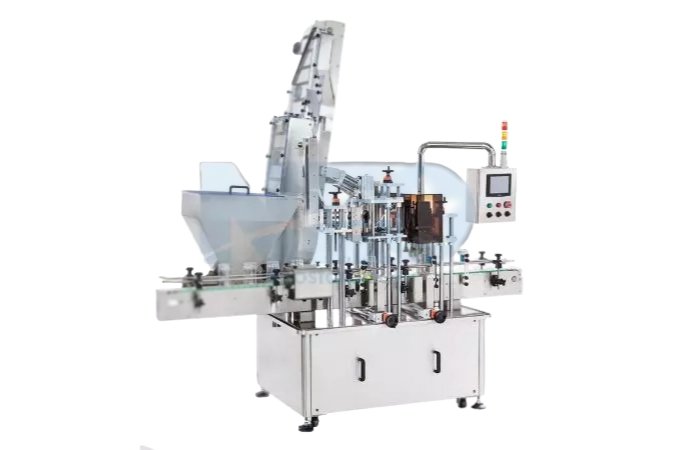
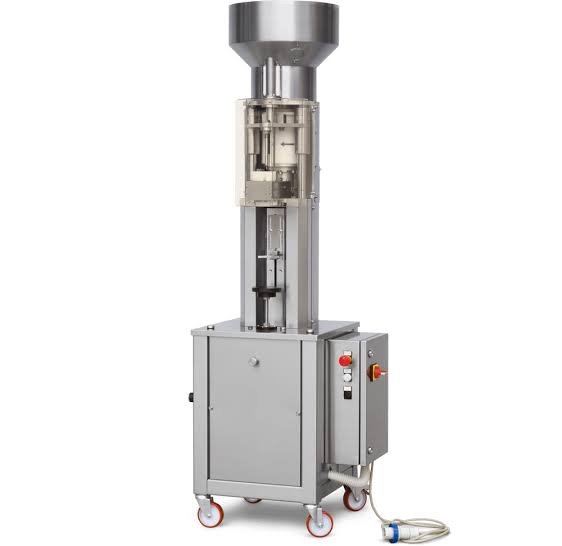
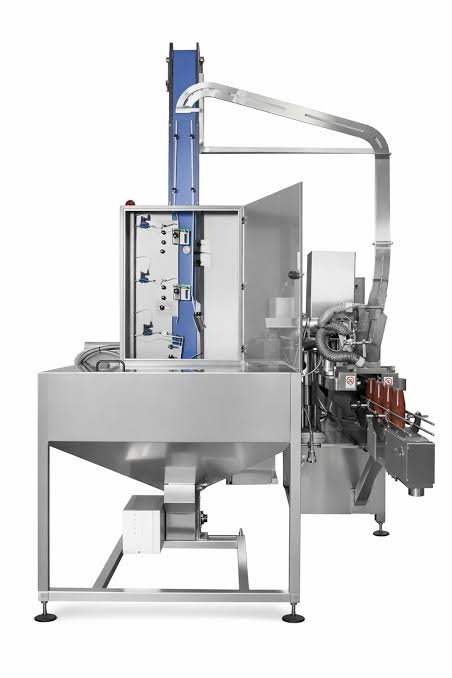
A capping machine works in three stages. The cap is sorted and delivered from a bowl or elevator, placed onto the filled container, then rotated or pressed until the closure reaches its target torque or seating force. Sensors confirm cap presence and, on servo systems, verify that applied torque falls inside tolerance before the container leaves the machine.
- Stage one: cap feeding
A sorter turns bulk caps open side down and feeds them single file to the head. A bulk hopper behind it holds ten to fifteen minutes of supply. Where the sorter mounts high, a cleated elevator refills it from floor level, so nobody carries caps up steps. - Stage two: placement
The cap drops onto the container as it arrives, with gripper belts holding it square. Cross-threading traces back to placement, not torque, so check belt tension and head height first when a line starts rejecting. - Stage three: torque or press
Threaded closures are rotated to a specified torque. Snap and press-on closures are seated by vertical force. Both are measured against a tolerance band, not a single number.
Capping Machines
Key Features of the Capping Machines
Every machine applies a specified torque and holds it across the shift. That is what stops caps loosening in transit or cracking at the neck finish. Screw, crimp and ROPP heads mount on the same frame, with [304 / 316L] stainless contact parts throughout.
Spindle models adjust to a new cap diameter by knob, without tools. Chuck models take a matched insert per diameter. Cap presence sensors reject uncapped containers before they reach the labeller, and servo models log applied torque for lines that need validation records.
Which capping machine do you need
Output is the first filter. Cap type is the second. Use the table to narrow the class before you request a quote.
| Your output | Machine class | Typical setup |
|---|---|---|
Under 500 units/hr |
Handheld or benchtop |
One operator, no conveyor, bench mounted |
500 to 1,500 units/hr |
Semi-automatic capper |
Operator loads, machine torques. Optional conveyor |
1,500 to 6,000 units/hr |
Automatic inline capper |
Cap elevator, sorting bowl, spindle or chuck head, conveyor |
6,000 units/hr and above |
Rotary capper |
Multi-head turret, servo torque, full line integration |
Any output, single footprint |
Monoblock filler and capper |
Filling and capping in one frame, shared control panel |
Types of Capping Machines
The nine machine types below cover almost every closure application in food, beverage, pharmaceutical, cosmetic and chemical packaging. Each links to full specifications.
Automatic Capping Machine
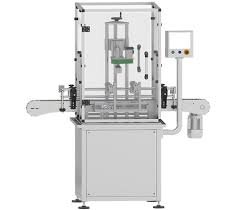
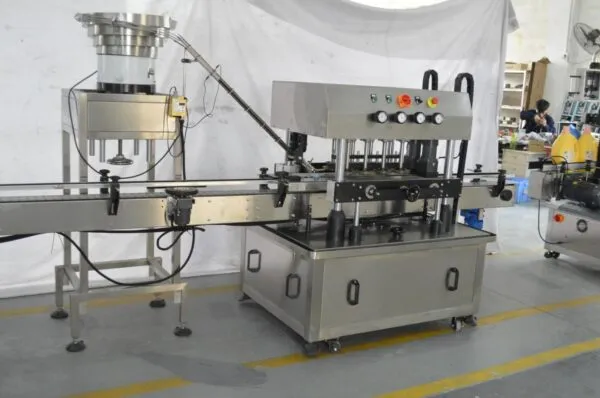
An automatic capping machine feeds, places and torques caps with no operator handling. Caps are delivered by a sorting bowl or elevator, positioned onto the container as it moves along the conveyor, and tightened to a preset torque. This is the standard choice once a line passes roughly 1,500 containers per hour and consistency of seal becomes more valuable than flexibility.
Semi-Automatic Capping Machine
A semi-automatic capping machine leaves container loading to the operator and handles the torque itself. It removes the wrist strain and the seal inconsistency of hand capping without the cost of full automation. Small beverage brands, contract fillers and cosmetic producers typically start here and add automation as volume grows.
Manual and Handheld Capping Machine
A handheld capper is a powered tool the operator brings to the container. It suits short runs, laboratory work, product development and startups testing a format before committing to a line. Output depends entirely on the operator, so it stops making sense once daily volume becomes predictable.
Inline Capping Machine
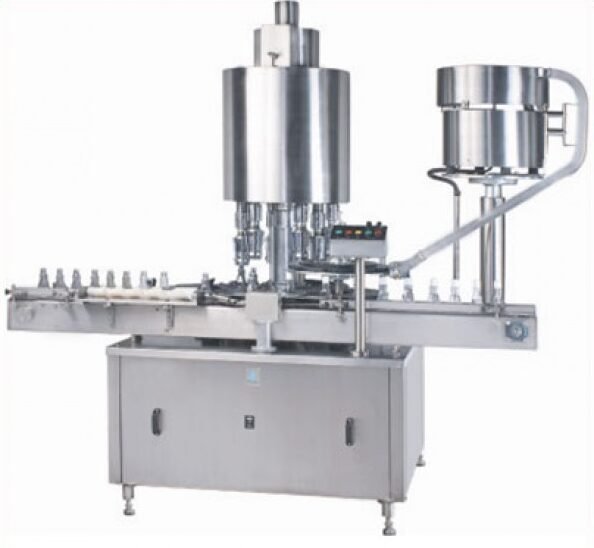
An inline capping machine caps containers while they travel along a straight conveyor, using spindle discs or chuck heads mounted above the line. It integrates into an existing conveyor run without a turret and handles a wide range of container shapes, which makes it the most common automatic format for mid-volume production.
Rotary Capping Machine
A rotary capping machine carries containers on a turret past multiple capping heads. Because several caps are applied simultaneously, throughput rises sharply while dwell time per cap stays constant. Rotary machines are the format used in high-volume beverage bottling, pharmaceutical filling and large cosmetic operations.
Rotary Capping Machine
A rotary capping machine carries containers on a turret past multiple capping heads. Because several caps are applied simultaneously, throughput rises sharply while dwell time per cap stays constant. Rotary machines are the format used in high-volume beverage bottling, pharmaceutical filling and large cosmetic operations.
Chuck Capper
A chuck capper grips the cap in a matched chuck insert and applies torque through direct contact. Because the chuck holds the cap positively, torque repeatability is higher than a spindle system. It is the format used where seal integrity is validated, such as pharmaceutical and child-resistant closures. A separate chuck insert is required for each cap diameter.
ROPP Capping Machine
A ROPP capping machine forms an aluminium blank onto the bottle thread and rolls a pilfer-proof band beneath the neck ring. The cap is created against the bottle rather than pre-threaded, which produces a tamper-evident seal that cannot be resealed without visible damage. Standard for spirits, wine, syrups and pharmaceutical liquids.
Screw Capping Machine
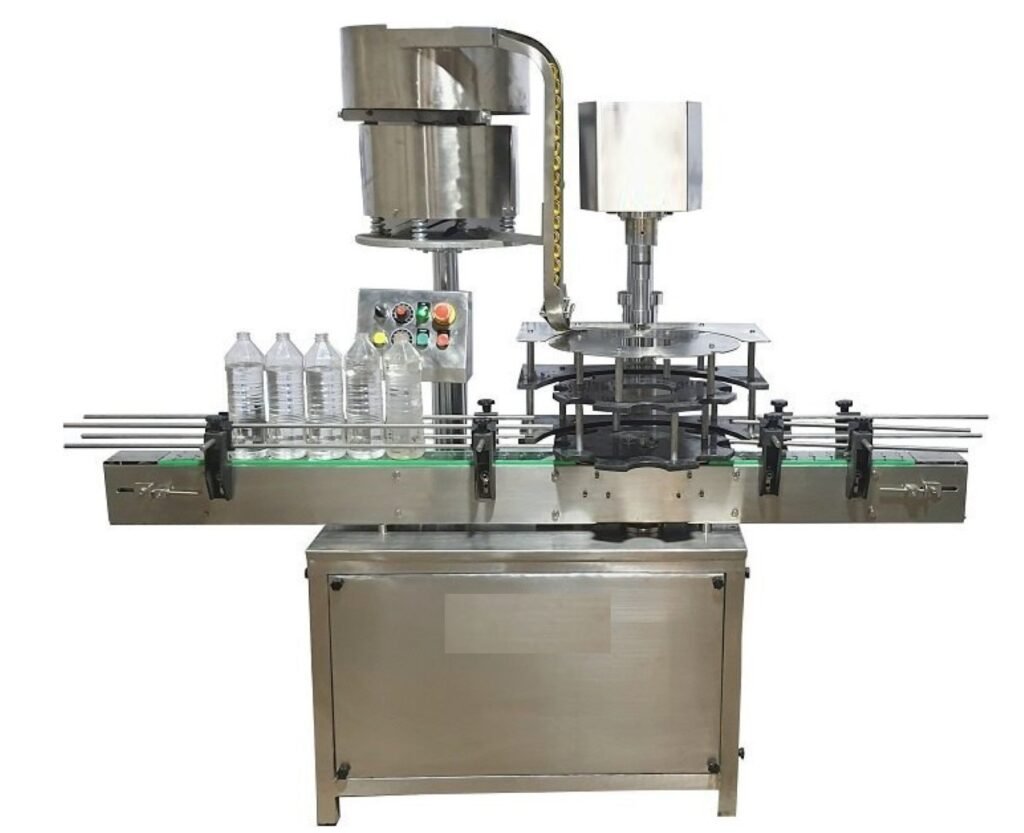
A screw capping machine applies threaded plastic or metal closures to a controlled torque. Torque is the variable that matters: too low and the product leaks in transit, too high and the liner deforms or the neck cracks. Servo-driven screw cappers hold torque within a set tolerance and reject out-of-spec containers.
Automatic Filling Machine Soultion
A capping machine is used to apply caps to bottles and containers. It ensures that products are securely sealed. This machine ( we are as a manufacturer .............
Servo Capping Machine
Our servo capping machine provides fast and precise capping. It uses servo motors for controlling torque and speed. This machine is essential for industries needing accurate bottle capping. The servo .......
Can Seaming Machine
A can seaming machine securely seals aluminum and tin cans, ensuring airtight packaging for food, beverage, and pharmaceutical products with reliable and high-speed performance...
Capping Machine Price Guide 2026
Capping machine prices range from roughly 500 US dollars for a handheld capper to over 200,000 US dollars for a high-speed rotary system. Automation level is the largest single cost driver, followed by output speed, cap type and the degree of customisation required for the container.
| Machine class | Market price (USD) | Best fit |
|---|---|---|
Handheld / portable |
$500 to $2,000 |
Startups, R&D, short runs and product trials |
Semi-automatic |
$2,000 to $10,000 |
Small beverage, specialty food, niche cosmetics |
Automatic inline |
$10,000 to $50,000 and above |
Mid-volume food, beverage, household and pharmaceutical lines |
Rotary capper (multi-head) |
$50,000 to $200,000 and above |
High-volume beverage bottling and large pharmaceutical plants |
Can seamer (automatic) |
$5,599 to $11,999 observed |
Canned food, seafood, ring-pull and vacuum can sealing |
Monoblock filler and capper |
$14,899 to $82,999 observed |
Lines with limited floor space, single-frame fill and cap |
Cap Types We Handle
Cap geometry decides the head design. These are the closure formats our capping machines are built for.
| Cap type | How it seals | Typical use |
|---|---|---|
Screw cap |
Threaded, applied to a controlled torque |
Water, juice, sauces, detergents, cosmetics |
ROPP cap |
Aluminium blank rolled onto the thread with a pilfer band |
Spirits, wine, syrups, pharmaceutical liquids |
Crown cap |
Crimped skirt over the bottle lip |
Beer, soda, carbonated soft drinks |
Snap / press-on |
Seated by vertical force |
Dairy, condiments, paint, household chemicals |
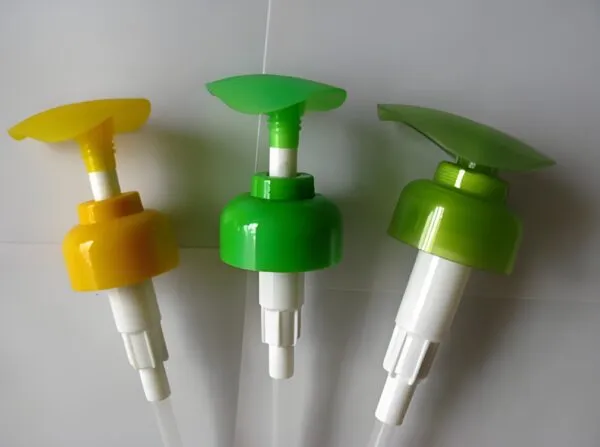
Pump and trigger |
Threaded with dip tube alignment |
Lotions, sanitisers, sprays, cleaning products |
Vacuum twist-off lug |
Sealed under vacuum, lugs engage the neck |
Jams, sauces, pickles, baby food, honey |
Cork and T-top |
Compressed and inserted |
Wine, spirits, oils, laboratory bottles |
Flip-top and disc-top |
Pressed on, hinge orientation controlled |
Shampoo, condiments, personal care |
Applications by industry
Capping machines are used wherever a filled container must be sealed consistently. The four largest sectors are food and beverage, pharmaceutical, cosmetic and personal care, and industrial chemicals.
| Sector | Products and closures | What matters |
|---|---|---|
Food and beverage |
Water, soda, juice, sauces, dairy. Screw and crown caps |
Speed, hygienic stainless, seal integrity |
Pharmaceutical |
Syrups, oral liquids, vials. ROPP and child-resistant closures |
Torque validation, documented changeover |
Cosmetic and personal care |
Creams, serums, perfumes. Pump caps, disc-tops, collars |
Cosmetic finish, no scuffing, orientation control |
Chemical and industrial |
Cleaners, lubricants, solvents. Screw caps and plugs |
Chemical-resistant contact parts, leak control |
Frequently Asked Questions
A capping machine costs between roughly 500 US dollars for a handheld unit and over 200,000 US dollars for a high-speed rotary system. Semi-automatic machines typically fall between 2,000 and 10,000 US dollars, and automatic inline machines between 10,000 and 50,000 US dollars. Cap type, output speed and container handling requirements drive the final figure.
A semi-automatic capping machine requires an operator to load and position each container, then applies the torque mechanically. An automatic capping machine feeds, places and torques caps without operator handling, using a cap sorting system and a conveyor. The practical crossover point is around 1,500 containers per hour.
Yes, within limits. Spindle systems handle a range of cap diameters with adjustment only. Chuck systems require a separate chuck insert per cap diameter. Confirm your full list of cap formats when requesting a quote so the correct change parts are included.
Calculate your required daily volume, divide by realistic running hours, and add margin for changeover and downtime. Under 500 containers per hour a handheld or benchtop unit is sufficient. Above 6,000 containers per hour a rotary machine becomes necessary.
Yes. Foshan Popper supplies capping machines standalone, integrated with filling machines and conveyors, or as monoblock filling and capping units in a single frame. [CONFIRM lead time and commissioning terms.]
Need Help Choosing the Capping Machines
Ready to work with us?