
Round Bottle Labeling Machine
We manufacture round bottle labeling machines at our factory in Foshan, China, for bottles, jars, cans, and other cylindrical containers. Send us your bottle diameter, label size, and target output, and our engineers will specify the right machine for your application.

How Our Round Bottle Labeling Machines Work
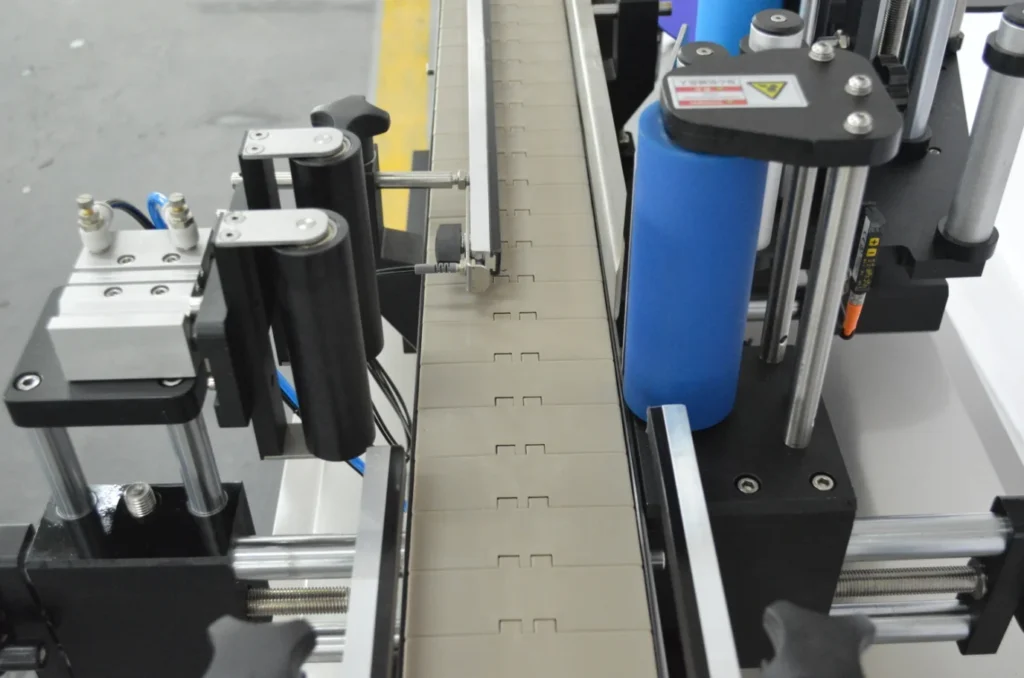
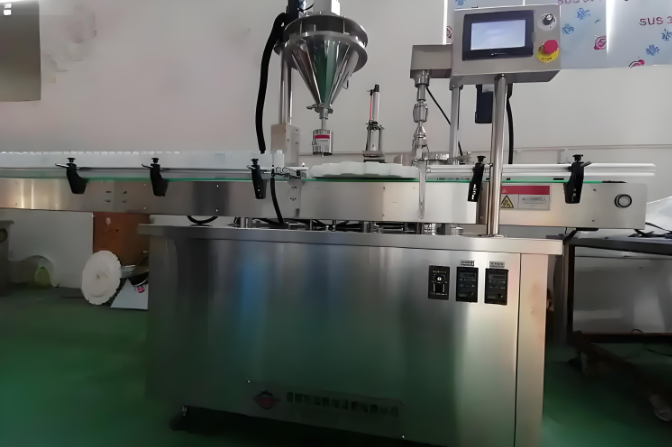
Bottles enter the conveyor and are spaced by a separating wheel so each container reaches the labeling head individually. A sensor detects the bottle, the applicator peels the label from the backing web, and pressing belts rotate the container while the round bottle labeling machine wraps the label around its circumference and closes the seam accurately.
Consistent wrap quality depends on three factors: even bottle spacing at the infeed, stable rotation speed beneath the labeling head, and accurate label feed throughout the production run. We set and test all three using your bottle and label specifications before the machine ships.
What You Get on a Popper Round Bottle Labeler
These are build features on the machines we ship, not a list of what round bottle labelers do in general.
- Seam-Aligned Wrap: Pressing belts rotate the bottle at a speed matched to label length, so the label closes on itself without overlap or gap.
- Clear Label Sensing: Photoelectric sensing set for your label stock, including transparent film where standard sensors miss the gap between labels.
- Servo Label Feed: Placement holds across a full run rather than drifting as the reel diameter changes.
- Change Parts Included: Guide rails and pressing belts supplied for every bottle diameter you run, not just the first one.
- Recipe Storage: Save settings per bottle and per label, so changeover is a selection rather than a recalibration.
- Tested on Your Bottle: We run your bottle and label at rated output before shipment and send you the result.
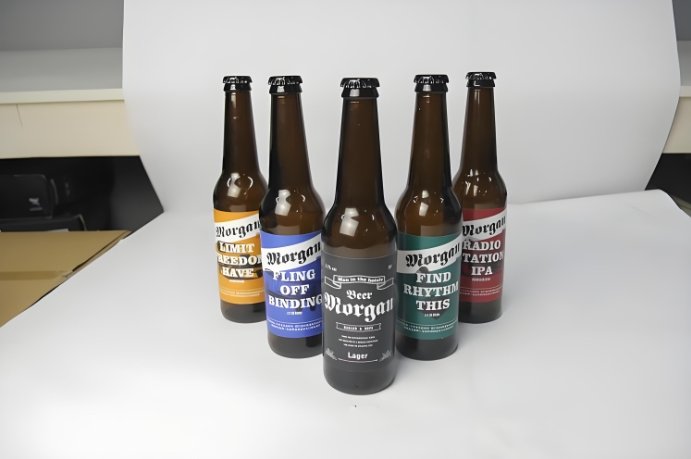
Add Your Heading Text Here
| Parameter | Specification |
|---|---|
Model |
Automatic Round Bottle Labeling Machine – Custom Configuration |
Labeling accuracy |
±1 mm depending on bottle and label quality |
Output rate |
25–160 bottles per minute, depending on bottle diameter, label size, and configuration |
Bottle diameter range |
20–120 mm |
Bottle height range |
20–260 mm |
Label length range |
20–300 mm |
Label height range |
15–150 mm |
Label roll inner diameter |
76 mm |
Label roll outer diameter |
Up to 350 mm |
Label materials supported |
Self-adhesive paper, PP/PET film, metallised film, and transparent film; clear labels require a suitable transparent-label sensor |
Power supply |
AC 220 V, 50/60 Hz, approximately 1.0–1.5 kW |
Machine dimensions |
Approximately 2000 × 900 × 1400 mm, depending on configuration |
Machine weight |
Approximately 180–250 kg |
Machine construction |
304 stainless steel and industrial-grade aluminum components |
Control system |
PLC + touchscreen HMI, servo/stepper-controlled label feed; component brand depends on configuration |
Applications of the Round Bottle Labeling Machine
Round bottle labelers are specified by container, not by industry. What matters is diameter, surface material and whether the label has to land in a particular position.
| Sector | Containers | Typical label |
|---|---|---|
Beverage |
Water, juice and soft drink bottles |
Wrap-around, paper or film |
Food |
Sauce and oil bottles, jars, nut cans |
Wrap-around, often with a
back panel |
Cosmetics and
personal care |
Lotion, serum and shampoo bottles |
Transparent or metallised,
small format |
Pharmaceutical |
Medicine bottles, vials |
Small format, batch coded |
Chemical and
household |
Cleaning product bottles, drums |
Durable stock, often
chemical resistant |
Label Accuracy
Accurate wrap-around labeling depends on three factors, all configured during the build and tested before the round bottle labeling machine ships.
- Bottle spacing at the infeed. A separating wheel feeds bottles individually to the labeling head. Bottles entering in contact with each other are a common cause of label skew.
- Rotation speed under the labeling head. The bottle rotation speed is matched to the label length so the label closes correctly around the container. If rotation is too fast, the seam can leave a gap; if too slow, the label can overlap.
- Label feed registration. Servo-driven label feeding maintains consistent placement as the label reel diameter decreases during production.
Bottle Types
Our round bottle labeling machine handles cylindrical containers across a range of diameters. The labeling principle stays the same; what changes is how each bottle type is handled.
- PET and HDPE bottles. Lightweight containers require carefully adjusted pressing-belt tension to prevent deformation during labeling.
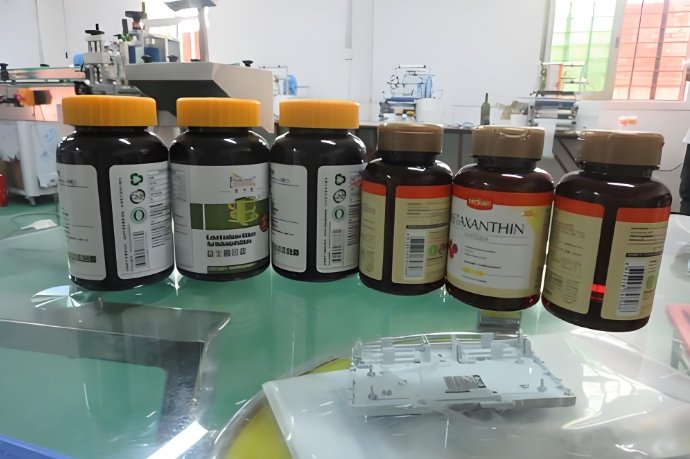
- Glass bottles and jars. Heavier containers need stable conveyor handling, while surface finish can affect label adhesion. See our guide to labeling machines for glass bottles.
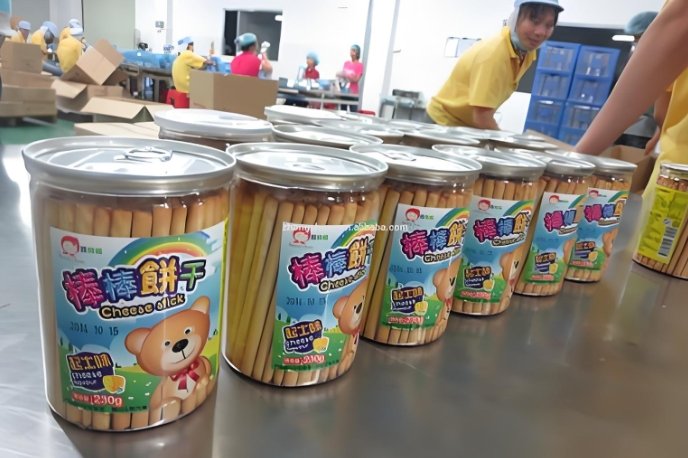
- Metal cans and tins. Their rigid, consistent shape generally makes accurate wrap-around labeling easier.
- Tapered and shouldered bottles. Labels must be positioned on the parallel section of the container, which reduces the usable label height.
We provide ongoing support after delivery to help keep your machine running reliably.
- Spare parts. Wear parts are stocked and shipped directly from our Foshan factory.
- Technical support. Engineering support is available by email and video call. See our service page for details.
Labels, Orientation and When You Need a Different Machine
Standard paper and film labels run on our round bottle labeling machines without special setup, but two applications need to be configured during the build. Transparent labels require photoelectric sensing tuned to the label gap because standard sensors can read clear stock as a continuous web. When a label must align with a seam, handle, or existing print, we integrate a bottle orientation system into the infeed so every bottle reaches the labeling head in the same starting position.
Glass containers require different handling because their weight and surface finish can affect stability and label adhesion. Our guides on labeling machines for glass bottles and glass and plastic container labeling explain these differences in more detail.
WHEN A DIFFERENT MACHINE IS THE RIGHT ANSWER
A round bottle labeler applies one wrapped label to a cylindrical container. If your container is flat, oval or square, or carries separate labels on more than one face, a different machine in our labeling machine range fits better. Use a single side labeling machine for one label on one flat face, a two side labeling machine where front and back have to register to each other, or a top and bottom labeling machine for boxes, trays and lidded packs.
Building a Complete Bottle Line
A round bottle labeling machine typically runs after filling and capping because a capped bottle is stable enough to rotate accurately under the labeling head. We also manufacture the equipment used before and after the labeler. For liquids, see our liquid filling machine and bottle filling machine range. For thicker products, we offer a sauce filling machine, while metal containers can be handled with a can filling machine. Before labeling, bottles can pass through our capping machines, including servo capping machines where controlled cap torque is important.
Adding a labeler to a production line you already own? Send us the make and model of the machines installed before and after it so we can match conveyor height, bottle pitch, and control signals. You can learn more about our manufacturing background on our about us page.
Frequently Asked Questions
Placement is held by servo label feed and by rotation speed matched to label length, so it does not drift as the reel diameter shrinks through a run.
Yes, with the sensor set for clear stock at build. Standard photoelectric sensors read clear labels as continuous web and miss the gap. Tell us your label material at enquiry stage. Our guide to transparent label machines explains what to check.
Yes, with a bottle orientation system in the infeed. Each bottle is turned to the same starting position before it reaches the label head. Specify this at enquiry stage, because it changes the infeed build.
Yes. Glass is heavier and less forgiving on the conveyor, so pressing belt tension and spacing are set differently. See our notes on labeling machines for glass bottles.
Usually bottles arriving at the label head in contact with each other rather than separated, or pressing belt tension set for a different bottle diameter. Our labeling machine troubleshooting guide covers the full list of causes.
Yes. We proudly serve clients in 50+ countries worldwide and manage all international logistics from our factory in Foshan, China.
Yes. Our engineers handle complete on-site installation, staff training, routine maintenance, and fast troubleshooting to keep your production running smoothly.
With 15+ years of manufacturing experience, we build reliable round bottle labeling machines with precise engineering, custom configurations, and dependable after-sales support for customers worldwide.
Need a Round Bottle Labeling Machine?
We manufacture and supply round bottle labeling machines for bottles, jars, cans and cylindrical containers. Share your bottle size, label size and production capacity, and our team will recommend the right machine. Contact us or email info@fillingmachinepp.com.