The best filling machine for a small beverage startup is almost always a semi-automatic filler. It is affordable, fits a small space, and fills consistently enough to look professional on the shelf, without the cost of a full automatic line. For a wider view of the options, our roundup of liquid filling machines for small and medium businesses compares specific models.
That said, the right choice depends on what you are bottling and how fast you are growing. For example, a still juice, a carbonated soda, and a thick smoothie each need a different fill method. Because of that, it helps to understand the bottle filling machine basics before you buy.
This guide gives you a clear recommendation, then explains how to match a machine to your drink, your budget, and your growth plans. First, though, a quick word on why beverage startups have slightly different needs from other small producers, a point our overview of the beverage industry expands on.
What is the best filling machine for a small beverage startup?
Quick answer For most beverage startups, a semi-automatic filler is the best choice. It powers the fill while the operator loads and unloads bottles, which gives consistent fill levels at a manageable price and a small footprint. Start manual only if you are still proving the product in tiny batches, and move to automatic once demand is steady. Whatever you pick, match the fill method to your drink, especially if it is carbonated. |
In other words, the semi-automatic filler is the sweet spot for a small beverage startup: cheap enough to start with, consistent enough to sell against bigger brands, and flexible enough to change products while you find your market.
Match the machine to your beverage
Before choosing a tier, look at your drink. The fill method matters more than the brand of machine, because the wrong method causes spills, foam, or inaccurate fills. Use this as a quick guide:
Your drink | How it behaves | Best fill method |
Still water, flat juice | Thin, free-flowing | Gravity or flow filler |
Carbonated soda, sparkling water | Holds gas, foams | Counter-pressure (isobaric) filler |
Smoothies, syrups, nectars | Thick or pulpy | Piston filler |
Hot-filled juice or tea | Filled warm | Gravity or piston with hot-fill setup |
Kombucha, cold brew | Often lightly carbonated | Counter-pressure or gentle gravity |
If your product foams or fizzes, read our guide on stopping foam when filling liquids before you buy, because foam control is the most common beverage-filling headache.
The three machine tiers for a startup
In practice, beverage fillers come in three tiers. Most startups move up this ladder as they grow, so it helps to know where you sit today.
Manual fillers
Manual and tabletop fillers are the cheapest and simplest option. The operator places each bottle, fills, and moves on, typically at a few to around a dozen bottles a minute. Consequently, they suit proof-of-concept batches, test flavours, and very low volumes. However, they are slow and tiring for daily runs, so most startups outgrow them quickly.
Semi-automatic fillers
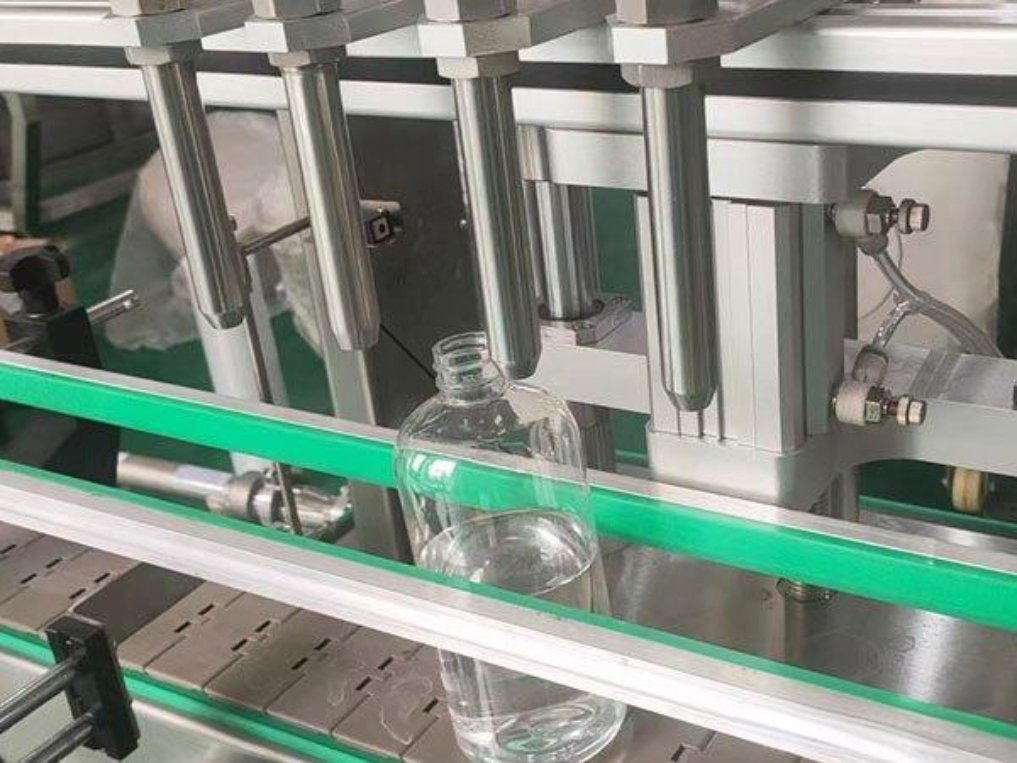
Semi-automatic fillers, usually with two, four, or more heads, power the fill while the operator loads and unloads. As a result, they are far more consistent and much faster than manual units, often reaching a few hundred to a few thousand bottles per hour depending on heads and bottle size. For most beverage startups this is the comparison winner, because it balances cost, speed, and space. Importantly, many run on a full-size frame, so you can add heads or automation later.
Automatic fillers
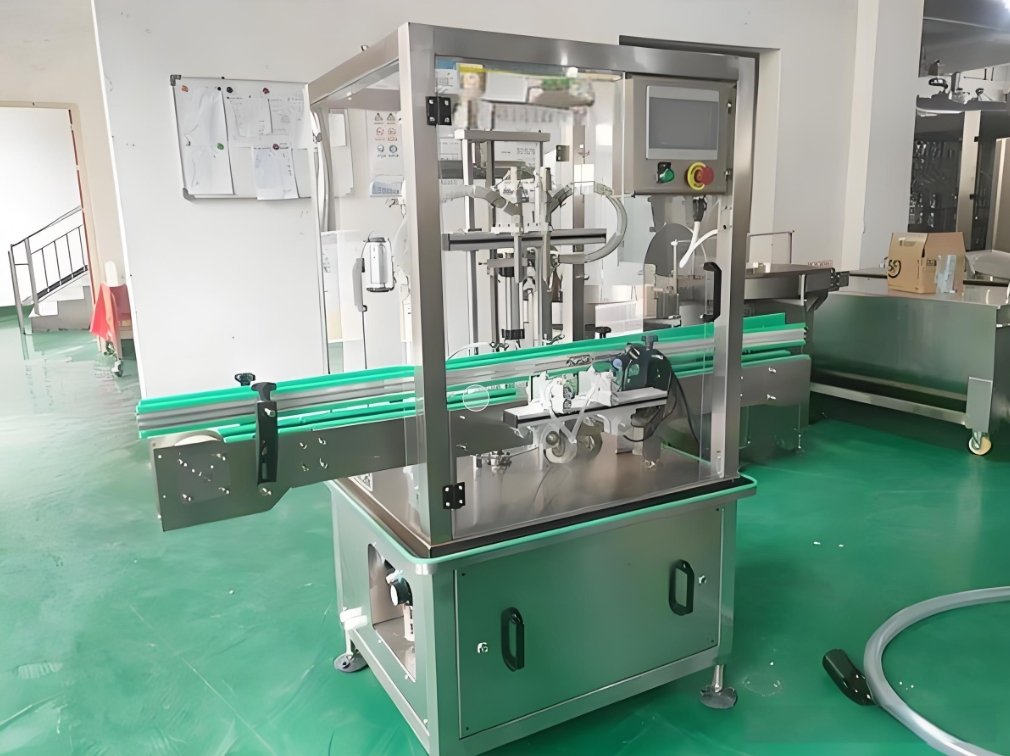
Automatic fillers run continuously on a conveyor with sensors and a touchscreen, and are often combined with rinsing and capping in one line. Therefore, they suit steady, higher-volume production, generally once you are filling well over a thousand bottles a day. They cost more and need more space, but they scale. When you reach that point, our guide to the best automatic liquid filling machine for a production line is the next step.
Do not forget carbonation and container type
This is where beverage startups differ from other small producers. First, if your drink is carbonated, you need a counter-pressure (isobaric) filler that pressurises the bottle before filling, so the gas stays in solution instead of foaming out. A standard gravity filler will not do this well. Second, your container matters. PET bottles flex and must not be over-pressured, glass presents the product well and protects flavour, and cans need a beverage can filling and seaming setup rather than a bottle filler. Finally, if space and budget allow, a three-in-one monoblock that rinses, fills, and caps in one pass saves handling and floor space.
How to choose: a startup checklist
Work through these in order; each one narrows the choice:
- Your drink. Still, carbonated, or viscous? This sets the fill method first.
- PET, glass, or can, and the sizes you will run.
- Bottles per day now, and where you expect to be in two years. Buy for near-term growth.
- Upgrade path. Can you add heads or automation later, or will you have to replace the machine?
- Space and power. Measure your workspace; tabletop units need little, conveyors need more.
- If you run several products, favour quick, tool-free format changes.
- Confirm spare parts, training, and after-sales help are available before you buy.
Budget and return on investment
Overall, prices vary widely by tier, number of heads, and level of automation, so treat any single figure with caution and get quotes for your exact setup. As a rule, manual tabletop units are the lowest cost, semi-automatic machines sit in the middle, and automatic lines are the highest. More useful than the sticker price is the total cost of ownership: a machine that reduces spills, keeps fills accurate, and grows with you often pays for itself faster than the cheapest option. For a broader small-business view, see our guide to a filling machine for small business.
Common mistakes beverage startups make
Notably, a few avoidable errors come up again and again:
- Ignoring carbonation. Buying a gravity filler for a fizzy drink leads to foam and underfills. Match the method first.
- Buying too big. A full automatic line before demand exists ties up cash and floor space.
- Buying too small with no upgrade path. A dead-end manual unit means buying again in a year.
- Overlooking viscosity. Thick smoothies and syrups need a piston filler, not a gravity one.
- Skipping after-sales support. No spares or training turns a small fault into long downtime.
When should a startup upgrade?
Upgrade when the machine, not the market, is holding you back. In practice, that means your operators cannot keep up with orders, you are running long shifts just to fill bottles, or fill consistency slips under pressure. When those signs appear and demand is steady, moving from semi-automatic to automatic is usually the right next step.
Frequently asked questions
What is the best filling machine for a small beverage startup?
For most beverage startups, a semi-automatic filler is the best choice, because it balances cost, consistency, and space. Start manual only for tiny proof-of-concept batches, and move to automatic when demand is steady. Compare specific models in our small-business filling machine roundup.
Manual or semi-automatic for a startup?
Manual suits very low volumes and testing new flavours. Semi-automatic is better for almost any startup selling regularly, because it is faster and far more consistent while still affordable and compact.
Can a startup filling machine fill carbonated drinks?
Only if it is built for it. Carbonated drinks need a counter-pressure (isobaric) filler that pressurises the bottle before filling. A standard gravity filler will cause foaming and underfills.
How many bottles per hour do I need?
It depends on your daily orders. Manual units handle a few to a dozen bottles a minute, semi-automatic machines reach a few hundred to a few thousand per hour, and automatic lines go far higher. Buy for near-term growth, not just today.
Should I fill in PET, glass, or cans?
PET is light and shatterproof but flexes, glass presents well and protects flavour, and cans need a can filling and seaming setup. Choose the container first, then a machine built for it.
How much does a startup filling machine cost?
Prices vary widely with tier, heads, and automation, so get quotes for your exact setup. Manual units are lowest cost, semi-automatic sits in the middle, and automatic lines are highest. Weigh total cost of ownership, not just the sticker price.