Wine bottle filling machines are the essential tools that turn a winemaker’s labor of love into a finished product, marking the precise moment the journey from vine to glass is complete. This final step is critical, impacting the wine’s quality, longevity, and presentation. This is why a high-performance wine bottle filling machine is an indispensable asset for any professional winery.
A high-quality wine bottle filling machine ensures accuracy, preserves the wine’s delicate characteristics, and maintains the elegant aesthetic consumers expect. But what exactly are these machines, and how do they ensure every bottle is filled to perfection? Let’s uncork the details.
What is a Wine Bottle Filling Machine?
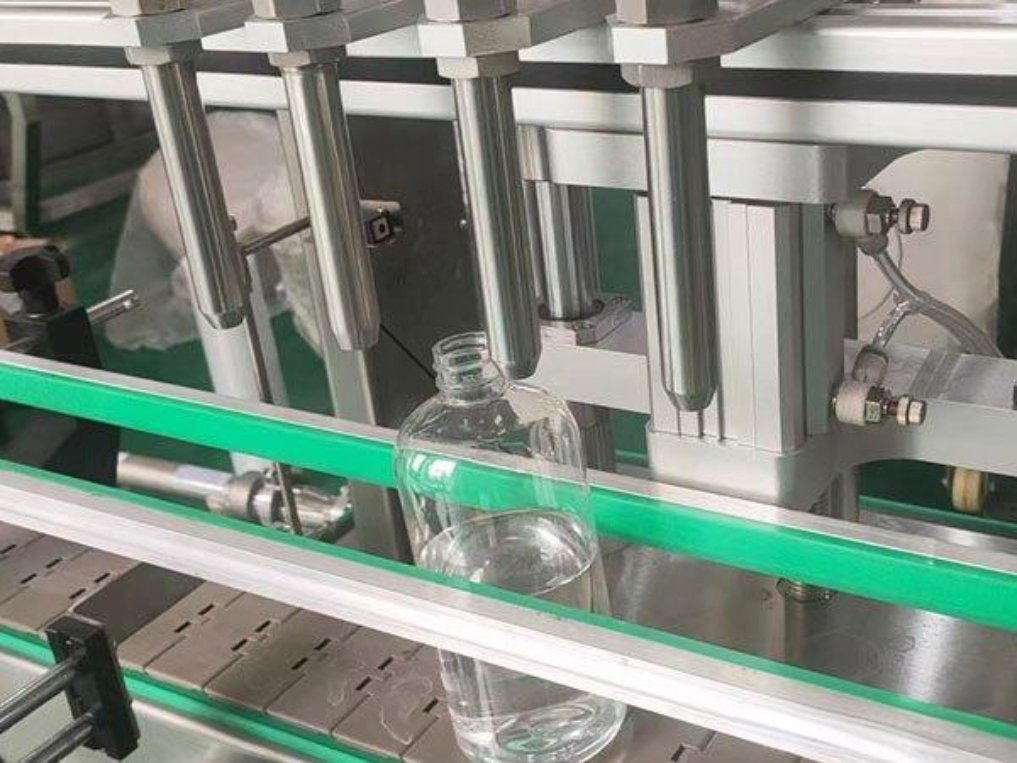
A wine bottle filling machine is specialized equipment designed to accurately dispense wine into bottles. Unlike general liquid fillers, these machines often incorporate unique features to handle the specific properties of wine, such as its susceptibility to oxidation, foaming, and precise volume requirements.
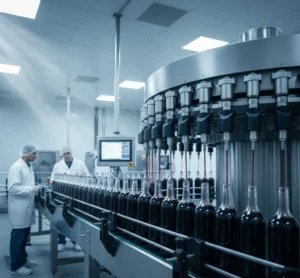
These machines can range from simple manual fillers for small vineyards to highly automated systems for large-scale wineries, all engineered to ensure consistent fill levels, minimize product loss, and maintain the wine’s quality during the bottling process.
Why Do We Need Wine Bottle Filling Machines?
The necessity of dedicated wine bottle filling machines stems from the unique challenges and demands of wine production:
- Preservation of Quality: Exposure to oxygen during filling can quickly degrade wine. Specialized fillers minimize oxygen pickup, preserving aromas, flavors, and color.
- Accuracy and Consistency: Consumers expect uniform fill levels. Machines ensure precise volume delivery for every bottle, critical for legal compliance and brand reputation.
- Efficiency and Speed: Manual filling is slow, prone to inconsistency, and labor-intensive. Automated systems drastically increase throughput, meeting market demands.
- Minimizing Product Loss: Precision filling reduces spillage and overfilling, leading to significant cost savings in valuable product.
- Foaming Control: Some wines can foam during filling. Wine-specific fillers employ techniques to reduce foaming, ensuring a clean fill and proper head space.
- Hygiene and Sterility: Stainless steel construction and easy-to-clean designs are crucial to prevent contamination and maintain the wine’s purity.
- Cost-Effectiveness: Automation reduces labor costs and increases efficiency, leading to a higher return on investment over time.
Types of Wine Bottle Filling Machines
The world of wine bottle fillers offers various technologies, each suited for different wine types, production volumes, and budget considerations.
1. Gravity Filling Machine
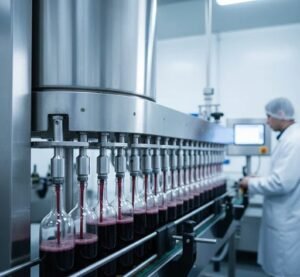
Gravity fillers use the force of gravity to dispense wine into bottles. The product flows from a supply tank positioned above the bottles through nozzles until it reaches a consistent level. These machines are ideal for still wines and non-foaming liquids. They are relatively simple, reliable, and cost-effective much like the high-efficiency systems discussed in our guide on choosing the right filling machine.
2. Vacuum Filling Machine
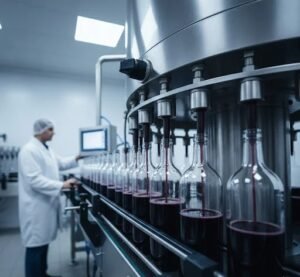
The vacuum filler works by creating a vacuum inside the bottle, which draws the wine from the supply tank. This method is excellent for still wines, especially those prone to foaming, as the vacuum reduces air agitation. Much like the precision required in a filling machine, this technology offers precise fill levels and minimal drip to ensure zero product waste.
3. Counter-Pressure (Isobaric) Filling Machine
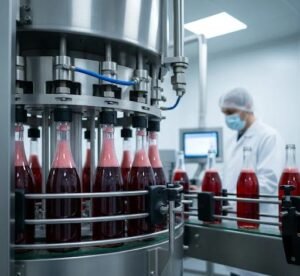
The counter-pressure filler is the industry standard for bottling sparkling wines and carbonated beverages. By pressurizing the bottle with $CO_2$ before the wine enters, it equalizes the pressure to prevent foaming and preserve the wine’s natural effervescence. This specialized technology ensures that every bottle maintains its bubbles and “pop” from the winery until it reaches a capping machine for the final, secure seal.
4. Volumetric Filling Machine
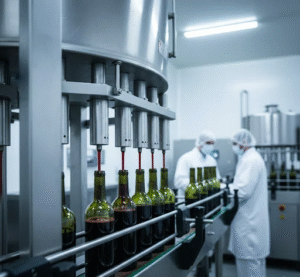
This is the preferred method for sparkling wines, champagne, and carbonated beverages. The bottle is first pressurized with an inert gas (like CO2) to match the pressure in the wine tank. This equalized pressure prevents foaming and CO2 loss, ensuring the wine’s effervescence is maintained during filling.
Volumetric fillers dispense a precise, measured volume of wine into each bottle, regardless of the bottle’s internal volume variations. This is achieved using pistons, pumps, or flow meters. While versatile, they are less common for wine unless combined with other technologies to prevent oxygen ingress. For a complete production line, these fillers are often paired with high-precision capping machines to ensure the bottle is sealed immediately after the volume is reached.
5. Monoblock Filling Machines
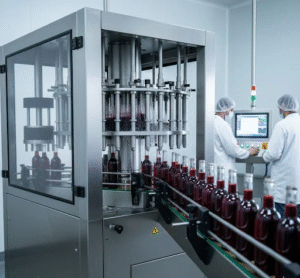
The Monoblock system integrates multiple stages of the bottling process – rinsing, filling, and capping – into a single, compact machine. This design reduces the footprint, minimizes bottle transfers (and thus breakage), and enhances efficiency for high-speed lines.
Wine Bottle Filling Machine Comparison Table
| Feature | Gravity Filler | Vacuum Filler | Counter-Pressure Filler | Volumetric Filler | Monoblock System |
| Best For | Still wines, low foam | Still wines, minimal oxygen pickup | Sparkling/Carbonated wines | Precise volume, various liquids | High-speed, integrated line |
| Oxygen Pickup | Moderate | Low | Very Low | Varies by design | Low (integrated process) |
| Foaming | Can be an issue | Reduced | Eliminated | Varies | Reduced |
| Fill Accuracy | Level-based (to neck) | Level-based (to neck) | Level-based (to neck) | Volume-based (mL) | High (integrated, consistent) |
| Complexity | Simple | Moderate | High | Moderate | High |
| Cost | Low | Medium | High | Medium | Very High |
| Speed | Medium to High | Medium to High | Medium to High | Medium to High | Very High |
| Application | Table wines, basic spirits | Premium still wines, oils | Sparkling wine, beer, soda | Viscous liquids, specialty wine | Large wineries, diverse lines |
Key Features to Look for in a Wine Bottle Filling Machine
Choosing the right wine bottle filling machine is a critical decision for any winery. Consider these essential features:
- Oxygen Reduction Technology: Features like inert gas sparging (nitrogen or argon) are vital to displace oxygen in the bottle before filling.
- Precision Fill Level/Volume Control: Ensures consistent product presentation and adherence to legal fill requirements.
- Gentle Handling of Wine: Mechanisms that prevent agitation and preserve the wine’s delicate structure.
- Sanitary Design & Materials: Food-grade stainless steel (e.g., 304 or 316L) is essential for hygiene, corrosion resistance, and easy cleaning.
- CIP (Clean-In-Place) Capability: Simplifies and automates the cleaning process, saving time and ensuring sanitation.
- Flexibility & Changeover: The ability to easily switch between different bottle sizes and shapes is crucial for diverse product lines.
- Speed and Automation: Match the machine’s output to your production volume. Options range from manual to fully automatic.
- Integration with Other Equipment: Compatibility with corkers, cappers, labelers, and rinsers for a complete bottling line.
- Ease of Use & Maintenance: Intuitive controls and accessible components reduce training time and operational downtime.
- Safety Features: Emergency stops, guarding, and pressure relief valves protect operators and prevent accidents.
Choosing the Right Wine Bottle Filling Machine
Selecting the ideal wine bottle filling machine depends on several factors unique to your winery:
- Type of Wine: Still, sparkling, rosé, fortified? This is the primary determinant for the filling technology (e.g., counter-pressure for sparkling).
- Production Volume: How many bottles do you need to fill per hour/day? This dictates the level of automation (manual, semi-automatic, or automatic).
- Bottle Types: Do you use standard Bordeaux, Burgundy, or specialty bottles? Consider the machine’s adaptability.
- Budget: Wine filling machines represent a significant investment. Balance features and automation with your financial plan.
- Space Availability: Automated lines can be extensive; ensure you have adequate floor space.
- Future Growth: Choose a machine that can scale with your winery’s anticipated expansion and product diversification.
- Support and Service: Evaluate the manufacturer’s after-sales support, spare parts availability, and technical assistance.
Frequently Asked Questions (FAQs)
1. What is the best type of filling machine for sparkling wine?For sparkling wine or champagne, a Counter-Pressure (Isobaric) Filling Machine is the best choice. It maintains the carbonation levels and prevents foaming by equalizing pressure between the bottle and the tank.
2. How do I prevent oxygen from ruining my wine during filling?To prevent oxidation, look for machines with vacuum-pre-evacuation or inert gas sparging with nitrogen or argon. These features remove air from the bottle before the wine enters, preserving the delicate flavors and aromas that define your craft.
3. Can one machine handle different wine bottle sizes?Yes, most modern wine fillers are adjustable. However, you may need “change parts” (like different starwheels or nozzles) to switch between a standard 750ml bottle and a larger Magnum or smaller split bottle.
4. Is a Gravity Filler good for high-end wines?Gravity fillers are reliable and cost-effective, but they can expose wine to more air than vacuum fillers. For high-end, oxygen-sensitive wines, a Vacuum Filling Machine is usually preferred for better quality control.
5. How often should a wine filling machine be cleaned?You should clean the machine after every production run. Using a machine with CIP (Clean-In-Place) capability makes this process much faster and ensures that no bacteria or leftover residue contaminates your next batch.
Conclusion
A wine bottle filling machine is more than just a piece of equipment; it’s a guardian of your wine’s quality and your brand’s reputation. From the delicate handling of still wines to the precise counter-pressure filling of sparkling varieties, the right machine ensures that every bottle captures the essence of your craft. By carefully considering your specific needs and the advanced technologies available, you can select a filler that brings efficiency, precision, and perfection to every pour.