In countless industries, achieving a smooth, consistent, and stable product isn’t just a preference—it’s a necessity. From creamy milk and smooth lotions to stable pharmaceutical suspensions, the secret often lies with the homogenizer machine. This powerful equipment transforms disparate ingredients into a unified, high-quality product by reducing particle size and dispersing them uniformly.
But what exactly is a homogenizer machine, and why is it so crucial for achieving that perfect blend and emulsion? Let’s delve into the world of homogenization.
What is a Homogenizer Machine?
A homogenizer machine is a specialized piece of equipment designed to break down particles or droplets in a liquid into extremely fine and uniform sizes, and then evenly distribute them throughout the entire mixture. The goal is to create a stable, consistent, and smooth product, preventing separation or sedimentation over time.
This process, known as homogenization, typically involves forcing the liquid at high pressure through a very narrow gap. The intense forces (shear, cavitation, and turbulence) within this gap cause the particles to micronize and disperse evenly.
Why Do We Need Homogenizer Machines?
The necessity of homogenizer machines stems from several critical advantages they offer across various industries:
- Improved Product Stability: Prevents ingredients from separating over time (e.g., cream rising in milk, oil separating from water in an emulsion).
- Enhanced Texture and Mouthfeel: Creates a smoother, richer, and more consistent texture in food products (e.g., dairy, sauces).
- Increased Shelf Life: By creating stable emulsions and suspensions, homogenizers can extend the shelf life of many products.
- Better Bioavailability: In pharmaceuticals, reducing particle size can improve the absorption rate of active ingredients in the body.
- Improved Appearance: Produces a more visually appealing, uniform product without visible lumps or uneven consistency.
- Reduced Ingredient Costs: Finer particle dispersion can sometimes allow for a reduction in expensive ingredients while maintaining product quality.
- Enhanced Flavor Release: In some food products, homogenization can improve the perception and intensity of flavors.
- Process Efficiency: Automates a complex mixing process, ensuring consistent results batch after batch.
Types of Homogenizer Machines
Homogenizer machines come in various designs, each suited for different applications, product viscosities, and required particle sizes.
1. High-Pressure Homogenizer
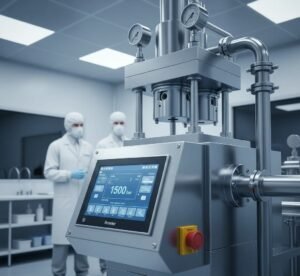
This is the most common type, operating by forcing product at high pressure (up to thousands of bar/psi) through a small, adjustable gap (homogenizing valve). The intense shear and cavitation forces reduce particle size significantly. They are widely used in dairy, food, pharmaceutical, and chemical industries.
2. Rotor-Stator Homogenizer (High-Shear Mixer)
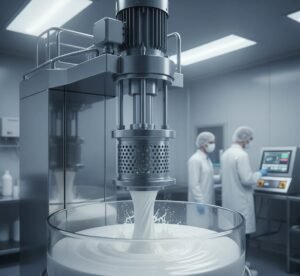
These machines use a rapidly rotating rotor within a stationary stator. The product is drawn into the center of the mixing head and expelled radially through small openings in the stator, subjecting it to intense mechanical and hydraulic shear. They are effective for initial dispersion, emulsification, and deagglomeration, often used as a pre-mixer for high-pressure homogenizers. Ensuring this perfect blend is the first step before the product is moved to final packaging and sealed by high-speed capping machines.
3. Ultrasonic Homogenizer
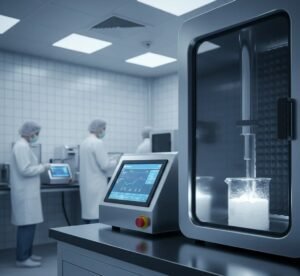
Ultrasonic homogenizers use high-frequency sound waves to create cavitation bubbles in the liquid. The violent collapse of these bubbles generates intense shear forces, disrupting particles and creating fine emulsions. They are particularly effective for small batches, laboratory use, and processes requiring precise control over particle size. Just as a wine bottle filling machine is used to preserve the delicate characteristics of a premium vintage, ultrasonic technology ensures that sensitive ingredients are blended without damage or excessive heat.
4. Inline Homogenizer
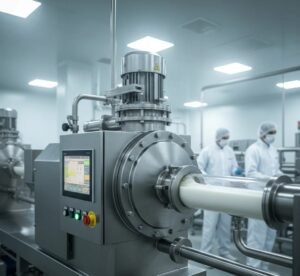
Unlike batch mixers, inline homogenizers are installed directly within a processing pipeline. The product continuously flows through the machine, undergoing homogenization before proceeding to the next stage of production. This offers high throughput and seamless integration into continuous processing lines, often seen in large-scale food and beverage operations, such as those utilizing an advanced wine bottle filling machine to maintain product consistency.
5. Laboratory Homogenizer
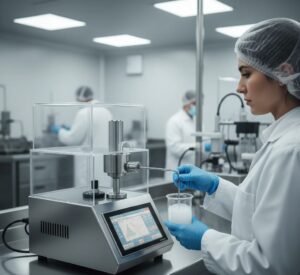
These are smaller, benchtop versions of industrial homogenizers, designed for R&D, pilot batches, and quality control. They allow scientists to experiment with different parameters and formulations before scaling up to larger production. This stage of testing is just as vital as selecting the right capsule filling machine to ensure that your final product formulation is perfectly optimized for automated packaging.
Homogenizer Machine Comparison Table
| Feature | High-Pressure Homogenizer | Rotor-Stator Homogenizer | Ultrasonic Homogenizer |
| Principle | High pressure shear through valve | High-speed mechanical shear | High frequency cavitation |
| Particle Size | Smallest (sub micron) | Medium (micron to sub micron) | Small (nanoparticles possible) |
| Viscosity | Low to Medium | Low to High | Low to Medium |
| Best For | Milk, Mix liposom | Initial dispersion, thick slurries | Nano-particles, cell disruption |
| Cost | High | Medium | Medium to High |
| Throughput | High | Medium to High | Low (batch) to Medium (flow-through) |
| Applications | Dairy, Pharma, Cosmetics | Food, Beauty products,Chemicals | Pharma, Biotech, Labs |
Key Features to Look for in a Homogenizer Machine
When investing in a homogenizer, several features are crucial for optimal performance and integration into your production line:
- Operating Pressure: Higher pressure generally means finer particle size reduction and better stability.
- Capacity/Throughput: Match the machine’s processing volume to your production needs (batch vs. continuous).
- Adjustable Gap/Valve: Allows for precise control over the homogenization process and particle size.
- Product Viscosity Handling: Ensure the machine can effectively process the specific viscosity of your product.
- Material of Construction: Food-grade stainless steel (316L for critical parts) is essential for hygiene, corrosion resistance, and compliance.
- Temperature Control: Homogenization generates heat; efficient cooling systems are vital for heat-sensitive products.
- CIP (Clean-In-Place) Capability: Automates cleaning, reducing downtime and ensuring sanitation, especially crucial for capsule filling machines that demand high sterility.
- Ease of Maintenance: Simple design for easy access to wear parts (e.g., plungers, valves).
- Noise Level: High-pressure homogenizers can be noisy; consider acoustic enclosures for operator comfort.
- Scalability: Can the lab-scale results be replicated on a production-scale machine?
- Automation & Controls: PLC-based controls with HMI screens offer precise parameter setting, monitoring, and recipe management.
- Compliance: Meets industry standards like FDA, GMP, CE, especially important when considering how this machinery might integrate with downstream equipment like capping machines.
Industries That Rely on Homogenizer Machines
Homogenizer machines are foundational across a vast array of sectors:
- Dairy Industry: Homogenizing milk, cream, yogurt, ice cream mixes for stability, texture, and taste.
- Food & Beverage: Sauces, dressings, fruit juices, purees, baby food, flavor emulsions.
- Pharmaceuticals: Producing stable emulsions, suspensions, liposomes, and cell disruption.
- Cosmetics & Personal Care: Lotions, creams, shampoos, conditioners, makeup, fragrances.
- Chemical Industry: Inks, paints, coatings, lubricants, adhesives, polymer emulsions.
- Biotechnology: Cell disruption, DNA/RNA extraction, vaccine production.
Choosing the Right Homogenizer Machine
Selecting the ideal homogenizer machine requires careful consideration of your specific application:
- Product Characteristics: What is the viscosity, particle size, and heat sensitivity of your product? Is it an emulsion, suspension, or dispersion?
- Desired Outcome: What final particle size, stability, and texture do you aim to achieve?
- Production Volume: Do you need a lab-scale batch unit, a pilot plant, or a continuous inline system for high throughput?
- Budget: Homogenizers vary significantly in cost based on pressure, capacity, and features.
- Hygiene & Sterility Requirements: Especially critical for food, dairy, and pharmaceutical applications.
- Energy Efficiency: Consider the operational costs associated with power consumption.
- Supplier Reputation & Support: Choose a reputable manufacturer offering strong after-sales service and spare parts.
Frequently Asked Questions (FAQs)
1. What is the main purpose of a homogenizer in dairy processing?
In dairy, the main purpose is to prevent the cream from separating and rising to the top of the milk. According toDairy Nutrition, this process breaks down fat globules into much smaller, uniformly dispersed particles, resulting in a stable, consistent product with a smoother mouthfeel and longer shelf life.
2. What’s the difference between a homogenizer and a mixer?
A mixer blends ingredients, but a homogenizer takes it a step further. It reduces the size of particles or droplets and evenly disperses them, creating a stable emulsion or suspension, which a standard mixer cannot achieve.
3. Can a homogenizer process very thick or viscous products?
While high-pressure homogenizers are generally better for lower viscosity, certain types like rotor-stator or specialized piston-pump designs can handle higher viscosity products. It’s crucial to match the machine’s capabilities to your product’s rheology.
4. Is homogenization always necessary?
No, it depends on the product and desired outcome. For products where stability, uniform texture, enhanced bioavailability, or a specific particle size is critical, homogenization is essential. For simple blends, a regular mixer might suffice.
5. How does a homogenizer improve shelf life?
By creating a more stable emulsion or suspension, a homogenizer prevents the physical separation of ingredients. This uniform dispersion can reduce the rate of chemical degradation or microbial growth in some products, thereby extending their shelf life.
Conclusion
The homogenizer machine stands as a testament to precision engineering, transforming raw ingredients into perfectly blended, stable, and aesthetically pleasing products. From the milk in your coffee to life-saving pharmaceuticals, its role is pivotal in achieving stable emulsions and particle size reduction. By understanding the different types, key features, and critical applications, businesses can select the ideal homogenizer to elevate product quality, enhance stability, and achieve consistent excellence in every batch.