Home » Box and Carton Labeling Machines: Top, Bottom or Side Labeler, Which Do You Need?

Box and Carton Labeling Machines: Top, Bottom or Side Labeler, Which Do You Need?

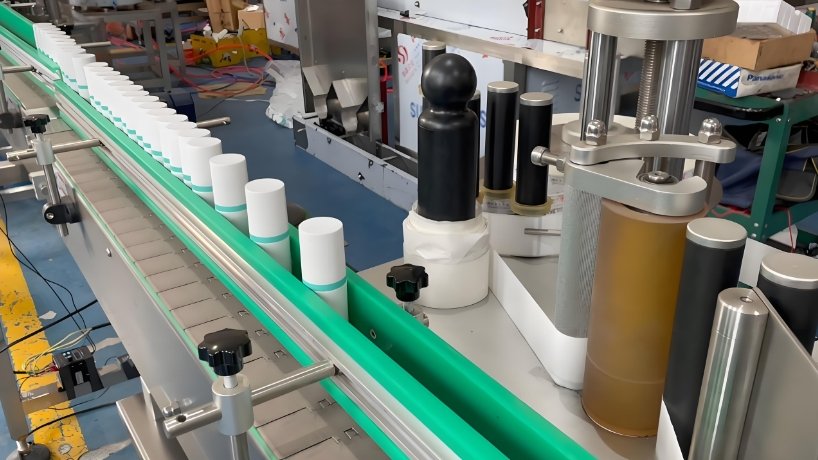
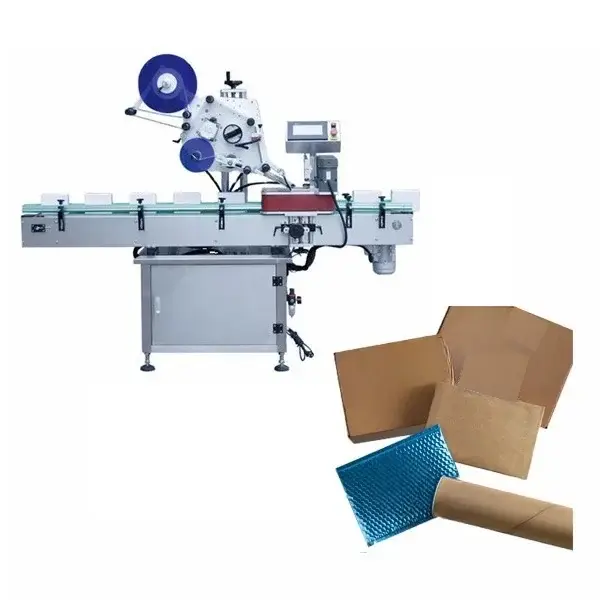
Box labeling machine applying a label to a carton on a conveyor

Key takeaways

  • The right box labeling machine depends first on where the label goes: top, bottom, one side, two sides, or around a corner.
  • A top and bottom labeling machine suits flat boxes, cups, and trays that need a label on the lid, the base, or both in one pass.
  • A single-side labeling machine suits square or flat-sided boxes that need one front label. A two-side labeler applies a front and back label in one pass.
  • Corrugated shipping cartons often need a corner-wrap or print-and-apply labeler, because the label carries variable data such as barcodes or addresses.
  • Plastic and printed boxes are smooth and easy to label. Corrugated board is rougher, so label stock and adhesive matter more.

What is a box labeling machine?

A box labeling machine is a labeler that applies self-adhesive labels to flat surfaces on boxes and cartons as they move along a conveyor. A sensor detects each box, and the label head peels a label from the roll and presses it on. Rollers or brushes then smooth it down.
Unlike a round bottle labeler, the product doesn’t need to roll. The machine labels the box as it passes, so it can handle square, rectangular and flat products that a bottle labeler can’t.

Box labeling machine types compared

Label position decides the machine. As Packaging World puts it, “the production line and the product’s packaging almost always determine what type of labeler is used” (Packaging World).
Labeler Type Where the Label Goes Best For
Top labeler Lid or top surface Lidded boxes, trays, pouches lying flat
Bottom labeler Base of the product Cups, tubs and boxes with a base label for barcodes or dates
Top and bottom labeler Top and base in one pass Food trays, cosmetic boxes, cups needing two labels
Single side labeler One flat side Square bottles, boxes and cartons with one front label
Two side labeler Front and back, or two opposite sides Flat bottles, tins and boxes with a front and back label
Corner-wrap labeler Across two faces of a corner Shipping cartons that must be readable from two sides
Print-and-apply labeler Any face, printed on demand Cartons with variable data, such as barcodes, batch codes and addresses

Top and bottom labeling machine

A top and bottom labeling machine has one label head above the conveyor and one below. It labels the lid, the base, or both, in a single pass. That makes it the usual choice for cups, trays, and flat boxes where the brand label goes on top, and the barcode or date goes underneath.

Single side labeling machine

A single side labeling machine applies one label to one flat face as the product passes. Guide rails keep each box square to the label head, so the label lands straight. It suits plastic boxes, cartons, and square containers that need just a front label.

Two side labeling machine

A two side labeling machine has a label head on each side of the conveyor. It applies a front and a back label in one pass, which saves running the product through twice. It suits tins, flat bottles, and boxes with an ingredients or compliance label on the back.

Corner-wrap and print-and-apply labelers

Shipping cartons are different. Their labels usually carry information that changes with every box, such as a barcode, batch code, or address. A print-and-apply labeler prints each label and applies it straight away. A corner-wrap version folds the label across two faces, so it can be scanned from either side on a conveyor or in a warehouse.

How to choose the right box labeling machine

Answer these five questions before you ask for a quote. The answers narrow the choice to one or two machine types.
  1. Where does the label go? Top, bottom, one side, two sides, or a corner. This is the deciding question.
  2. What is the box made of? Smooth plastic and printed paperboard take labels easily. Corrugated board is rough and may need a stronger adhesive or a larger label.
  3. Is the label the same on every box? Pre-printed labels suit standard labelers. Labels with changing data need a print-and-apply system, or a coder added to the labeler.
  4. How many boxes per minute? Match the labeler’s speed to the conveyor and the machines before and after it.
  5. How many box sizes do you run? If you change sizes often, choose a machine with quick guide-rail and label-head adjustment.
The Packaging World checklist also asks where the product will end up. Labels on chilled, frozen, or damp products need an adhesive made for those conditions (Packaging World).
Product Usual Labeler What to Watch
Plastic box (one face) Single side labeler Static and smooth surfaces can make labels slide. Use pressure rollers
Folding carton (retail) Single side or top labeler Printed coatings can affect adhesion. Test your label stock
Corrugated shipping carton Print-and-apply or corner-wrap Rough surface. Choose a strong adhesive and press the label firmly
Tin can (front and back) Two side labeler Curved tin edges. Keep labels on the flat area
Cup or tub Top and bottom labeler Tapered cups can tip. Use a stable conveyor and side guides
Food tray Top labeler or top and bottom labeler Condensation on chilled trays. Use a chill-rated adhesive

If your line also fills and caps round bottles, see the round bottle labeling machine and our full labeling machine range

Common box labeling problems and fixes

Problem Likely Cause Fix
Label skewed or crooked Box not square to the label head Adjust the guide rails so the box runs straight
Label in the wrong place Sensor or label-head position Re-teach the product sensor and adjust the label head height
Wrinkles or bubbles Speeds not matched, or weak pressure Match conveyor and label speed, and check the pressure roller
Label lifts on corrugated board Adhesive too weak for the surface Switch to a stronger adhesive or a heavier label stock
Missing or double labels Label gap sensor not set for the roll Re-teach the gap sensor whenever you change the label roll

For more fixes, see our labeling machine troubleshooting guide.

Frequently asked questions

What is the best labeling machine for boxes?

It depends on where the label goes. A single side labeler suits one front label, a top and bottom labeler suits lid and base labels, and a two side labeler suits front and back labels. Shipping cartons with barcodes usually need a print-and-apply labeler.

Can one machine label the top and bottom of a box?

Yes. A top and bottom labeling machine has a label head above and below the conveyor, so it can label the lid, the base, or both in one pass.

Can a bottle labeling machine label boxes?

Usually not. A round bottle labeler rolls the product to wrap the label around it, so a box won’t work. Boxes need a flat-surface labeler, such as a side, top or bottom labeler.

What labeler do I need for corrugated shipping cartons?

Most shipping cartons need a print-and-apply labeler, because each label carries changing data such as a barcode or address. A corner-wrap version lets the label be scanned from two sides.

Do I need a special adhesive for corrugated boxes?

Often, yes. Corrugated board is rougher and more absorbent than plastic or coated cartons. Test your label stock on the actual boxes, and use a stronger adhesive if labels lift.

Next step

Tell us your box size, material, label position and target speed. A Foshan Popper engineer will recommend the right box labeling machine and send you a quote.

Request a box labeling machine quote

Leave a Comment

Your email address will not be published. Required fields are marked *

Scroll to Top