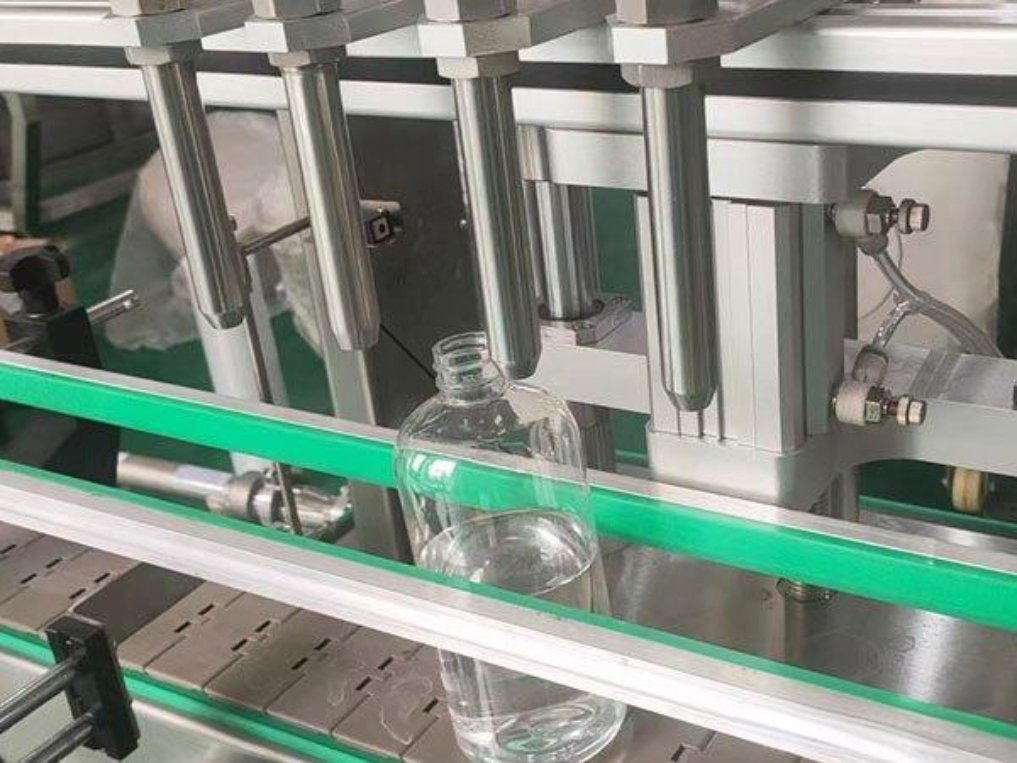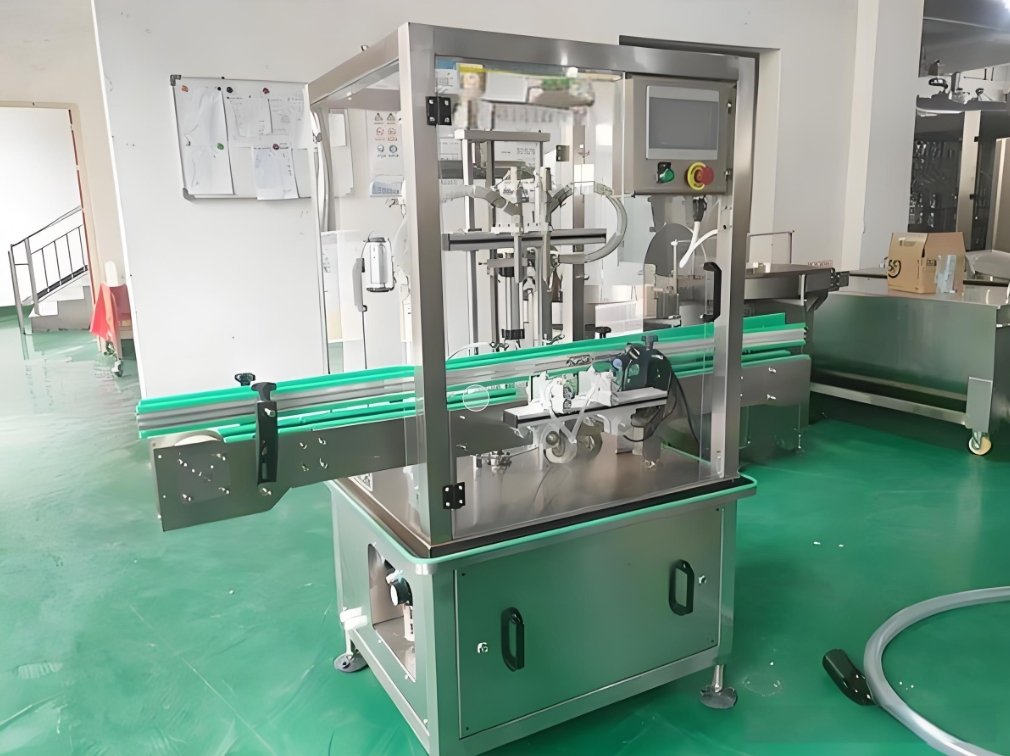

Choosing the right automatic liquid filling machine manufacturer is one of the highest-stakes decisions a packaging buyer makes. After all, the machine you select sets your line speed, your fill accuracy, your compliance position, and your cost per unit for the next seven to ten years. Get it right, and the equipment quietly pays for itself. Get it wrong, however, and you inherit downtime, product waste, and a supplier who stops answering emails once the wire transfer clears.
This guide therefore walks through what a real manufacturer does, how filling technologies differ, which machine fits your industry, what these systems cost in 2025 and 2026, and how to vet a supplier before you commit. Specifically, it targets buyers in food and beverage, cosmetics, pharmaceuticals, and chemicals who compare options before they request a formal quote.
Manufacturer vs. Supplier: Why the Distinction Matters
People often use the terms interchangeably, yet they do not mean the same thing, and the difference affects your price, your lead time, and your after-sales support.
A manufacturer owns the factory, the engineering team, and the assembly line. So when a fill nozzle needs redesigning for your viscosity, or a change part needs machining for your bottle neck, the work happens in-house. As a result, you deal directly with the people who build the machine.
A supplier or trading company, by contrast, resells machines that others build. That does not automatically create a problem. However, it adds a layer between you and the engineering, which usually means slower troubleshooting, thinner spare-parts availability, and less room to customize.
When you evaluate a partner, therefore, ask directly: are you a factory or a trading company? A genuine manufacturer will happily show you the workshop, name the engineers, and produce its own certification documents instead of forwarding someone else’s. Because this is the first and cheapest due-diligence question you can ask, it filters out a surprising number of listings.
Foshan Popper, for example, builds its automatic liquid filling machines in-house at its Foshan facility, which is what allows the change-part and viscosity customization that this guide covers below.
Filling Machine Types and Technologies Compared
There is no single best filling machine. Instead, the right choice depends on your product’s viscosity, your accuracy requirement, and your hygiene standard. Together, the five core technologies below cover the vast majority of production lines.
| Technology | How It Works | Best Product Fit | Accuracy | Common Industries |
| Gravity | Product flows in under its own weight through timed valves | Thin, water-based liquids: toners, floral water, thin beverages | Moderate | Beverage, low-viscosity cosmetics |
| Overflow | Fills every container to the same visible level, recirculating excess | Clear liquids where fill-level appearance matters | Level-consistent | Beverage, clear cosmetics, chemicals |
| Piston (volumetric) | A piston draws a set volume, then dispenses it | Medium to high viscosity: creams, lotions, gels, sauces, oils | High | Cosmetics, food, chemicals |
| Peristaltic pump | Fluid moves through flexible tubing; product touches only the tube | Shear-sensitive, sterile, or high-value liquids | Highest | Pharmaceutical, lab-grade, essential oils |
| Auger (powder) | A rotating screw meters dry product by turn count | Powders and granules: flour, spices, protein, milk powder | High (with checkweigh) | Food, nutraceutical, pharmaceutical |
A few practical notes rarely appear on catalog spec sheets. First, piston fillers hold accuracy across a wide viscosity range, which is why they anchor the cosmetics and sauce world. Peristaltic systems, meanwhile, stay the most precise and the easiest to keep sterile, because cleaning often means just a tube swap. That is exactly why pharmaceutical and lab lines favor them. For a deeper side-by-side of the liquid options, see our breakdown on comparing liquid filling machine types.
If your product runs thick, such as ketchup, honey, hair gel, or heavy sauce, the technology choice narrows quickly toward piston or lobe-pump systems. Our notes on viscous liquid filling best practices cover these trade-offs in more detail.
Matching the Machine to Your Industry
Filling Machine for Cosmetics
A filling machine for cosmetics must handle a wide viscosity spread, from thin toners to thick creams and pastes, often on the same line and often into premium containers where spillage costs you dearly. Piston fillers dominate here, since they meter medium and high viscosity products with tight repeatability. Manufacturers also use vacuum filling when a product must resist oxidation, such as a serum. For small, high-value fills like essential oils and dropper bottles, meanwhile, peristaltic pumps work best.
Two standards matter in this sector. First, contact parts should use 316L stainless steel. Second, the machine’s hygienic design should support ISO 22716, the cosmetic Good Manufacturing Practice standard. On quality machines, servo-driven volumetric dosing holds fill accuracy to roughly plus or minus 0.5 percent, which protects your margin on every unit from 5 ml samples up to larger tubes and jars.
Filling Machine for the Pharmaceutical Industry
A filling machine for the pharmaceutical industry operates under the strictest rules of any sector. Here, most lines prefer peristaltic filling, because the product only ever touches sterile, replaceable tubing, which supports contamination control and clean validation. Reputable builders therefore design these machines for cGMP environments, with 316L contact surfaces, documented material traceability, and support for installation, operational, and performance qualification (IQ/OQ/PQ).
Compliance is not a marketing checkbox in this space. Depending on your market, you may face FDA expectations, EU GMP, and 21 CFR-style documentation requirements. So before you shortlist any machine for pharmaceutical use, read our guide on pharmaceutical filling machines and regulatory standards, which explains what documentation to demand from the manufacturer.
Powder Filling Machine Manufacturer Considerations
If you source from a powder filling machine manufacturer, the technology runs on an auger rather than a pump. A rotating screw meters powder by the number of turns. Moreover, accuracy improves sharply when the machine includes an integrated checkweigher that fills to real-time weight and rejects out-of-spec units. Look for food-grade stainless hoppers with polished inner walls, since a smooth wall stops fine powder from bridging or sticking, and choose servo-driven augers for consistent dosing of flour, spices, ground coffee, protein, or milk powder.
Foshan Popper’s powder filling machine range, for instance, covers semi-automatic through automatic linear and rotary formats. For selection help, our guide to choosing the right powder filling machine walks through screw sizing and accuracy levels.
Bottles, Sauces, and Full Lines
Most liquid producers standardize around a bottle filling machine as the core of the line, and then add capping and labeling around it. For thicker food products, however, a dedicated sauce filling machine with piston or lobe-pump metering handles particulates and high viscosity that a gravity filler cannot. On a fully automatic line, finally, the filler connects to capping machines, labelers, and accumulation tables, so containers move from infeed to finished package without operator intervention during the run.
How Much Does an Automatic Liquid Filling Machine Cost?
Price depends on automation level, number of filling heads, product viscosity, and integration. The ranges below give indicative market figures that we compiled from public 2025 and 2026 supplier listings. They serve as a planning reference, not a quote, since actual FOB pricing depends on your exact specification.
| Machine Configuration | Automation Level | Typical Output | Indicative Price (USD, FOB) | Best For |
| Manual liquid filler | Manual | 20–50 containers/hr | $1,000 – $5,000 | Startups, labs, craft batches |
| Semi-automatic liquid filler | Semi-auto | 50–200 containers/hr | $2,000 – $10,000 | Small batch, single-SKU runs |
| Automatic benchtop / tabletop | Fully auto (compact) | Moderate | $8,000 – $20,000 | Growing brands, moderate volume |
| Industrial inline liquid line | Fully auto (multi-head) | Thousands/hr | $20,000 – $100,000+ | High-volume, multi-shift |
| Cosmetic cream / tube fill-seal | Semi to fully auto | 30–100 units/min | $19,500 – $90,000 | Creams, lotions, tubes, serums |
| Powder auger filler | Semi to fully auto | Varies by model | $2,000 – $60,000 (indicative) | Powders, spices, nutraceuticals |
| Pharmaceutical fill (peristaltic, cGMP) | Fully auto | Varies by format | $25,000 – $120,000+ (indicative) | Sterile liquids, vials, ampoules |
| Pricing methodology: We drew these figures from public listings and buyer guides published in 2025 and 2026 (Oden Machinery, Accutek, Orshang, E-PAK, HIJ, ZONESUN, and Made-in-China listings). We flagged the powder and pharmaceutical ranges as indicative, because published FOB pricing stays less standardized in those categories. [PENDING FROM JIMMY] Replace the indicative ranges with Foshan Popper’s actual model names, output rates, and FOB price bands for capsule, liquid, and powder machines, so this table reflects real quotable products rather than market estimates. |
One caution applies across every category. Be wary of ultra-low-cost imports priced well under the ranges above. Typically, they ship with poor-quality components, no spare-parts pipeline, and no local support, so the savings evaporate the first time the line goes down. For a growing business, therefore, a mid-range machine usually delivers the best value.
Choosing a Bottle Filling Machine Supplier in China
China supplies more packaging machinery than any other country, and for good reason: strong engineering, competitive pricing, and deep manufacturing capacity. Still, the quality range runs wide, so due diligence separates a good purchase from an expensive mistake. Use the checklist below whenever you evaluate a bottle filling machine supplier in China.
Certifications and Market Compliance
First, verify certifications, and then verify that they are real. Ask for ISO 9001 (quality management) and CE marking. Next, confirm that the certificate stays genuine and current through an independent registry such as IAF Cert Search or the issuing registrar’s directory, and check that its scope actually matches the machine you buy. Because fraudulent or expired paperwork turns up more often than newcomers expect, a quick verification always pays off.
Also confirm that the certification fits your market. CE marking, for example, carries no legal standing in North America, where UL, CSA, or another NRTL certification governs electrical safety. So if you import into the US or Canada, CE alone will not clear you for sale. Check your national standards body first, rather than assume that any single mark covers you.
Lead Time, Trade Terms, and After-Sales
Next, insist on evidence rather than claims. Request factory photos, a live video of the machine running your product type, and at least two customer references you can contact. A confident manufacturer provides these without friction.
Then pin down lead time and logistics. Production typically runs four to eight weeks, and longer when a machine needs new molds or deep customization, though it can drop to around 15 working days in the off-season. In addition, allow roughly 20 to 40 days for sea freight, plus customs clearance. Because factories close for Chinese New Year, always build in a buffer around that period.
Finally, settle trade terms and after-sales in writing. Agree on FOB, CIF, or DDP terms up front. Also confirm warranty length (avoid anything under one year), spare-parts availability, remote commissioning support, and whether the supplier sends an engineer for installation. Before you order, keep a list of critical spare parts and confirm their dispatch time.
Pre-Order Buyer’s Checklist
Before you sign, confirm that you can answer yes to each point below:
- You know your daily container count, and you have matched it to the right automation level.
- You have confirmed container type, neck diameter, height range, and material, and you have asked which change parts the price includes.
- The filling technology matches your product’s viscosity and hygiene requirement.
- You have verified the machine’s certifications as current and valid for your target market.
- You hold the supplier’s spare-parts list, warranty terms, and installation support in writing.
- You have a written FOB or CIF quote, a lead time, and a payment-protection method.
- You have contacted at least one reference customer.
Frequently Asked Questions
What is the difference between a filling machine manufacturer and a supplier?
A manufacturer owns the factory and the engineering team, and it builds the machine directly, so you get faster support and real customization. A supplier or trading company, by contrast, resells machines that others build, which adds a layer between you and the engineering. Always ask, therefore, whether you deal with a factory or a trader.
How much does an automatic liquid filling machine cost?
Manual units generally run about $1,000 to $5,000, while semi-automatic machines run roughly $2,000 to $10,000. Compact automatic machines sit around $8,000 to $20,000, and full industrial inline lines start at $20,000 and climb well past $100,000. Ultimately, speed, number of heads, viscosity, and integration drive the final price.
Which filling technology works best for cosmetics?
For most cosmetics, piston (volumetric) filling works best, because it handles medium to high viscosity products such as creams and lotions with high accuracy. Manufacturers use vacuum filling for oxidation-sensitive serums, whereas peristaltic pumps suit small, high-value fills.
What certifications should a filling machine have?
Look first for ISO 9001 (quality management) and CE marking (European safety). For cosmetics, hygienic design that supports ISO 22716 matters, whereas pharmaceuticals also demand cGMP-ready design and IQ/OQ/PQ documentation. In every case, verify the certificates independently, and confirm that they cover your market.
How long does delivery take from a China supplier?
Generally, plan for four to eight weeks of production, plus roughly 20 to 40 days of sea freight, plus customs clearance. Machines that need custom molds take longer. Because factories close for Chinese New Year, build in extra buffer time around that holiday.
Can one machine fill both liquids and powders?
Usually not. Liquids rely on pump, piston, gravity, or overflow systems, whereas powders need auger (screw) metering. Some flexible lines accept interchangeable heads; however, most producers run dedicated liquid and powder machines for the best accuracy.
About the Manufacturer
Foshan Popper manufactures filling and packaging machinery in Foshan, China, and it produces liquid, bottle, powder, capsule, and sauce filling machines alongside capping, labeling, and packaging equipment.