
A volumetric filling machine is one of the most widely used packaging systems across the food, beverage, pharmaceutical, and chemical industries. It dispenses a pre-set volume of product into containers, whether bottles, pouches, jars, or tubes, with consistent accuracy on every cycle. If you are exploring filling solutions for your production line, understanding how volumetric filling works is the first step toward choosing the right equipment.
This guide covers everything you need to know: how volumetric fillers operate, the different types available, what industries rely on them, and how to select the best system for your specific application. As a filling machine manufacturer with over a decade of hands-on experience, we have built this resource from real production knowledge to help you make a confident, informed decision.
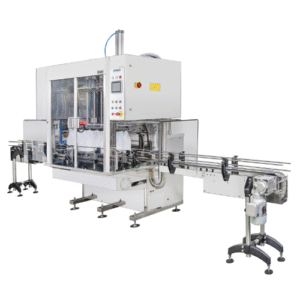
What Is a Volumetric Filling Machine?
A volumetric filling machine is a packaging device that measures and dispenses a fixed volume of product into containers. Rather than weighing the product (as a gravimetric system would), it relies on volume-based measurement to achieve a consistent fill every time.
In simple terms, a volumetric filling machine dispenses a pre-measured volume of liquid, paste, powder, or granular product into containers. It uses mechanical displacement, typically through pistons, pumps, or gravity flow, to deliver the same volume per cycle. This ensures uniform fills across high-speed production lines.
The term “volumetric” simply means “relating to the measurement of volume.” In the context of filling equipment, it means the system calculates how much product goes into each container based on volume, not weight.
How Does a Volumetric Filling Machine Work?
The core principle behind every volumetric filling system is straightforward: a fixed cavity or chamber is filled with product, and then that exact volume is pushed into the container.
Here is a step-by-step breakdown of the typical filling cycle:
- Product Intake: The product flows from a hopper or supply tank into a metering chamber such as a cylinder, cup, or cavity.
- Volume Measurement: The chamber fills to a pre-set level that defines the exact volume to be dispensed.
- Dispensing: A piston, pump, or gravity mechanism pushes the measured product through a nozzle into the waiting container.
- Reset: The piston retracts or the cup resets, drawing new product into the chamber and preparing for the next cycle.
The fill volume is adjusted by changing the stroke length, cup size, or pump settings depending on the machine type.
From our experience manufacturing and calibrating these machines on the factory floor, the most critical factor for accuracy is the precision of the metering chamber. Even a small deviation in machining can affect fill consistency over thousands of cycles. That is why we test every unit under real production conditions before it leaves our facility.
Types of Volumetric Filling Machines
Volumetric fillers come in several configurations, each designed for specific product types and production demands. Below are the most common types.
Volumetric Piston Filling Machine
The volumetric piston filler is the most popular type across industries. It uses a piston inside a cylinder to draw in and dispense a precise volume of product.
Best for: Thick liquids, pastes, creams, sauces, gels, and viscous products.
A piston volumetric filler works exceptionally well with products that do not flow freely. The piston provides the mechanical force needed to handle high-viscosity materials, making it a top choice for food processing and cosmetics packaging.
Key advantages of piston volumetric fillers:
- High accuracy, typically plus or minus 0.5% or better
- Handles thin to very thick products without nozzle clogging
- Easy to adjust fill volume by changing piston stroke length
- Available in both semi-automatic and fully automatic models
We build our piston fillers with food-grade stainless steel (SS304 and SS316L) and precision-machined cylinders. This combination ensures long-term durability and fill accuracy that holds up across millions of cycles.
Volumetric Liquid Filling Machine
A volumetric liquid filling machine is engineered specifically for free-flowing liquids like water, juices, oils, solvents, and cleaning chemicals. These systems often use overflow, gravity, or pump-based mechanisms to achieve accurate volume fills.
Common sub-types include:
- Gravity fillers that use the natural force of gravity to fill containers to a set volume
- Pump fillers that use gear pumps or peristaltic pumps for precise flow control
- Overflow fillers that fill to a visual level rather than strict volume, though still volumetric in principle
Both the automatic volumetric liquid filling machine and the semi-automatic volumetric liquid filling machine are widely available. Automatic models integrate with conveyors, cappers, and labelers for full-line automation. Semi-automatic variants are ideal for startups, small batches, or R&D labs.
If you are filling thin liquids at high speed, an automatic volumetric liquid filling machine with servo-driven pumps will give you the best combination of speed and precision. Our engineering team can help you determine the right configuration based on your product viscosity and target output.
Volumetric Powder Filling Machine
A volumetric powder filling machine dispenses dry powders, granules, and particulate products using a rotating auger screw or volumetric cup system.
Best for: Spices, flour, protein powders, pharmaceutical powders, coffee, detergents, and similar free-flowing or semi-free-flowing dry products.
The auger screw turns a set number of rotations to push a defined volume of powder through the fill tube. Alternatively, cup-based systems use interchangeable measuring cups to set the fill amount. One important factor we always advise our clients on is powder density variation. If your powder compacts or aerates during handling, you may need a combination of volumetric and check-weigh systems for optimal accuracy.
Volumetric Bottle Filling Machine
A volumetric bottle filler is any volumetric system configured specifically for filling bottles, whether glass, plastic (PET, HDPE), or metal. These machines often feature:
- Adjustable nozzle heights for different bottle sizes
- Drip-free nozzle designs for clean operation
- Quick-change parts for fast product or size changeovers
- Integration with capping, labeling, and sealing equipment
Whether you are running a craft beverage operation or a large-scale bottling plant, a volumetric bottle filling machine scales to match your throughput needs. We supply bottle fillers ranging from 2-head semi-automatic units to 12-head rotary systems capable of filling over 200 bottles per minute.
Semi-Automatic Volumetric Filling Machine
A semi-automatic volumetric filling machine requires some manual involvement, usually placing the container under the nozzle and triggering the fill cycle with a foot pedal or push button. The filling itself is automated and precise.
Ideal for:
- Small and medium businesses scaling up production
- Contract packers handling multiple SKUs
- Startup operations with limited budgets
- R&D and pilot production runs
Semi-automatic systems typically cost significantly less than fully automatic lines while still delivering the same volumetric accuracy. Many of our clients start with a semi-automatic unit and upgrade to a fully automatic line as their production volume grows. We design our machines with that upgrade path in mind.
Volumetric Filling vs. Gravimetric Filling: What Is the Difference?
This is one of the most frequently asked questions in the packaging industry. Here is a clear comparison:
Feature | Volumetric Filling | Gravimetric Filling |
Measurement Basis | Volume (ml, cc, liters) | Weight (grams, kg, ounces) |
Speed | Generally faster | Slightly slower due to weigh-check |
Accuracy | High (plus or minus 0.5 to 1%) | Very high (plus or minus 0.1 to 0.5%) |
Best For | Consistent-density products | Variable-density products |
Cost | Lower entry cost | Higher equipment cost |
Simplicity | Simpler mechanics | More complex with load cells and software |
When to choose volumetric: Your product has consistent density, you need high speed, and your accuracy tolerance is plus or minus 0.5% or wider.
When to choose gravimetric: Product density varies batch to batch, you need to fill by net weight for regulatory compliance, or ultra-precision is critical.
In many production environments, volumetric filling is the preferred method because it is faster, simpler, and more cost-effective for products with stable density. Our team can evaluate your product samples and recommend the right filling method before you invest in equipment.
Industries That Use Volumetric Filling Machines
Volumetric fillers are found in nearly every sector of manufacturing that involves filling containers. Key industries include:
- Food and Beverage: Sauces, dressings, oils, juices, dairy, honey, jams, syrups
- Pharmaceuticals: Syrups, suspensions, creams, ointments, capsule filling
- Cosmetics and Personal Care: Lotions, shampoos, serums, creams, gels
- Chemicals and Industrial: Lubricants, solvents, adhesives, paints, cleaning agents
- Agriculture: Pesticides, herbicides, liquid fertilizers
- Cannabis and CBD: Oils, tinctures, topicals requiring high-accuracy fills
We have supplied filling machines to manufacturers in over 20 countries across all of these industries. Each sector has unique requirements, from explosion-proof ratings for chemical plants to FDA-compliant sanitary designs for food and pharma. Our engineering team tailors each machine to meet the specific standards your industry demands.
Benefits of Using a Volumetric Filling System
Why do manufacturers overwhelmingly choose volumetric filling? Here are the core advantages:
- Consistent, repeatable fills that reduce product giveaway and protect your margins
- High throughput with automated systems filling hundreds of containers per minute
- Versatility to handle liquids, pastes, creams, and even some powders on the same platform
- Easy changeovers with quick adjustment between different fill volumes and container sizes
- Lower cost of ownership thanks to simpler mechanics that require less maintenance and produce less downtime
- Regulatory compliance with consistent fills that help meet labeling and net-content regulations
When you partner with us, you also get 24/7 technical support, on-site installation and training, and a long-term service commitment that keeps your filling line running at peak performance.
How Much Does a Volumetric Filling Machine Cost?
Volumetric filling machine price varies widely depending on automation level, number of fill heads, materials of construction, and the product being filled.
General price ranges:
- Tabletop and manual fillers: $500 to $3,000
- Semi-automatic volumetric filling machines: $3,000 to $15,000
- Automatic single-head fillers: $15,000 to $40,000
- Multi-head automatic filling lines: $40,000 to $250,000+
- Fully integrated high-speed rotary systems: $250,000 to $1,000,000+
Factors that increase cost include sanitary (food or pharma-grade) construction, explosion-proof ratings, CIP (clean-in-place) capability, servo-driven precision, and custom integration requirements.
We offer competitive pricing with direct-from-factory rates and no middlemen. Whether you need a single semi-automatic filler or a complete turnkey packaging line, our team provides a detailed quotation tailored to your exact requirements. Contact us for a free, no-obligation quote.
How to Choose the Right Volumetric Filler
Selecting the right machine depends on several factors. Consider these questions before making a decision:
- What is your product?
Consider whether it is a liquid, paste, powder, or granular material and what viscosity it has. - What container are you filling?
Bottles, jars, pouches, tubes, or pails each require different nozzle and conveyor setups. - What fill volume do you need?
Ranges can go from 1 ml up to 20 liters, and your accuracy tolerance matters. - What is your production speed target?
Measured in containers per minute, this determines how many fill heads you need. - What is your budget?
Semi-automatic machines offer the same accuracy at a lower investment. - Do you need sanitary design?
Food-grade, pharma-grade, and industrial ratings each require different materials and certifications. - What future growth do you expect?
Choose a system that can scale with your production needs.
Working with an experienced filling equipment manufacturer is the fastest way to match your requirements to the right machine configuration. Our team walks every client through this selection process, often starting with a free product trial on our machines. Send us a sample and we will test it on the right filler for your application.
Volumetric Filling Method: How It Compares to Other Filling Techniques
The volumetric filling method is just one of several approaches used in the packaging industry. Here is how it compares to the alternatives:
- Volumetric Filling measures by volume and is fast, simple, and cost-effective
- Gravimetric (Net Weight) Filling measures by weight and offers the highest accuracy for variable-density products
- Constant Level Filling fills each container to the same visual level and is ideal for transparent containers where shelf appearance matters
- Time-Pressure Filling uses timed flow at constant pressure and works well for thin, consistent liquids
Each method has trade-offs. Volumetric fills strike the best balance between speed, accuracy, and cost for the majority of liquid and paste filling applications. If you are unsure which method suits your product, our engineers are available to evaluate your requirements and recommend the optimal solution.
Maintenance Tips for Volumetric Filling Equipment
Proper maintenance extends the life of your equipment and prevents costly downtime. Based on our years of building and servicing these machines, here is the maintenance schedule we recommend to all our clients:
- Daily: Wipe down nozzles, check for leaks, inspect seals and O-rings
- Weekly: Lubricate moving parts, verify fill accuracy with spot checks
- Monthly: Deep clean product contact parts, inspect piston wear, calibrate sensors
- Quarterly: Replace wear parts such as seals, gaskets, and O-rings, and check pneumatic and electrical connections
- Annually: Full machine audit, servo and motor inspection, software updates
Our after-sales team provides complete maintenance support, including on-site visits, spare part supply, and remote troubleshooting. We keep essential components in stock to minimize your wait times and keep your production running smoothly.
FAQ: Volumetric Filling Machine Questions Answered
Q: What is volumetric filling?
Volumetric filling is a packaging method that dispenses a pre-set volume of product into a container. It measures by volume (milliliters, liters, cubic centimeters) rather than by weight, using pistons, pumps, augers, or gravity-flow systems to achieve consistent fills.
Q: Does volume filling work?
Yes, volumetric filling is one of the most reliable and widely used filling methods in the packaging industry. It works best for products with consistent density, delivering accuracy levels of plus or minus 0.5% or better in most applications.
Q: What are the merits and demerits of volumetric filling?
Merits: High speed, consistent fills, lower equipment cost, mechanical simplicity, versatility across liquids and pastes, and easy volume adjustment.
Demerits: Less accurate than gravimetric filling for variable-density products, fill accuracy depends on product consistency, and may not satisfy net-weight regulations when density fluctuates between batches.
Q: What is a volumetric machine?
A volumetric machine is any device that measures and dispenses material based on volume. In the packaging context, it refers to a filling machine that uses volume-based measurement through pistons, cups, pumps, or auger screws to deliver a consistent amount of product into each container.
Q: What does volumetric mean?
“Volumetric” means “relating to the measurement of volume.” In filling technology, it describes any system that determines the quantity of product dispensed by measuring its volume rather than its weight, time, or level.
Q: How much does an automatic capsule filling machine cost?
Automatic capsule filling machines are a specialized type of volumetric equipment used in the pharmaceutical industry. Entry-level automatic capsule fillers start around $10,000 to $30,000, while high-speed pharmaceutical-grade models can range from $50,000 to over $500,000 depending on output capacity and compliance certifications.
Q: What is the best filler for older skin?
This question relates to dermal fillers in the cosmetics industry, not packaging equipment. However, the cosmetics manufacturers who produce those dermal filler products often rely on volumetric filling machines for precise, sterile dispensing of serums, creams, and injectable-grade products into their final packaging.
Q: What are the 4 types of fillings?
The four primary filling methods in packaging are: (1) volumetric filling, which measures by volume, (2) gravimetric or net-weight filling, which measures by weight, (3) constant-level filling, which fills to a visual liquid level, and (4) time-pressure filling, which uses timed flow at constant pressure. Each method suits different product types and production requirements.
Q: How long should a volume fill take?
Fill time depends on the product viscosity, fill volume, and machine type. A thin liquid like water may fill a 500 ml bottle in under 2 seconds. A thick paste or cream could take 3 to 8 seconds for the same volume. High-speed rotary systems fill hundreds of containers per minute by running multiple fill heads simultaneously.
Q: What is volume filling?
Volume filling, also known as volumetric filling, is a method of dispensing product based on a measured volume rather than weight. It is one of the most common filling techniques used in food, beverage, pharmaceutical, cosmetics, and chemical manufacturing.
Q: What is the difference between gravimetric filling and volumetric filling?
Gravimetric filling measures product by weight using load cells or scales, while volumetric filling measures by volume using pistons, cups, or pumps. Gravimetric is more accurate for products with variable density but is slower and more expensive. Volumetric is faster, simpler, and more cost-effective for products with consistent density.
Q: How does the filling machine work?
A filling machine works by transferring a measured quantity of product from a supply tank or hopper into a container. Volumetric models use a metering chamber such as a piston cylinder, measuring cup, or pump cavity that captures a set volume of product and then dispenses it through a nozzle into the container. The cycle repeats automatically or semi-automatically depending on the machine type.
Ready to Find the Right Volumetric Filling Machine?
Choosing the right filling equipment is a decision that directly impacts your production efficiency, product quality, and bottom line. Whether you need a semi-automatic volumetric filler for a growing operation or a fully automatic high-speed line for large-scale manufacturing, we are here to help.
With over a decade of experience, ISO-certified manufacturing, and machines operating in 20+ countries, our team delivers reliable, precision-built filling solutions backed by 24/7 technical support.
Get in touch today for a free consultation and custom quote. Send us your product details and production targets, and our engineers will recommend the ideal volumetric filling machine for your application.
