What Is the Best Packaging Machine for a Small Business?
The best packaging machine for a small business is a semi-automatic machine that handles the most labor-intensive part of the packaging process. For many small manufacturers, a shrink wrap machine starting at approximately USD 2,000 or a semi-automatic carton machine costing USD 5,000 to 15,000 is a practical first investment.
You don’t have to install an entire automated production line to improve packaging efficiency. Sometimes, one carefully selected machine is enough to reduce repetitive work, increase daily output and help your existing team handle more orders.
Key facts:
- Best first machine: A semi-automatic shrink wrap or carton packaging machine.
- Typical budget: USD 2,000 to 15,000 for one machine.
- Space required: Approximately 2 to 6 square meters, including operator space.
- Staff required: Generally one operator per machine.
- When to fully automate: When manual packaging requires two or more full-time employees.
What Counts as a Small Business in Packaging?
In the packaging industry, business size is better measured by daily production volume than by the total number of employees. The number of packages you produce each day helps determine whether manual equipment, a semi-automatic machine or an automatic system is the most practical choice.
| Business size | Packs per day | What usually works |
|---|---|---|
| Starting out | Under 300 | Hand tools such as a hand sealer, band sealer and batch coder |
| Small producer | 300 to 2,000 | One semi-automatic machine, such as a shrink wrap or carton machine |
| Growing producer | 2,000 to 5,000 | Two or three semi-automatic machines connected by a conveyor |
| Ready to scale | Over 5,000 | Automatic machines introduced one stage at a time |
Most businesses considering their first packaging machine fall into the small producer or growing producer categories. At these production levels, choosing the right equipment can significantly reduce manual work and operating expenses.
Which Packaging Machines Work Best for a Small Business?
Four types of packaging equipment are commonly suitable for small manufacturers: shrink wrap machines, carton packaging machines, wrapping machines and paper box packaging machines.
Each serves a different purpose, so the selection should be based on your product, available workspace, electrical supply and production requirements rather than price alone.
| Machine | Best for | Price (USD) | Speed | Space | Power | Staff |
|---|---|---|---|---|---|---|
| Shrink wrap machine | Bundles, gift sets, bottle packs | 2,000 to 8,000 | 10 to 20 packs/min | 2 to 4 m² | Single-phase | 1 |
| Carton packaging machine | Products sold in cartons | 5,000 to 15,000 | 10 to 30 cartons/min | 3 to 5 m² | Single-phase | 1 |
| Wrapping machine | Bars, bakery, single items in film | 10,000 to 25,000 | 40 to 80 packs/min | 4 to 6 m² | Single or three-phase | 1 |
| Paper box packaging machine | Branded paper boxes | 15,000 to 30,000 | 20 to 40 boxes/min | 5 to 8 m² | Three-phase | 1 to 2 |
If your business produces fewer than 300 packages daily, you may not need a dedicated packaging machine yet. Basic equipment such as hand sealers, band sealers and batch coders can often handle smaller volumes.
As production moves beyond this level, a semi-automatic machine becomes worth considering because it can take over repetitive tasks that would otherwise require additional workers.
Shrink Wrap Machine
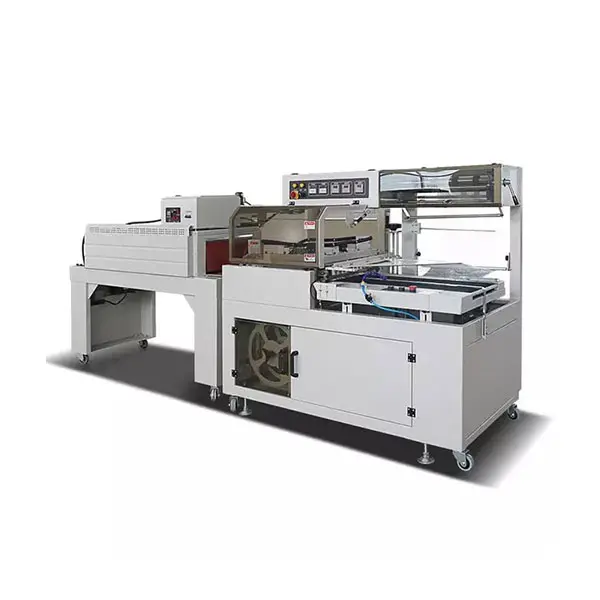
A shrink wrap machine offers one of the most affordable ways to replace manual wrapping. The operator positions the product, the machine seals packaging film around it, and a heat tunnel shrinks the material tightly around the package.
This method works well for gift sets, jars, bottles and multipacks. It also provides visible evidence when certain sealed packages have been opened.
For small manufacturers, a shrink wrap packaging machine can be a cost-effective way to improve packaging consistency without investing in a fully automated line.
Running cost: Primarily shrink film, which typically costs a few cents per package.
Carton Packaging Machine
Semi-automatic carton packaging machines are suitable for businesses selling products in printed folding cartons. Common applications include tea, supplements, boxed snacks and other retail products.
The operator places the product into the machine, which then folds and closes the carton. This reduces repetitive handling while helping maintain a consistent appearance across finished packages.
Businesses that already use printed cartons can consider a carton packaging machine to increase output while keeping packaging quality more consistent.
Running cost: Carton materials and, where applicable, adhesive used for hot-melt sealing.
Wrapping Machine
Wrapping machines are commonly used to seal individual products in protective film. They are particularly useful for snack bars, biscuits, bakery products and other items that need separate packaging.
Compared with basic shrink wrapping equipment, wrapping machines generally require a larger initial investment. However, they can package products at considerably higher speeds and help maintain product freshness when used with suitable packaging materials.
For manufacturers producing individually wrapped items, a wrapping packaging machine may provide the speed and packaging consistency needed as orders increase.
Running cost: Plain or printed wrapping film.
Paper Box Packaging Machine
Paper box packaging machines are designed for brands that package their products in rigid or folded paperboard boxes. They are especially relevant to manufacturers using branded boxes for retail presentation.
These machines generally cost more than entry-level shrink wrapping and carton packaging equipment. As a result, they are often a better investment for businesses that already have reliable daily production volumes.
A paper box packaging machine can become a useful addition once a company’s existing packaging process can no longer keep up with demand.
Running cost: Paperboard box blanks used during production.
What Are the Best Food Packaging Machines for Small Businesses?
The best food packaging machines for small businesses depend on the type of food being packaged and the finished packaging format. Wrapping machines are suitable for individual snacks, shrink wrap machines work well for bundled products, and carton packaging machines are commonly used for boxed food items.
Food-contact components should be made from suitable materials, with 304 stainless steel commonly used in food packaging equipment.
| Your food product | Best machine | Why it works |
|---|---|---|
| Snack bars, cookies, baked goods | Wrapping machine | Seals individual products to help preserve freshness |
| Jars, bottles, multipacks | Shrink wrap machine | Bundles products and provides evidence of opening |
| Tea, coffee pods, boxed snacks | Carton packaging machine | Creates a neat, retail-ready package |
| Sauces, oils, drinks | Liquid filling machine, then a capper | Fills and seals containers before secondary packaging |
| Spices, flour, protein powder | Powder filling machine | Accurately measures and dispenses dry products |
Some food products must be filled into containers before secondary packaging can begin. In these cases, the filling stage should be addressed first.
For example, a business producing sauces, beverages or oils may need a liquid filling machine before investing in carton or shrink wrapping equipment. Similarly, businesses handling flour, spices or powdered supplements may require a powder filling machine.
A high-speed packaging machine provides limited value when the filling process cannot supply products quickly enough.
Before buying food packaging equipment, consider these additional requirements:
- Cleaning: Food-contact components should be easy to remove for cleaning, preferably without tools.
- Documentation: Request CE documentation and appropriate food-contact material certificates from the supplier.
- Packaging materials: Confirm that the machine works with films, cartons and other materials available from your local suppliers.
Hand Packing vs. a Semi-Automatic Machine: What’s the Real Cost?
Manual packaging may seem inexpensive because there is no major equipment purchase involved. However, the ongoing cost of labor, product overfilling and rejected packages can make manual operations more expensive as production grows.
Consider a small food manufacturer packing 1,000 pouches daily, with workers earning USD 15 per hour.
The following example compares manual packing with a semi-automatic machine.
| Daily cost | Hand packing | Semi-automatic machine |
|---|---|---|
| Workers needed | 3 | 1 |
| Wages (8 hours) | USD 360 | USD 120 |
| Product lost to overfilling | USD 60 | USD 15 |
| Packs redone or thrown away | USD 30 | USD 5 |
| Machine cost (USD 8,000 spread over 3 years) | None | USD 11 |
| Total per day | USD 450 | USD 151 |
In this example, switching to a semi-automatic machine reduces daily expenses from USD 450 to approximately USD 151.
That represents savings of about USD 300 per day. Over a working year of 250 days, the business could save roughly USD 75,000.
At this rate, an USD 8,000 machine could recover its purchase price in less than two months.
Actual savings depend on labor costs, production volume, waste levels and machine performance. However, the example demonstrates why packaging automation becomes financially attractive when several employees are needed to complete repetitive manual work.
To determine the potential savings for your business, replace the example figures with your actual wages, production output and operating expenses.
How Do You Choose a Small Packaging Machine?
Choosing a small packaging machine requires more than comparing prices. Start by identifying the packaging method your product needs, then consider your daily production target, available space and electrical supply.
A low-cost machine that cannot handle your packaging requirements may ultimately become more expensive than purchasing suitable equipment from the beginning.
Before requesting a quotation, work through these six questions.
1. What product are you packaging?
Different products require different packaging methods. Bottles, snack bars, pouches and cartons cannot necessarily be handled by the same equipment. Identify your product type, dimensions and packaging materials first.
2. How many packages do you produce daily?
Calculate your existing daily output and consider your expected growth. Choosing equipment with approximately 30% more capacity than your current requirements can provide room for increased production.
3. How much floor space is available?
Measure the intended installation area carefully. Include enough room for the operator to work, packaging materials to be stored and finished products to move through the process.
4. What electrical supply is available?
Many small semi-automatic packaging machines operate using standard single-phase power. Larger or faster systems may require a three-phase supply, so confirm the machine’s electrical specifications before ordering.
5. How much will the machine cost to operate?
Purchase price is only one part of the total cost. Ask the supplier about the amount and cost of film, cartons, adhesive and other consumables required during production. It is also important to confirm whether these materials are available locally.
6. Who will provide technical support?
Find out how the manufacturer handles maintenance requests and breakdowns. Confirm whether remote technical assistance is available, which spare parts are stocked and how quickly support can be provided.
How Should a Small Business Grow Its Packaging Line?
The most practical approach to packaging automation is usually to expand gradually. Start by automating the slowest or most labor-intensive task, then introduce additional equipment as production demand increases.
This approach allows small businesses to improve efficiency without paying for an entire automated line before they need it.
| Stage | What you add | When to move up |
|---|---|---|
| 1. Start | Hand tools such as sealers and coders | Packing takes one full-time person |
| 2. First machine | One semi-automatic machine at the slowest stage | Packing takes two or more people |
| 3. Linked machines | A second machine connected by a short conveyor | Orders become steady and continue growing |
| 4. Automatic line | Automatic machines introduced gradually | Daily output exceeds approximately 5,000 packs |
When buying your first semi-automatic machine, consider whether it can later connect to a conveyor or automatic feeding system.
Equipment that supports future integration can help avoid unnecessary replacement costs as the business expands.
When Should You Switch to an Automatic Packaging Machine?
A small business should consider automatic packaging equipment when manual packing requires two or more full-time workers or when the packaging stage becomes the main limitation on production capacity.
Under these conditions, reducing manual labor may generate enough savings to recover the machine’s purchase cost within a year.
Fully automatic packaging machines generally cost around two to five times more than comparable semi-automatic models. This makes gradual automation a practical option for businesses that want to manage their investment carefully.
Rather than upgrading every production stage at once, begin with the process that consumes the most time or prevents the line from reaching its required output.
What Mistakes Do Small Businesses Make When Buying a Packaging Machine?
One common mistake is selecting equipment that only handles the products currently being manufactured. When the business introduces a different package size or product variation, the machine may not have the flexibility needed to accommodate it.
There are several other purchasing mistakes that can create unnecessary expenses.
1. Overlooking change parts
A different package size may require new guides, tooling or other components. Ask the manufacturer which change parts are included with the equipment and what additional parts will cost.
2. Choosing the wrong production speed
A packaging machine cannot operate at its full rated capacity if the previous production stage cannot supply enough products.
For example, a fast wrapping machine connected to a slow manual filling process may spend much of its operating time waiting for products.
3. Buying without testing the product
Before purchasing, request a demonstration using your actual product and packaging materials. A factory test video can help confirm that the machine handles the product properly and produces acceptable finished packages.
4. Ignoring ongoing operating expenses
Film, cartons, adhesive, replacement components and routine maintenance all contribute to operating costs. These expenses should be included when comparing equipment prices.
What Should You Ask a Supplier Before You Buy?
Before selecting a packaging machine supplier, request clear written answers about the equipment, warranty, technical support and future expansion options.
A reliable supplier should be able to explain the machine’s capabilities and provide the documentation necessary to evaluate the purchase.
Ask the following six questions:
- Can you provide a video showing the machine operating with my actual product?
- Which spare parts and change parts are included in the purchase price?
- What warranty is provided, and which components or services does it cover?
- How are technical problems handled, and what is the typical response time?
- Does the equipment have the required CE documentation and relevant food-contact certificates?
- Can the machine be connected to a conveyor or automatic feeding system in the future?
Getting these details in writing makes it easier to compare suppliers and understand what is included in each quotation.
How Do You Get the Right Machine for Your Business?
The first step toward finding the right packaging machine is to provide accurate information about your product and production requirements.
At Filling Machine Manufacturer, businesses can explore machinery designed for different filling and packaging applications. You can also learn more about our company before deciding which equipment supplier is suitable for your operation.
To help our engineering team recommend the right machine, provide the following details:
- Product type and packaging format
- Package dimensions and sizes
- Number of packages produced daily
- Available installation space
- Electrical supply specifications
With this information, our engineers can recommend appropriate equipment and prepare a quotation based on your production needs.
You can request a packaging machine quote or explore our complete packaging machine range to compare available solutions.
Frequently Asked Questions
What Is the Cheapest Packaging Machine for a Small Business?
A semi-automatic shrink wrap machine is generally one of the least expensive dedicated packaging machines, with prices starting around USD 2,000. For businesses with very limited production, hand sealers and band sealers may cost only a few hundred dollars.
Can a Small Packaging Machine Run on Normal Power?
Yes, many semi-automatic packaging machines operate using standard single-phase electricity. However, voltage and power requirements vary by model, so confirm compatibility with your local electrical supply before ordering.
Do I Need a Trained Operator?
Most semi-automatic packaging machines do not require advanced technical skills for routine operation. Operators can often learn the basic process within a few hours, and many suppliers provide introductory training.
How Much Space Does a Small Packaging Machine Need?
Most small packaging machines require approximately 2 to 6 square meters, including enough space for the operator and packaging materials. Larger or more advanced equipment may need additional room.
How Long Does It Take to Get a Machine Running?
A basic semi-automatic packaging machine can often be installed and operating within one day of delivery, provided the necessary utilities and workspace are ready. Customized or fully automatic machines generally require more installation and commissioning time.
Should a Small Business Buy a Used Packaging Machine?
A used machine can be a reasonable investment when it supports your exact packaging format and replacement parts remain available. If those requirements cannot be confirmed, purchasing a new semi-automatic machine is often the safer long-term option.