
Introduction Your Filling Line Is Probably Wasting Money Right Now
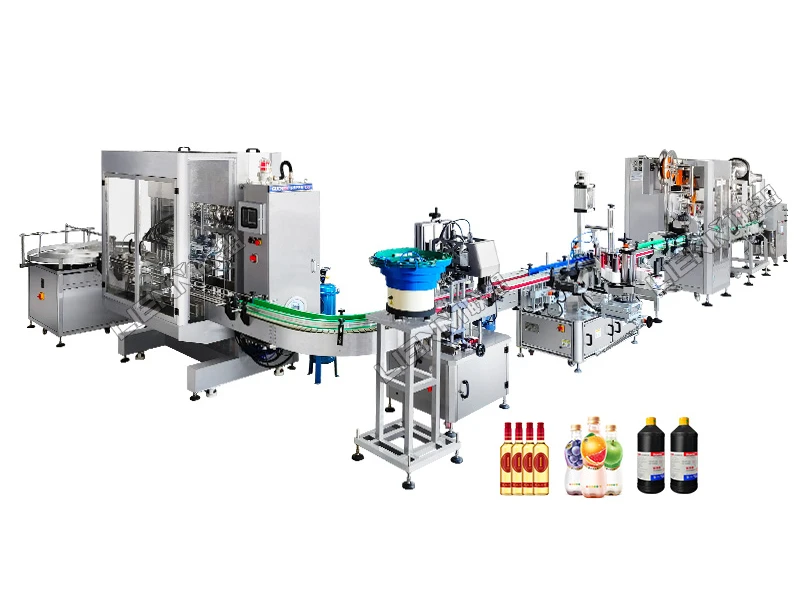
Your filling line is consuming energy right now even if it is not producing anything. Not because your machines are broken. Because most plants have never systematically measured where that energy actually goes. Poor energy efficiency in filling machines is more common than most manufacturers realise, industry data shows that 20 to 30 percent of energy on a typical filling line is wasted through idle motors, compressed air leaks, and oversized compressors cycling at half load. The machines are not the problem. The absence of a measurement system is. Whether you operate a liquid filling machine, a powder filling machine, or a full automatic filling machine solution, the principles in this guide apply directly to your operation. We will walk you through every step from setting your energy baseline to building a prioritised improvement roadmap that pays for itself.
Every month without an energy audit is a month of recoverable cost you are leaving on the table.
What Is a Filling Line Energy Audit And Who Needs One?
A filling line energy audit is a structured process that answers three questions: how much energy are we using, where exactly is it going, and what is the cheapest way to use less of it? It is not a one-time event. The best-run plants treat it as an annual discipline the same way they schedule preventive maintenance or safety inspections.
You need one if:
- Your utility bills are rising but output has not changed
- You have not audited your filling line in the last two years
- You are planning to add a high-speed capping machine or expand your packaging line
- Your sustainability or ESG team needs Scope 2 emissions data
- You are evaluating whether to retrofit or replace existing equipment
Step 1 Baseline Your Energy Consumption
You cannot manage what you do not measure. Before any improvement is possible, you need a clear picture of current consumption broken down in a way that is actually actionable.
What to measure:
- Total line consumption install a sub-meter at the filling line panel
- Per-machine consumption clip-on current loggers on individual motors
- Shift patterns log energy separately for day, night, and weekend shifts. Idle consumption during unmanned hours is almost always the biggest surprise
- Units produced correlate energy with output to calculate your Specific Energy Consumption (SEC)
The key metric SEC (Specific Energy Consumption):
SEC = Total kWh ÷ Units produced (per 1,000)
A well-run liquid filling machine line typically achieves 0.8–1.5 kWh per 1,000 units. If yours is above 2.0, there is meaningful waste to recover. Run your baseline for a minimum of four weeks to capture a full production cycle including changeovers and scheduled downtime.
Step 2 Identify the Biggest Energy Consumers
Once your baseline is set, find out which systems drive the largest share of consumption.
On most filling lines, the breakdown looks like this:
| System | Typical Energy Share | Priority |
| Compressed air / compressor | 40–45% | ⭐ Highest |
| Drive motors and actuators | 20–25% | ⭐ High |
| Heating and CIP systems | 12–18% | Medium |
| Conveyors and transfer | 8–12% | Medium |
| Controls, lighting, HMI | 5–8% | Lower |
The compressed air system is the single largest consumer and also the one with the most recoverable waste. This is especially true on lines running pneumatic capping machines or pneumatically actuated filling heads. Our servo capping machine replaces pneumatic actuators with precision servo motors one of the most effective single upgrades for reducing compressed air dependency and overall line energy consumption.
Step 3 Spot Compressed Air Leaks
Compressed air is the most expensive utility in a filling plant roughly 7 to 8 times more expensive per unit of useful energy than direct electricity. A single 3mm leak at 7 bar wastes approximately 1.5 kW continuously. At typical industrial electricity rates, that one leak costs $1,000–$1,500 per year.
Two detection methods:
Ultrasonic leak detection is the gold standard. An ultrasonic detector picks up the high-frequency hiss of escaping air inaudible to the human ear. Walk the entire distribution system during a live production run and tag every leak with a numbered label.
Pressure drop test gives a system-level picture. Pressurise the system, isolate it from the compressor, and measure how fast pressure falls over 30 minutes. More than 10% drop per hour signals significant aggregate leakage.
Five highest-risk leak points on a filling line:
- Compressor outlet connections and flexible hoses
- Filter/regulator bowl threads and O-ring seals
- Pneumatic cylinder rod seals every stroke cycle wears the wiper seal
- Solenoid valve exhaust ports worn internal seals cause continuous bleed
- End-of-line blowoff nozzles often left open or incorrectly sized
A thorough survey of a 10-machine filling line typically uncovers 15–30 leak points. Fixing them costs a few hundred dollars in parts and labour. Payback is usually measured in weeks.
Not sure where your leaks are hiding?
Our engineering team can run a full compressed air leak survey and motor load analysis on your filling line typically completed in a single day visit. Book a free consultation →
Step 4 Measure Idle and Standby Losses
This step surprises nearly every plant that does it for the first time.
Log your line power consumption during:
- Planned breaks lunch, shift changeovers
- Changeovers between products or container sizes
- Unplanned stoppages jams, faults, material shortages
- Overnight and weekend shutdowns
In many plants, idle energy accounts for 15 to 20% of total consumption. A compressor maintaining line pressure over a weekend when no production runs is one of the most common culprits often adding $200–$500 in completely unnecessary cost per weekend.
Quick wins for idle loss reduction:
- Programme filling machine HMIs to drop to low-power mode after 10 minutes of inactivity
- Install auto-isolation valves that close compressed air supply during planned breaks
- Set compressor controls to full off not standby during overnight shutdowns
- Review your packaging machine cycles shrink wrap tunnels left on during breaks consume significant heat energy with zero output
Step 5 Benchmark Against Industry Standards
With your baseline SEC calculated, you can now compare your performance against the industry.
Sector benchmarks for filling lines:
| Sector | Typical SEC (kWh/1,000 units) | Best-in-class target |
| Beverage / liquid | 0.8 – 1.5 | Below 0.8 |
| Dairy / aseptic | 1.2 – 2.2 | Below 1.2 |
| Pharmaceutical | 2.0 – 4.5 | Below 2.0 |
| Oils and viscous liquids | 1.8 – 3.0 | Below 1.8 |
| Powder and granule | 0.5 – 1.0 | Below 0.5 |
Our granule filling machines and powder filling machines are engineered to operate at the lower end of the SEC range for dry products a common specification request from clients in the food and nutraceutical sectors.
Two frameworks to benchmark against:
ISO 50001 (external link) provides the international management system framework for energy performance. It requires you to establish baselines, set measurable objectives, and demonstrate year-on-year improvement. Certification is increasingly requested by multinational buyers and retailers.
OEE (Overall Equipment Effectiveness) is the operational lens. A filling line running at 65% OEE consumes more energy per unit than the same line at 85% OEE because more energy is spent per unit of useful output. Improving OEE and improving energy efficiency are the same goal approached from different directions.
Step 6 Prioritise Improvements by ROI
Not all energy improvements are equal. The discipline of prioritisation separates plants that make consistent progress from those that invest in expensive upgrades without fixing the underlying basics first.
Tier 1 Quick wins (payback under 6 months)
Fix compressed air leaks, programme idle shutdowns, eliminate unnecessary blowoffs, and insulate unlagged hot pipework. These actions alone typically reduce filling line energy consumption by 8–15% and cost very little to implement.
Tier 2 Medium-term improvements (6–18 months)
VFD retrofits on fixed-speed conveyor and pump motors, motor right-sizing, and compressor pressure setpoint optimisation. These require modest capital but deliver savings year after year.
Tier 3 Strategic capital investments (2–5 year payback)
Upgrading from pneumatic to servo-driven filling and capping systems is one of the most impactful long-term moves. Our servo capping machine eliminates the compressed air demand of traditional capping entirely and our automatic bottle filling machine range is available with servo-driven fill heads for clients targeting best-in-class SEC performance. Compressor replacement with a correctly sized variable-speed unit, or heat recovery from CIP systems, also falls into this tier.
The critical rule: Always complete Tier 1 before evaluating Tier 3. Plants that buy a new compressor without first fixing their leaks often find the new compressor runs just as hard as the old one because the waste is still there.
How Foshan Popper Machinery Supports Energy-Efficient Operations
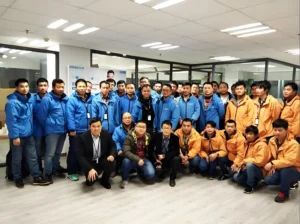
At Foshan Popper Machinery Co., Ltd., energy efficiency is built into our machine design not added as an afterthought.
Our full product range is designed to work together as an energy-optimised line:
- Liquid filling machines precise volumetric control reduces overfill waste and the energy cost of rework
- Servo capping machines eliminate compressed air dependency at the capping station
- High-speed capping machines higher throughput per kWh, reducing SEC at scale
- Shrink wrap packaging machines temperature-controlled tunnels with programmable idle modes
- Palletizing packaging machines automated end-of-line handling that eliminates manual transfer energy losses
Our service team also supports existing line audits, motor assessments, and upgrade consultations. Learn more about us →
Frequently Asked Questions (FAQ)
Q1: How much energy does a filling machine typically use per day?
This varies widely by machine type and line speed. A small desktop filling machine may use 1–3 kWh per shift. A full automatic multi-head liquid filling machine running at 3,000 units/hour can use 15–40 kWh per shift. The most useful number is not total kWh, but SEC kWh per 1,000 units produced.
Q2: Do servo-driven machines really use less energy than pneumatic ones?
Yes significantly. Pneumatic systems waste 70–80% of compressor input energy as heat before the air does any useful mechanical work. A servo capping machine converts electrical input to mechanical work at roughly 85–90% efficiency. For high-cycle capping applications, the energy saving is substantial and the payback period is typically 2–3 years.
Q3: What is a realistic energy saving from fixing compressed air leaks?
Most plants recover 8–15% of total line energy consumption from a comprehensive leak repair programme. On a line spending $50,000/year on energy, that is $4,000–$7,500 in annual savings often achievable with less than $1,000 in repair costs.
Q4: Does the type of product being filled affect energy consumption?
Yes. High-viscosity products like sauces and oils require more pump pressure and longer fill cycles, increasing energy per unit. Our sauce filling machine is specifically engineered for viscous products with optimised pump selection to minimise this effect.
Q5: Can a milk powder or capsule filling machine be made more energy efficient?
Absolutely. Our milk powder filling machine and capsule filling machine both support idle-mode programming and can be integrated with line-level energy monitoring systems. Nitrogen purge systems common in powder lines should also be audited separately as they are a significant and often overlooked energy cost.
Conclusion Measure It, Fix It, Repeat It
Energy waste in filling lines is not a technical mystery. It is the predictable result of systems that have never been systematically looked at. Achieving real energy efficiency in filling machines starts with something straightforward — measurement. The savings from acting on it are real, recurring, and often surprisingly large. Start with a four-week baseline. Walk your compressed air system. Log your idle consumption over a weekend. Calculate your SEC and compare it to your sector benchmark. Build a prioritised action list. Start at the top. Every step you take toward energy efficiency in filling machines pays back in lower utility bills, stronger sustainability reporting, and longer equipment life. The plants that treat energy efficiency in filling machines not as a one-off project but as a recurring annual discipline are the ones that consistently outperform on operating cost and equipment longevity.