
Can Seaming Machine
We manufacture can seamers at our factory in Foshan, China, for aluminium and tin cans across food, beverage and pharmaceutical production. Tell us your can diameter, your lid and your target output, and our engineers will specify the machine.


How a Can Seamer Works
A filled can and its lid are held together between a seaming chuck above and a lifter plate below. The chuck holds the lid firmly against the can flange while the can rotates, and two sets of rollers close in against it in sequence.
The first operation roller curls the lid edge under the can flange, hooking the two together. The second operation roller then flattens and tightens that hook into a compressed fold with five layers of metal and a sealing compound between them. This is the double seam, and it is what makes the can airtight rather than merely closed.
Seam quality is measured, not assumed. A correctly formed seam has a defined thickness, height, countersink depth and overlap, and those figures are checked by sectioning a sample can and measuring it.
Can Seaming Machine
What You Get on a Popper Can Seamer
These are build features on the machines we ship, not a list of what can seamers do in general.
- Set to Your Can and Lid : Roller profile, chuck and base plate pressure matched to your can gauge and lid diameter before shipment, not to a generic standard.
- Two-Stage Seaming : First operation rollers hook the lid under the can flange, second operation rollers compress it into an airtight double seam.
- Seam Checked Before It Ships : We measure seam thickness, body hook, cover hook and overlap on the test run and send you the results.
- Change Parts per Can Format : Supplied for every can diameter you run, not just the first.
- Nitrogen Dosing Available : Displaces oxygen before the lid is seamed, for beer and other oxygen-sensitive products.
- Runs Inline : Conveyor height and can pitch matched to the filler upstream.
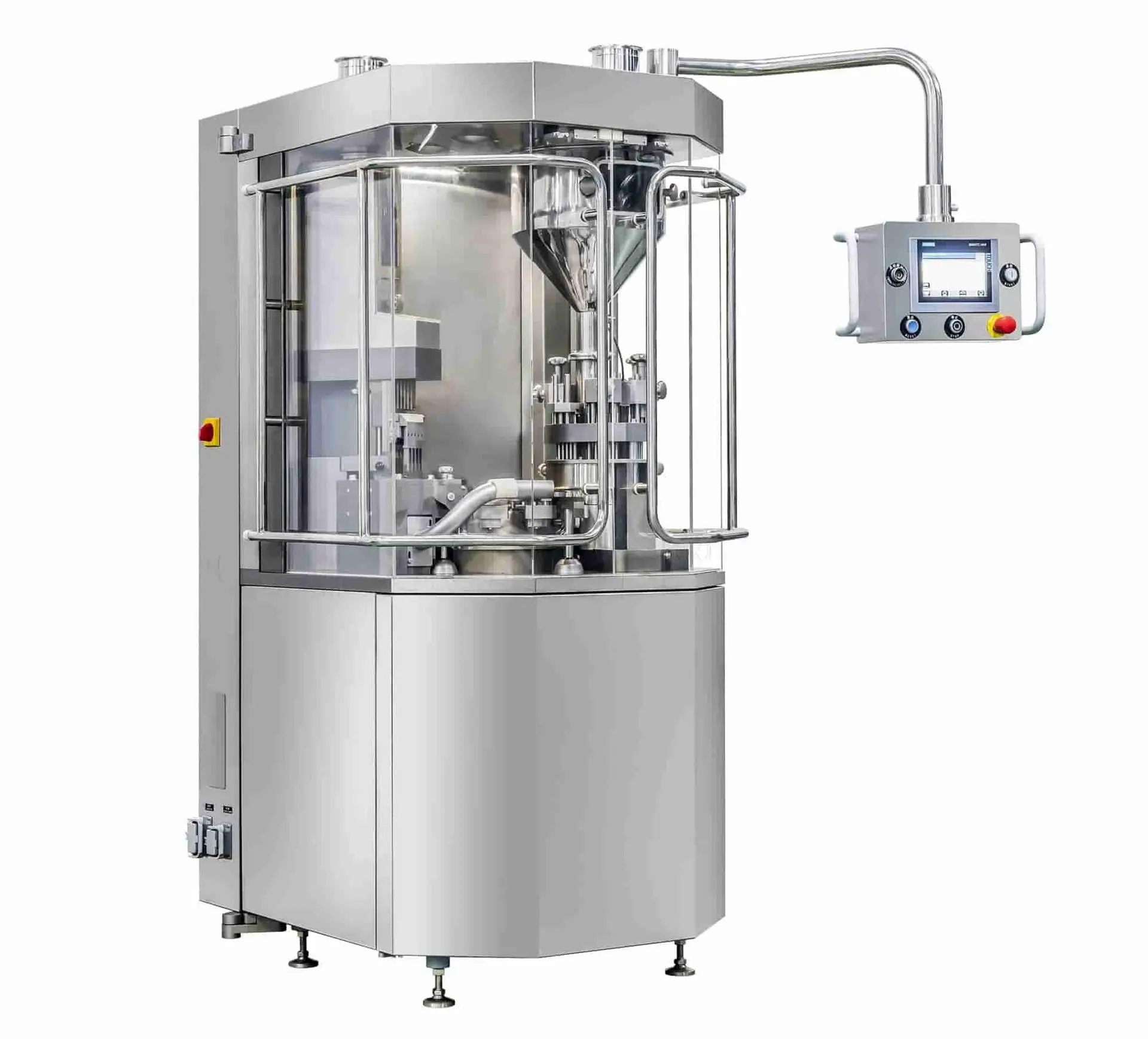
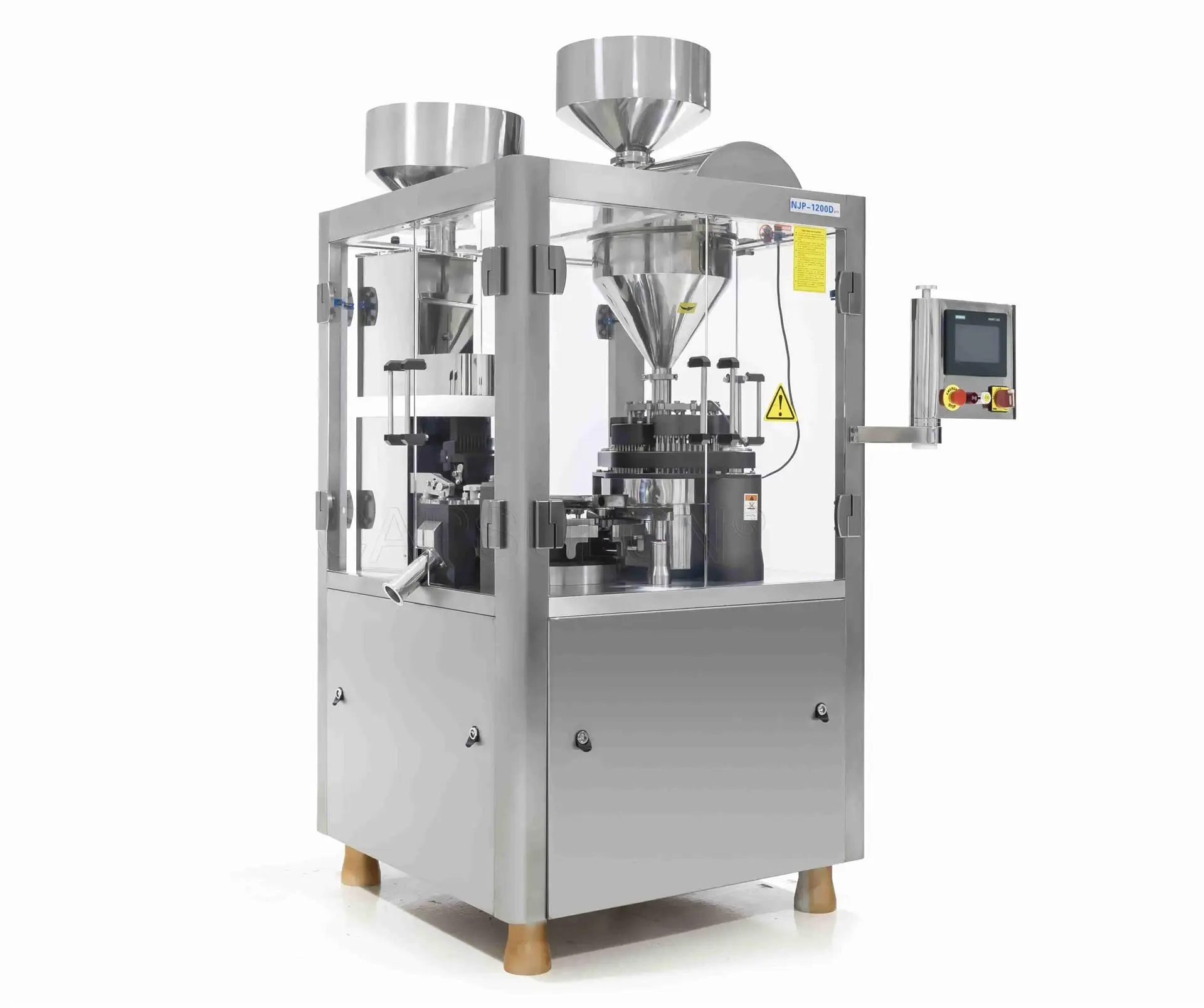
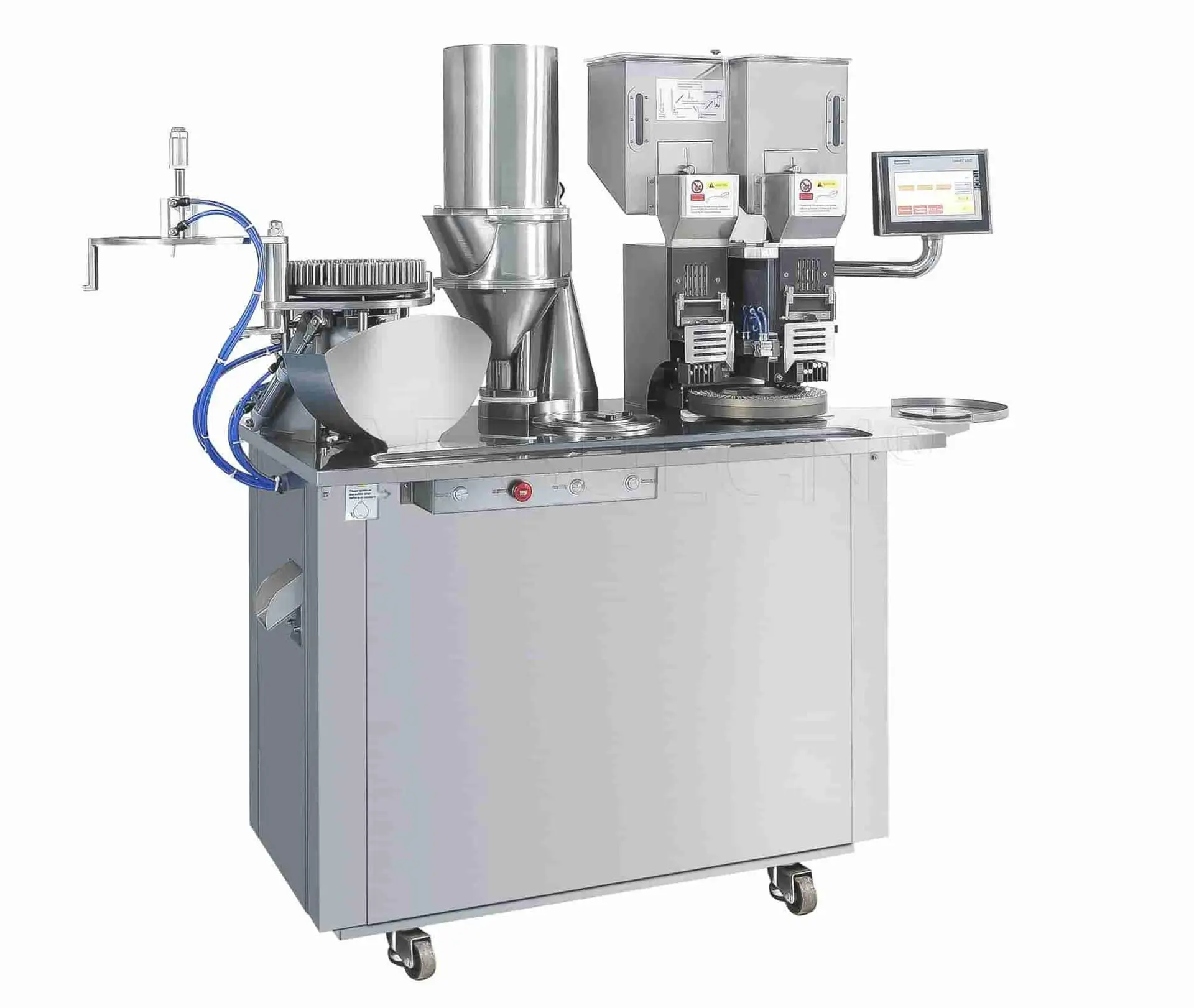
Manual, Semi-Automatic and Automatic Can Seamers
Manual, semi-automatic, and automatic can seamers suit different production volumes and operating requirements. The right configuration depends on how cans are handled, the required output, batch size, and how much automation the line needs.
| Manual | Semi-automatic | Automatic rotary | |
|---|---|---|---|
Can handling |
Operator positions and lowers the can |
Operator loads, the machine seams |
Conveyor fed, continuous |
Output |
Low, batch work |
Moderate |
High |
Suits |
Pilot runs, R&D, very small batches |
Craft producers, small lines |
Production lines |
Seam setting |
Set per can type |
Set per can type, saved |
Set per can type, saved per recipe |
Where the can is filled and seamed in one pass, the machine is a filling and seaming monobloc. See our can filling machine for that configuration. For craft brewery canning specifically, see our notes on beer can filling machines for breweries.
Can Seaming Machine Specifications
Manual, semi-automatic, and automatic can seamers suit different production volumes and operating requirements. The right configuration depends on how cans are handled, the required output, batch size, and how much automation the line needs.
| Parameter | Specification | |
|---|---|---|
Model |
Automatic Single-Head Can Seaming Machine | |
Seaming type |
Double seam, two-operation | |
Number of seaming heads |
1 | |
Output rate |
20–60 cans per minute, depending on can size and product | |
Can diameter range |
35–130 mm | |
Can height range |
25–220 mm | |
Can materials |
Aluminium, tinplate, composite paper and compatible plastic cans | |
Seam thickness achieved |
Application-specific; confirm against can/end supplier specification | |
Seam height achieved |
Application-specific; typically around 2.4–3.3 mm for common beverage/food can seams | |
Overlap achieved |
Application-specific; commonly ≥40–50% minimum depending on can/end specification | |
Change parts per can size |
Chuck and lifter plate/tooling matched to each can diameter and end | |
Power supply |
AC 220 V / 50–60 Hz / approx. 1.7 kW | |
Compressed air |
Not required on standard mechanical/servo single-head configuration; pneumatic versions may require ≥0.6 MPa | |
Contact materials |
304 stainless steel standard; 316L available where product-contact requirements justify it | |
Machine dimensions |
Approx. 1850 × 840 × 1650 mm | |
Machine weight |
Approx. 330 kg |
Industries and Cans We Seam
Discover how can seaming machines create secure, leak-resistant seals, improve packaging efficiency, and support reliable production across beverage, food, and canned product industries.
| Sector | Products | What Matters Most |
|---|---|---|
Beverage |
Soda, beer, energy drinks, seltzer, juice |
Reliable seam integrity under internal pressure, especially for carbonated products |
Food |
Soups, vegetables, fruit, sauces, pet food |
Hermetic sealing for retort processing, food safety, and shelf stability |
Pharmaceutical |
Medical powders, supplements |
Protection from moisture and air to maintain product stability |
Cosmetics & Aerosol |
Hair spray, body spray, propellant-based products |
Pressure-resistant seam integrity for safe containment |
Nutrition |
Infant formula, protein powder, milk powder |
Strong oxygen and moisture barrier to support product quality and shelf life |
A can seamer is configured for one can diameter at a time. Changing to another diameter requires the appropriate seaming chuck and lifter plate, followed by adjustment of both seaming operations.
Provide all can sizes during the enquiry stage so the required change parts can be included in the quotation before commissioning. Because aluminium, tinplate, and composite cans have different seaming characteristics, send a sample of each can type for evaluation.
- We manufacture. Built and tested at our own facility in Foshan.
- We seam your actual cans. Send cans and lids and we set both roller operations against them before the machine ships.
- We build the filler too. Filling and seaming from one supplier, so the monobloc is engineered rather than negotiated between vendors.
- Change parts supplied. Chuck and lifter plate for every can diameter you run.
A seamer runs directly after filling, with no gap, because an open filled can cannot be buffered or conveyed far. Upstream, our can filling machine. Downstream, labeling machines for shrink sleeves or wrap labels, then packaging machines for multipacking and case packing.
Frequently Asked Questions
A can seamer is a machine that attaches a lid to a filled can by forming a double seam. Two sets of rollers fold the lid edge and can flange together and compress them into an airtight seal. A can seamer and a can seaming machine are the same type of equipment.
A double seam is the folded joint that connects the lid to the can body. The first roller curls the lid edge under the can flange, while the second roller compresses and tightens the fold. The finished seam contains five layers of metal with sealing compound between them, creating a hermetic closure.
A sample can is sectioned and the seam is measured. Key checks include seam thickness, seam height, countersink depth, body hook, cover hook, and overlap percentage. We set both roller operations against your actual cans and verify these measurements before shipment.
Yes. Different can diameters require the correct seaming chuck and lifter plate, along with adjustment of both roller operations. Provide all can sizes during the enquiry stage so the required change parts can be included in the quotation.
The machine can be configured for aluminium, tinplate, and composite cans. Because each material behaves differently during seaming, we recommend sending samples of every can type you plan to run.
Price depends mainly on production speed, number of seaming heads, can specifications, and automation level. Manual bench seamers are generally the entry-level option, while automatic rotary seamers are designed for higher-output production lines.
Yes. Filling and seaming can be integrated into one monobloc system, which is commonly used on beverage production lines. See our can filling machine for this configuration.
Yes. Carbonated products create internal pressure inside the can, so consistent seam integrity is especially important. The main difference is on the filling side, where carbonated beverages typically require counter-pressure filling before seaming.
Need a Can Seamer?
Send us your can diameter, your lid and your target output in cans per minute. We set the seam against your actual cans, then return a specification with pricing. Contact us or email info@fillingmachinepp.com