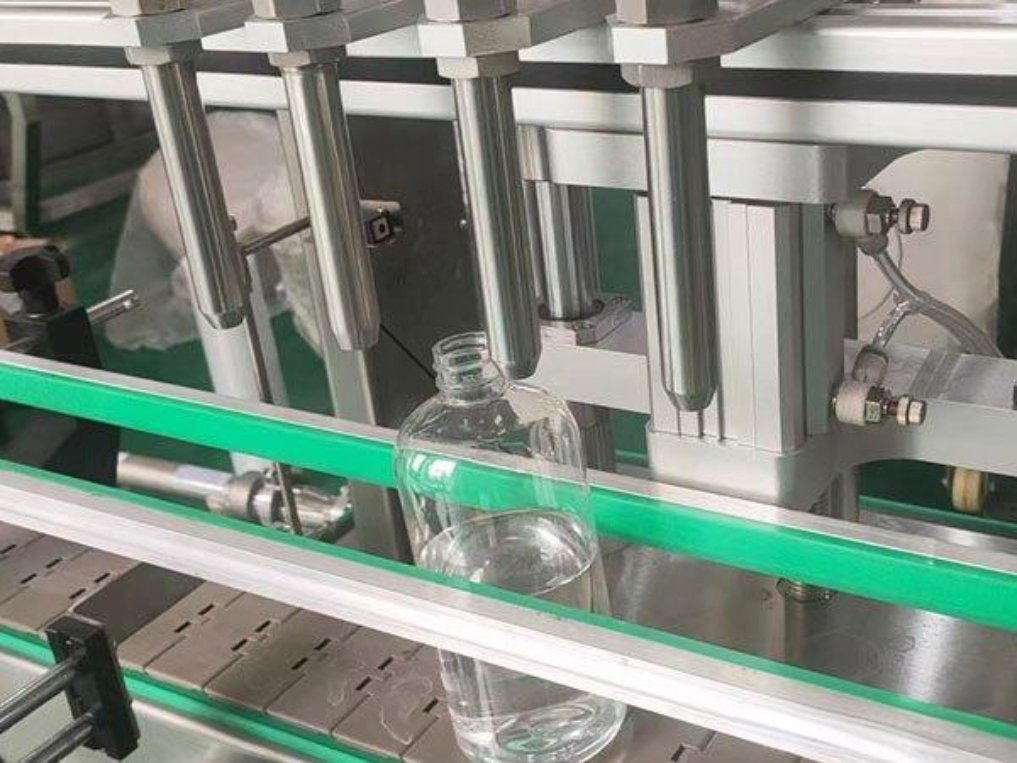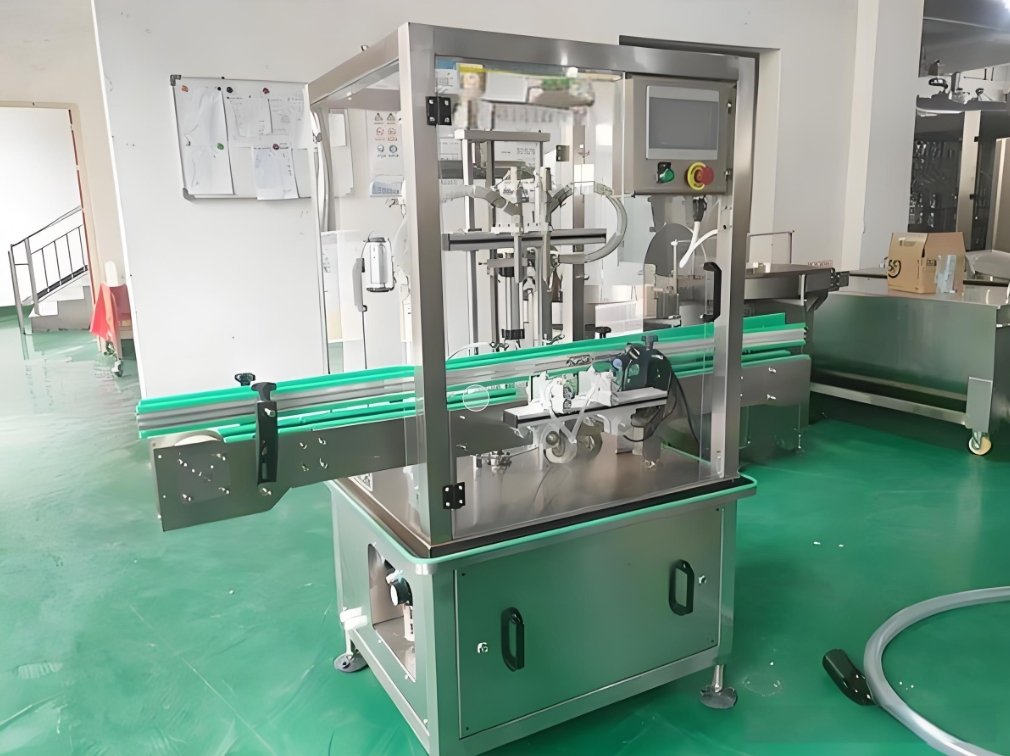

When manufacturers plan a powder filling line, most of them compare fillers first. However, the filler is only one station. A working line also needs machines that feed the powder, handle containers, seal them, check their weight, and pack the finished product for shipping. If any one of those stations falls behind, the whole line runs at the speed of its slowest machine.
At Foshan Popper, we build automatic and semi-automatic powder filling machines and plan complete lines around them for food, supplement, and pharmaceutical producers. This guide walks through each station in the order powder meets it, so you can see where the filler fits and what has to surround it.
Along the way, you will find example layouts for four common products, a planning checklist, and the cost factors to compare before you request quotations.
What Is a Powder Filling Line?
A powder filling line is a connected set of machines that doses dry powder into containers and prepares those containers for sale. It combines the powder filler with feeding, container handling, sealing, inspection, labeling, and end-of-line packaging equipment, all linked by conveyors and controls so product moves from bulk powder to finished pallet.
The exact mix of powder filling equipment depends on the product and the package. For example, a milk powder line filling metal cans needs a can seamer, while a spice line filling sachets uses a form-fill-seal machine instead of a capper.
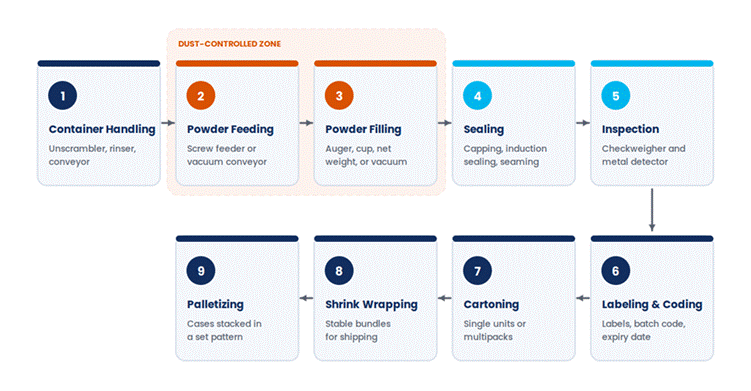
The stations in a complete powder filling line
Core Powder Filler Types
The filler sets the accuracy of the whole line, so choose it first. In most plants, one of four dosing methods does the job.
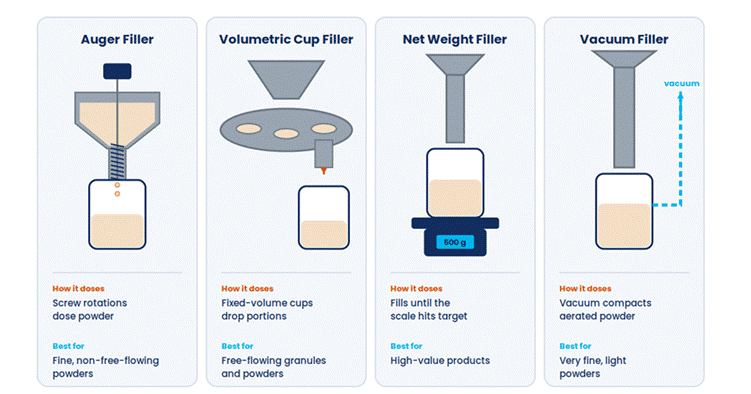
Four common powder filler types
Auger Fillers
An auger filler turns a precision screw inside a funnel and doses powder by counting screw rotations. Meanwhile, an agitator in the hopper keeps the powder moving, which helps with fine, non-free-flowing products such as flour, milk powder, and protein powder. As a result, auger fillers are the most common choice for food and supplement powders.
Volumetric Cup Fillers
Cup fillers measure product in adjustable cups on a rotating plate and then drop each portion into a container. They run fast with free-flowing products such as sugar, salt, and coffee granules. However, accuracy falls when bulk density changes, so they suit uniform products better than fine or sticky powders.
Net Weight Fillers
A net weight filler places the container on a load cell and fills until the scale reads the target weight, often with a fast bulk fill followed by a slow final fill. Because it weighs every container, this design suits high-value products where overfilling is costly. On the other hand, weighing each fill takes longer than volumetric dosing.
Vacuum Fillers
A vacuum filler draws air out of the powder as it enters the container, which compacts light, aerated powders and cuts dust. For this reason, it works well with very fine materials that trap air and settle unpredictably. For more detail on filling very fine, aerated powders, see our dedicated guide.
Powder filler types compared
| Filler Type | How It Doses | Best For | Watch Out For |
| Auger | Screw rotations (volumetric) | Fine, non-free-flowing powders | Density changes affect fill weight |
| Volumetric cup | Fixed-volume cups | Free-flowing granules and powders | Lower accuracy with variable density |
| Net weight | Load cell weighing | High-value products | Slower cycle per container |
| Vacuum | Vacuum-assisted compaction | Very fine, aerated powders | More complex setup and cleaning |
When you are ready to shortlist models, compare our powder filling machines by filler type and output. For a deeper selection walkthrough, read how to choose the right powder filler.
Upstream Equipment: Feeding and Preparing Powder
A filler doses accurately only when its hopper receives a steady supply of powder. That is the job of upstream equipment:
- Screw feeders: An inclined screw conveyor lifts powder from a floor-level bin into the filler hopper and keeps the level consistent.
- Vacuum conveyors: A vacuum conveyor moves powder through a closed pipe, which reduces dust and suits hygienic or hazardous products.
- Hoppers with agitators and level sensors: Agitators keep powder moving, and level sensors call the feeder before the hopper runs low.
- Sifters and sieves: A vibrating sieve removes lumps and foreign matter before the powder reaches the filler.
In practice, a stable hopper level matters as much as the filler itself, because the weight of powder above the dosing point changes its density and, in turn, the fill weight.
Container Handling Equipment
Next, containers need to reach the filler clean, upright, and correctly spaced:
- Bottle and jar unscramblers: An unscrambler orients loose containers and feeds them onto the conveyor.
- Conveyors and indexing: Belt conveyors carry containers between stations, while star wheels or timing screws position each one under the fill nozzle.
- Container rinsing and sterilizing: Many can and jar lines add an air rinser, and infant formula lines often add a UV sterilization tunnel before filling.
Sealing and Closing Equipment
Powder reacts to moisture and air, so the seal protects shelf life as much as it prevents spills.
Capping Machines
Jars and bottles move to a capping station that places and tightens screw caps or presses on snap lids. Our capping machines for jars and bottles include inline and high-speed options.
Induction Sealers
An induction sealer heats a foil liner inside the cap so it bonds to the container rim. The result is a tamper-evident, moisture-resistant seal, which is why protein powder and supplement jars commonly use one.
Can Seaming with Nitrogen Flushing
Milk powder and infant formula cans close on a can seaming machine. In addition, many of these lines flush each can with nitrogen just before seaming to lower residual oxygen, which helps protect fats and nutrients from oxidation.
Weight Control and Inspection Equipment
Even a well-tuned filler drifts over a shift. Therefore, inspection equipment confirms every package before it leaves the line:
- Checkweighers: A checkweigher weighs each container on the move and rejects any that fall outside the set tolerance. Some systems also send feedback to the filler so it corrects its dose automatically.
- Metal detectors: Food and supplement lines use metal detection to catch contamination from worn parts or raw materials. Some lines also add X-ray inspection for dense non-metal contaminants such as glass or stone.
- Cap and seal inspection: Sensors or vision systems check for missing caps, lifted lids, and failed induction seals.
Dust Control and Hygiene
Dust is the defining challenge of powder filling. It wastes product, contaminates nearby machines, and creates health risks for operators. Moreover, some powders, including flour, sugar, and certain chemicals, can form combustible dust clouds.
- Dust extraction: Collection hoods at the fill nozzle, connected to a central dust collector, capture airborne powder at the source.
- Enclosed filling zones: Guarded or enclosed fill stations keep dust inside the machine and protect operators.
- Bottom-up filling: A container lift or diving nozzle starts the fill low in the container and rises as it fills, so less powder becomes airborne.
- Contact materials: Most food powders run on 304 stainless steel, while corrosive, salty, or pharmaceutical products call for 316L.
- Tool-free disassembly: Quick-release augers, funnels, and hoppers shorten cleaning time and lower cross-contamination risk between products.
Where a dust hazard assessment identifies combustible dust, specify equipment rated for that hazardous area. Beyond safety, routine cleaning also keeps every station accurate over time.
Labeling and Coding Equipment
After sealing, a labeling machine applies front, back, or wrap-around labels to jars, bottles, and cans. A coder, usually an inkjet or laser unit, then prints the batch number and expiry date for traceability. Because powder dust can stop labels from sticking, place these stations downstream of the dust-controlled fill zone.
End-of-Line Packaging Equipment
Finally, end-of-line equipment groups finished packages for storage and shipping:
- Cartoning: A carton packaging machine erects cartons and packs single units or multipacks.
- Shrink wrapping: A shrink wrap packaging machine bundles cans or jars into tight, stable packs.
- Palletizing: A palletizing machine stacks cases in a set pattern, which removes one of the most physically demanding jobs in the plant.
Pouch, Sachet, and Bag Formats
Not every powder goes into a rigid container. Flexible packaging changes the line in a few important ways:
- Vertical form-fill-seal (VFFS) machines: These form bags from a roll of film, fill them through an auger, and seal them in one continuous process. They suit high-volume products such as flour, detergent, and spices.
- Premade pouch machines: These open, fill, and seal ready-made stand-up or zipper pouches, which suits retail protein and drink powders.
- Sachet and stick pack machines: These fill single-serve portions of drink mixes, coffee, and supplements.
Example Powder Filling Line Layouts by Product
The same building blocks combine differently for each product. Here is how four common lines come together.
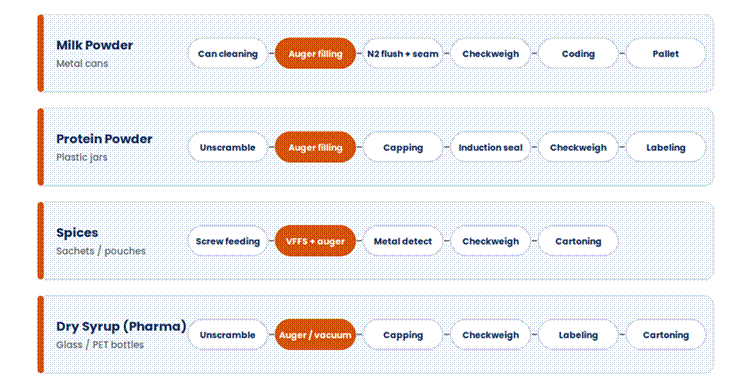
Example powder filling line layouts
File: powder-filling-line-layouts-by-product.webp | Alt text:
Typical line sequence by product
| Product | Container | Typical Line Sequence |
| Milk powder / infant formula | Metal cans | Can cleaning and sterilizing, auger filling, nitrogen flushing and seaming, checkweighing, coding, shrink wrapping, palletizing |
| Protein powder | Plastic jars | Unscrambling, auger filling, capping, induction sealing, checkweighing, labeling, cartoning or shrink wrapping |
| Spices and seasonings | Sachets or pouches | Screw feeding, VFFS or sachet filling with auger, metal detection, checkweighing, cartoning |
| Pharmaceutical dry syrup | Glass or PET bottles | Unscrambling, auger or vacuum filling, capping, checkweighing, labeling, cartoning |
For infant formula and dairy projects, our milk powder can filling machine combines auger filling with the can handling this layout needs.
How to Plan Your Powder Filling Line
Work through these questions before you request quotations:
- What are your powder’s properties? Test flowability, bulk density, particle size, dusting, and moisture sensitivity. Together, these decide the filler type, the hopper design, and whether you need humidity control or closed transfer.
- What package will you fill? Cans, jars, bottles, pouches, and sachets each need different container handling and sealing equipment.
- What output do you need? Size the line for realistic packs per minute over the next few years, then confirm that every station, not just the filler, can hold that speed.
- How many products and pack sizes will run? Frequent changeovers favor quick-release parts and recipe storage in the PLC.
- Which hygiene and safety rules apply? Food, supplement, and pharmaceutical products each carry different material, cleaning, and documentation requirements.
- What space and utilities do you have? Confirm floor space, power, compressed air, nitrogen supply if needed, and room for dust collection.
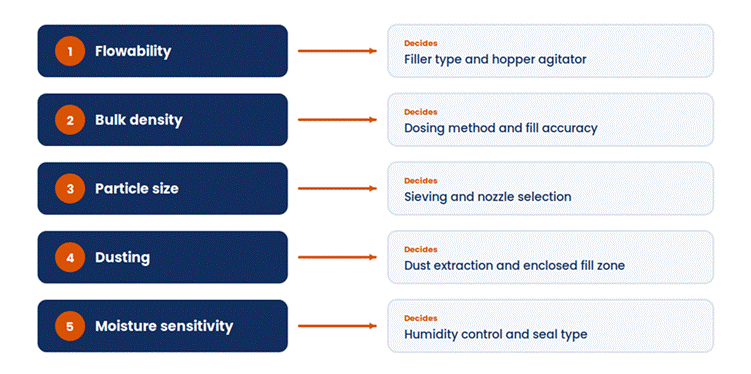
How powder properties shape your equipment choices
What Affects Powder Filling Line Cost?
Line costs vary widely, so compare quotations on the same scope rather than on a headline price. The main cost drivers include:
- Filler type and number of filling heads.
- Automation level, from semi-automatic to fully automatic.
- Contact material grade and hygienic design.
- Dust control and any hazardous area requirements.
- Sealing method, such as capping, induction sealing, or nitrogen seaming.
- Inspection equipment, such as checkweighers and metal detectors.
- End-of-line equipment and the conveyors that link each station.
Because the filler is usually the most engineered station, start by confirming its specification, then build the rest of the quotation around it.
Plan Your Powder Line with Foshan Popper
At Foshan Popper, we build powder fillers alongside the capping, seaming, labeling, and packaging equipment that completes a line. As a result, one supplier takes responsibility for how the stations work together, from the hopper to the pallet. Before shipment, every line goes through [confirm: factory acceptance testing process], and after delivery our team supports installation, operator training, and spare parts [confirm: after-sales terms and service regions].
Tell us your powder, package, and target output, and our engineers will recommend a line configuration. Request a quotation
Frequently Asked Questions
What is the difference between a powder filling line and a powder filling machine?
A powder filling machine is the station that doses powder into containers. A powder filling line connects that machine to feeders, container handling, sealing, inspection, labeling, and end-of-line packaging, so products move through every step automatically.
Which filler works best for fine powders?
Auger fillers handle most fine, non-free-flowing powders, such as flour, milk powder, and protein powder. For very light, aerated powders that trap air, however, a vacuum filler can compact the product and reduce dust.
Do I need a checkweigher if my filler is already accurate?
In most cases, yes. Powder density can shift during a production run, so a checkweigher confirms every package and rejects off-weight units. Some models also send feedback to the filler to correct the dose.
How do you control dust on a powder filling line?
Combine dust extraction at the fill nozzle, enclosed filling zones, closed transfer such as vacuum conveyors, and bottom-up filling. Also, keep labeling and coding downstream of the fill zone so dust does not affect label adhesion.
Why do milk powder cans use nitrogen flushing?
Nitrogen replaces most of the oxygen in the can before seaming. Lower oxygen slows fat oxidation, which helps protect flavor and nutrients over the product’s shelf life.
Can one line handle both jars and pouches?
Usually not with the same machines. Rigid containers need container handling and capping, while pouches need a form-fill-seal or premade pouch machine. If you plan for both formats, design the layout early so the powder feeding system can serve each filler.
Final Thoughts
The best powder filling line is a balanced one, not just a fast filler. Start with your powder’s properties and your package, choose the filler that doses it accurately, and then match feeding, sealing, inspection, and packing equipment to the same speed. With dust control and hygiene designed in from the start, the line holds its accuracy shift after shift. When you are ready, talk to our engineers about a line built around your product.
Share your powder type, packaging format, and required output, and our engineers will recommend the most suitable filling line for your production needs. Request a quotation