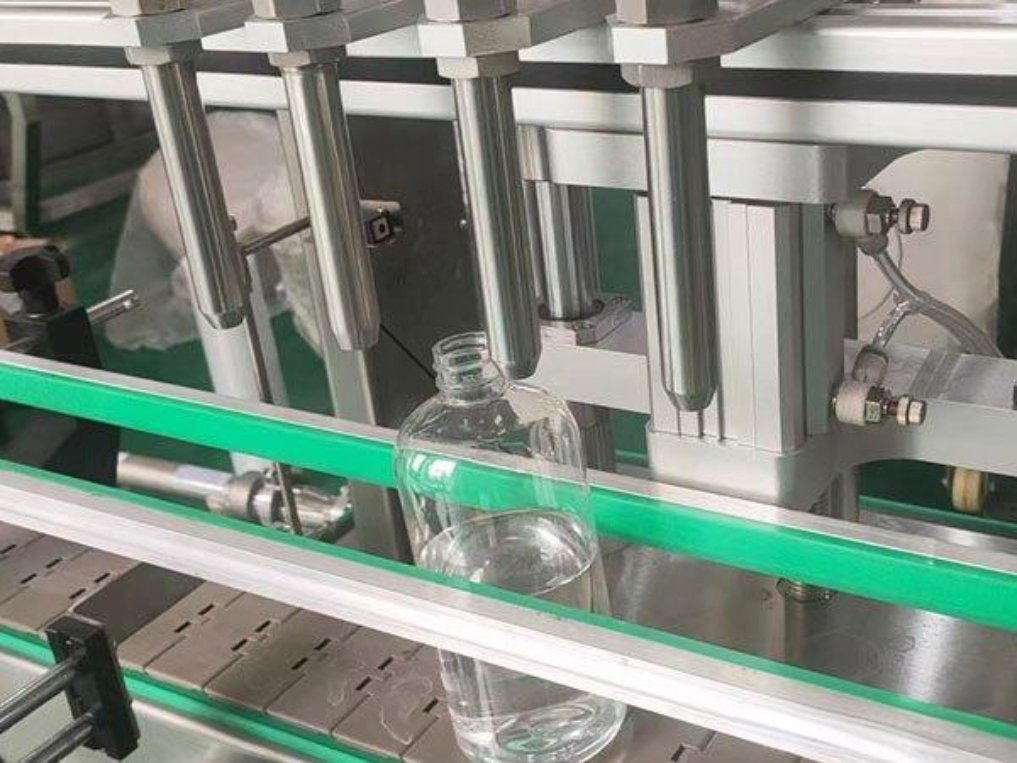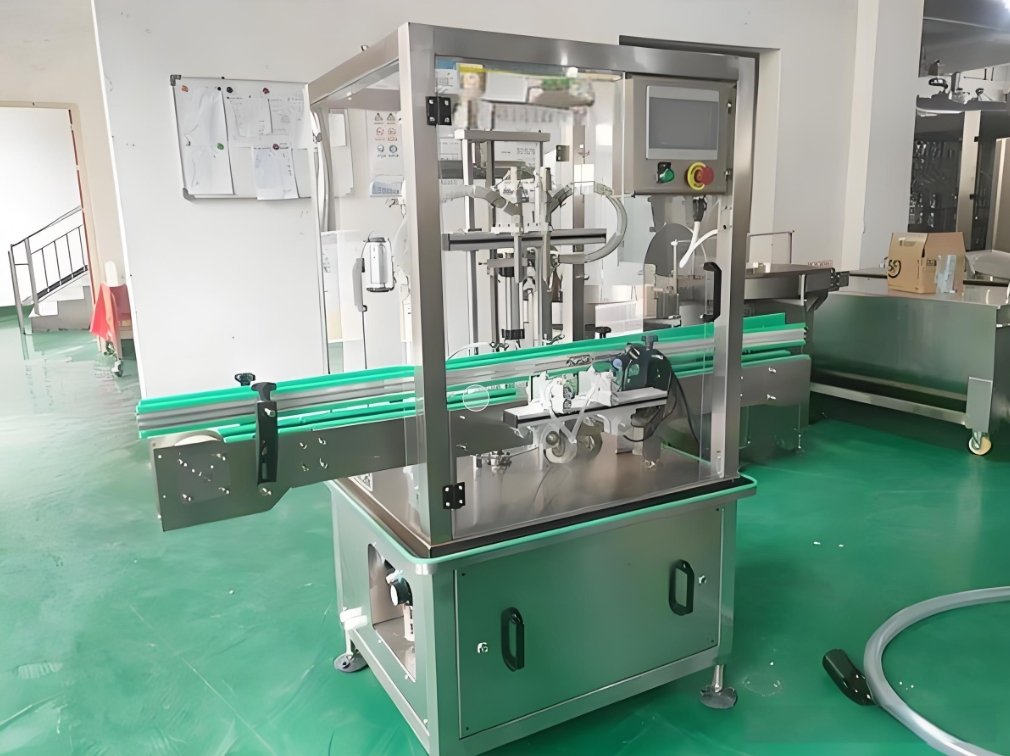
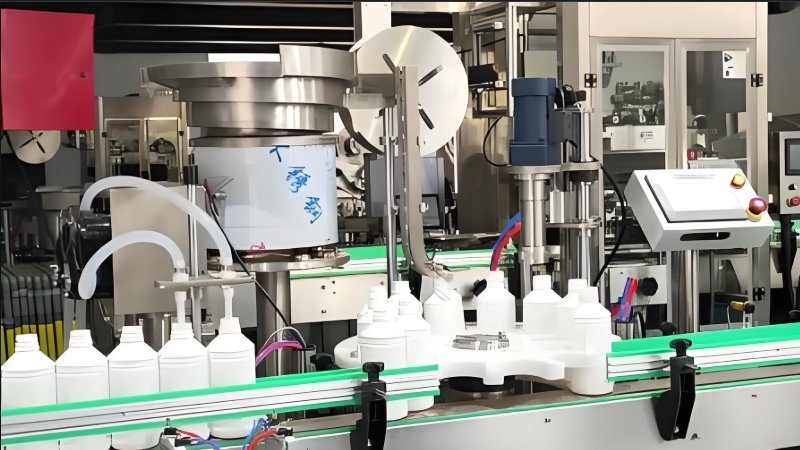
A fine powder filling machine is designed to measure and dispense powders that may be dusty, lightweight, cohesive, or difficult to move consistently through a standard filling system.
Fine powders behave differently from liquids, granules, and larger particles. They may become aerated, compact inside a hopper, stick to surfaces, generate dust, or change in bulk density during production. Each of these factors can affect dosing accuracy and filling consistency.
For many fine or non-free-flowing powders, an auger-based system is a practical option because the auger actively controls product movement. Volumetric, weight-based, and vibratory dosing systems may also be suitable depending on the product and required output.
This guide explains how fine powder filling works, the main machine types available, how a powder dosing machine controls each dose, and what manufacturers should evaluate before selecting equipment.
What Is a Fine Powder Filling Machine?
A fine powder filling machine measures a controlled quantity of powder and transfers it into bottles, jars, cans, pouches, sachets, or other containers.
A complete filling system may include:
- Product hopper
- Feeding mechanism
- Dosing unit
- Filling nozzle
- Container positioning system
- Control system
- Optional checkweighing or verification
- Integration with downstream packaging equipment
The dosing technology is especially important because not all powders flow in the same way.
For example, some products move easily through a hopper under gravity, while flour, protein powder, milk powder, pharmaceutical powders, and certain cosmetic powders can bridge, compact, or stick.
For commercial machine configurations, compare available powder filling machines based on your product characteristics, container type, filling range, and required production speed.
Why Are Fine Powders Difficult to Fill?
Fine powder filling is challenging because product behavior can change during storage, transfer, dosing, and filling.
Poor Flowability
Some powders do not move consistently through the hopper.
They may:
- Bridge above the outlet
- Compact under their own weight
- Stick to internal surfaces
- Form lumps
- Require mechanical agitation
If powder flow into the dosing mechanism changes, the quantity delivered during each cycle can also change.
Dust Generation
Fine particles can become airborne during product transfer and filling.
Excessive dust may:
- Cause product loss
- Accumulate around sensors and moving parts
- Contaminate container openings
- Increase cleaning requirements
- Affect downstream capping or sealing
Dust control should therefore be considered when configuring the machine.
Bulk Density Changes
Bulk density describes how much powder mass occupies a particular volume.
A powder may become aerated during transfer or more compact after remaining in the hopper for some time. If the filling system measures by volume, these changes can affect the final package weight.
Static Electricity
Lightweight powders may develop static charge and cling to nozzles, machine surfaces, hoppers, or containers.
This can interfere with clean product transfer and increase powder buildup around the filling area.
Types of Fine Powder Filling Machines
There is no single filling technology that is suitable for every powder.
The correct system depends on powder flow, bulk density, required accuracy, fill weight, container type, and production output.
| Machine Type | Best Suited For | Main Advantage | Main Consideration |
|---|---|---|---|
| Auger filler | Fine, cohesive and non-free-flowing powders | Controlled mechanical dosing | Requires product-specific setup |
| Net-weight filler | Applications where actual weight is critical | Measures the product by weight | Feeding must remain consistent |
| Volumetric filler | Stable, free-flowing powders | Efficient dosing | Density changes can affect weight |
| Vibratory filler | Free-flowing dry products | Controlled feeding | Less suitable for cohesive powders |
| Gravity filler | Highly free-flowing products | Simple operation | Limited use with difficult fine powders |
Auger Filling Machines
An auger filling machine uses a rotating screw to move a controlled quantity of powder toward the filling outlet.
Because the powder is mechanically moved rather than relying entirely on gravity, auger dosing is commonly used for fine, dusty, cohesive, or non-free-flowing powders.
Typical applications include:
- Flour
- Protein powder
- Milk powder
- Pharmaceutical powders
- Spices
- Nutritional blends
- Cosmetic powders
- Chemical powders
Actual performance depends on auger size, screw geometry, hopper configuration, powder density, machine speed, and calibration.
Net-Weight Filling Machines
Net-weight systems measure the quantity of powder according to actual weight.
The product is fed until the target weight is reached.
This approach may be useful when:
- Final package weight is critical
- Powder density changes during production
- Overfilling is expensive
- Weight control is a major production requirement
The powder must still feed consistently into the weighing system.
Volumetric Powder Fillers
Volumetric filling systems measure a fixed volume of powder during each cycle.
They can work well when the product has:
- Stable bulk density
- Predictable flow
- Consistent particle characteristics
However, if density changes significantly, the same volume may no longer contain the same product weight.
Vibratory and Gravity Fillers
Vibratory systems use controlled vibration to move dry products toward the filling point.
Gravity systems rely primarily on natural product flow.
These methods are generally better suited to free-flowing products than highly cohesive fine powders.
How Does a Powder Dosing Machine Work?
A powder dosing machine controls the quantity of material released during each filling cycle.
The dosing method directly affects filling consistency, speed, and suitability for different powders.
Auger Dosing
An auger screw rotates a controlled number of revolutions to move powder through the dosing chamber.
The quantity delivered can depend on:
- Auger dimensions
- Number of revolutions
- Rotation speed
- Powder bulk density
- Hopper conditions
- Product flowability
Auger dosing is commonly used for fine and non-free-flowing powders.
Volumetric Dosing
A measured volume of powder is delivered during each cycle.
This method works best when powder density remains relatively stable.
Weight-Based Dosing
A weighing system measures actual product mass.
The machine can use faster feeding during the first stage and slower feeding as the target weight is approached.
Vibratory Dosing
A vibratory feeder moves product toward the dosing or weighing point.
This works best when the powder responds predictably to controlled vibration.
Free-Flowing vs Non-Free-Flowing Powder Filling
Understanding powder flow behavior is one of the most important parts of machine selection.
Free-Flowing Powders
Free-flowing powders move relatively easily under gravity.
These products may be suitable for:
- Volumetric filling
- Vibratory filling
- Gravity-assisted systems
Non-Free-Flowing Powders
Non-free-flowing powders may:
- Bridge
- Compact
- Stick
- Form lumps
- Resist gravity flow
For these products, an auger filler is often considered because it mechanically moves the material through the dosing system.
The final selection should still be verified using the actual powder.
Which Fine Powder Filling Machine Is Best for Your Product?
Machine selection should be based on the behavior of the formulation rather than simply its product name.
A practical starting point is:
| Powder Behavior | Technology to Consider |
|---|---|
| Fine and cohesive | Auger filler |
| Fine and dusty | Auger filler with dust-control features |
| Free-flowing with stable density | Volumetric or vibratory filler |
| Density varies significantly | Weight-based system |
| High accuracy requirement | Weight verification or controlled dosing |
| Frequent product changes | Easy-clean, quick-change configuration |
Two products described as protein powder, for example, may behave differently because of formulation, moisture, fat content, particle size, or bulk density.
For a broader equipment evaluation process, see our guide to choosing the right powder filling machine.
Features to Look for in a Fine Powder Filling Machine
Stable Product Feeding
The dosing system needs a consistent supply of powder.
Depending on the product, the hopper may require:
- Agitation
- Controlled feeding
- Level monitoring
- Mechanical assistance
Appropriate Dosing Components
For an auger filler, screw geometry and size should match the product characteristics and fill range.
A machine designed for a small pharmaceutical dose may require a very different setup from equipment filling large containers of food powder.
Adjustable Filling Parameters
Operators should be able to adjust settings according to:
- Product
- Fill quantity
- Container size
- Production speed
Dust Management
Fine powder filling equipment may require:
- Controlled nozzle positioning
- Dust extraction
- Enclosed filling zones
- Container lifting
- Reduced powder drop distance
Cleaning Access
Product-contact components should be accessible for cleaning, especially in food, supplement, pharmaceutical, cosmetic, and multi-product production.
Automatic vs Semi-Automatic Fine Powder Filling Machines
The appropriate automation level depends on production volume and workflow.
Semi-Automatic Systems
Semi-automatic machines can be suitable for:
- Smaller batches
- Frequent product changes
- Product trials
- Startup production
- Lower output requirements
Containers may be positioned manually before each cycle.
Automatic Systems
Automatic filling machines can be integrated with:
- Container feeding
- Conveyors
- Capping
- Sealing
- Labeling
- Inspection
- Secondary packaging
Higher machine speed is not always better. Speed must remain compatible with powder behavior, dosing accuracy, and container handling.
For production planning, review our guide to choosing the right filling speed in powder filling machines.
Fine Powder Filling Machine Accuracy
Fine powder filling accuracy depends on more than the nominal machine specification.
Actual performance can be affected by:
- Powder density
- Powder flowability
- Hopper level
- Fill quantity
- Dosing method
- Machine speed
- Calibration
- Environmental conditions
A powder that becomes aerated during transfer can produce different package weights even when the machine settings remain unchanged.
Accuracy should therefore be evaluated with the actual product under realistic production conditions.
For a more detailed explanation, see powder filling machine accuracy levels.
Fine Powder Filling Machine Applications
Fine powder filling systems are used across many industries.
Food Products
Applications may include:
- Flour
- Spices
- Milk powder
- Coffee powder
- Drink mixes
- Baking ingredients
Nutritional Supplements
Applications include:
- Protein powder
- Vitamin blends
- Meal replacements
- Nutritional formulas
- Sports nutrition powders
Different supplement formulations can have very different density and flow characteristics.
Manufacturers in this category can also review the use of powder filling machines for food supplements.
Pharmaceutical Powders
Pharmaceutical applications may require controlled dosing, cleaning, product handling, and documented operating procedures.
Cosmetic Powders
Products may include:
- Loose face powder
- Body powder
- Cosmetic blends
Lightweight particles can make dust management especially important.
Chemical Powders
Chemical powders can vary in:
- Particle size
- Abrasiveness
- Moisture sensitivity
- Flow characteristics
- Material compatibility
Machine materials and configuration should therefore be selected for the specific product.
How to Improve Fine Powder Filling Accuracy
Test the Actual Product
Product testing can reveal:
- Flow problems
- Dust behavior
- Bridging
- Density variation
- Suitable dosing speed
Maintain Stable Hopper Conditions
Large changes in hopper level or powder compaction can influence feeding consistency.
Optimize Filling Speed
Excessive dosing speed may increase dust or reduce control.
Verify Samples During Production
Regular checks can identify filling drift caused by:
- Product changes
- Powder buildup
- Density variation
- Machine wear
- Setting changes
Recalibrate When Necessary
Calibration may be required when changing:
- Product formulation
- Fill quantity
- Auger size
- Machine speed
- Dosing settings
Dust Control During Fine Powder Filling
Dust control can improve product handling and keep downstream packaging operations cleaner.
Possible methods include:
- Keeping the nozzle close to the container
- Using container lifting
- Installing dust extraction
- Controlling auger speed
- Reducing powder drop distance
- Enclosing the filling area where appropriate
The correct approach depends on the powder and production environment.
Cleaning and Maintenance
Fine powders can accumulate around hoppers, augers, filling nozzles, sensors, seals, and other machine components.
Regular maintenance can include:
- Cleaning product-contact parts
- Inspecting auger wear
- Checking seals
- Verifying sensors
- Inspecting moving components
- Recalibrating the filler
For a more detailed maintenance process, see how to maintain a powder filling machine.
How to Choose a Fine Powder Filling Machine
Before selecting equipment, define the following requirements.
1. Powder Characteristics
Record:
- Product type
- Particle size
- Bulk density
- Flowability
- Dust level
- Moisture sensitivity
2. Fill Range
Specify:
- Minimum dose
- Maximum dose
- Most common production dose
3. Accuracy Requirement
Determine the acceptable tolerance for each fill size.
4. Container Type
Provide details for:
- Bottles
- Jars
- Cans
- Pouches
- Sachets
Container opening size is particularly important when selecting the filling nozzle.
5. Required Output
Define realistic production requirements in:
- Containers per minute
- Containers per hour
- Shifts per day
6. Automation Level
Determine whether the production process requires:
- Manual handling
- Semi-automatic filling
- Automatic filling
7. Cleaning and Changeover
Consider:
- Number of products
- Changeover frequency
- Cross-contamination risk
- Cleaning procedure
8. Product Testing
Testing the actual formulation is one of the most reliable ways to evaluate whether a machine is suitable.
Once equipment is selected, the powder filling machine setup and operation process should be documented for the specific product and production conditions.
Common Mistakes When Selecting Fine Powder Filling Equipment
Choosing Only by Maximum Speed
Maximum machine speed does not guarantee suitable production performance.
Speed must be evaluated alongside accuracy, dust generation, and container handling.
Assuming Similar Powders Behave the Same
Products within the same category can behave differently because of particle size, formulation, moisture, and bulk density.
Ignoring Density Changes
Changes in bulk density can directly affect volumetric dosing.
Ignoring Cleaning Requirements
A machine that is difficult to clean can create unnecessary downtime and cross-contamination risk.
Buying Without Product Testing
Product testing can identify issues that may not be apparent from equipment specifications alone.
What Is the Best Fine Powder Filling Machine?
For many fine, dusty, cohesive, or non-free-flowing powders, an auger filling machine is a practical starting point because the auger provides controlled mechanical dosing.
For free-flowing powders with stable bulk density, volumetric or vibratory systems may also be suitable.
If actual package weight is particularly important, a weight-based dosing system may be a better option.
The final decision should be based on:
- Powder behavior
- Fill range
- Required accuracy
- Container type
- Production speed
- Cleaning requirements
- Automation level
The best approach is to evaluate the real powder and packaging requirements before choosing the final machine configuration.
Frequently Asked Questions
What is a fine powder filling machine?
A fine powder filling machine measures and dispenses powdered products into containers. Depending on the application, it may use auger, volumetric, weight-based, vibratory, or other dosing technology.
Which machine is best for fine powder?
Auger fillers are commonly used for fine, cohesive, and non-free-flowing powders because the screw actively controls product movement. However, machine selection should depend on the actual powder characteristics.
What is a powder dosing machine?
A powder dosing machine measures a controlled quantity of powder during each filling cycle. Common methods include auger dosing, volumetric dosing, weight-based dosing, and vibratory feeding.
Is an auger filler suitable for non-free-flowing powder?
Yes. Auger fillers are commonly used for products that bridge, compact, or do not move consistently under gravity.
Can one machine fill different powder products?
Potentially, yes. Different products may require separate auger components, machine settings, calibration, and cleaning procedures.
Why does powder filling weight change during production?
Common causes include changes in bulk density, aeration, hopper conditions, machine speed, product buildup, dosing settings, and inconsistent feeding.
How accurate is a fine powder filling machine?
Accuracy depends on machine design, dosing technology, powder behavior, fill quantity, calibration, and operating conditions. Actual performance should be tested using the intended formulation.
Should I use volumetric or weight-based powder dosing?
Volumetric dosing can work well when powder density is stable. Weight-based dosing may be more suitable when actual package weight needs to be directly measured or when density changes substantially.
Need Help Choosing the Right Fine Powder Filling Machine?
If you are unsure which machine configuration fits your powder, fill range, container type, or production target, contact us with your product and packaging requirements. Our team can help you evaluate the most suitable filling solution for your application.