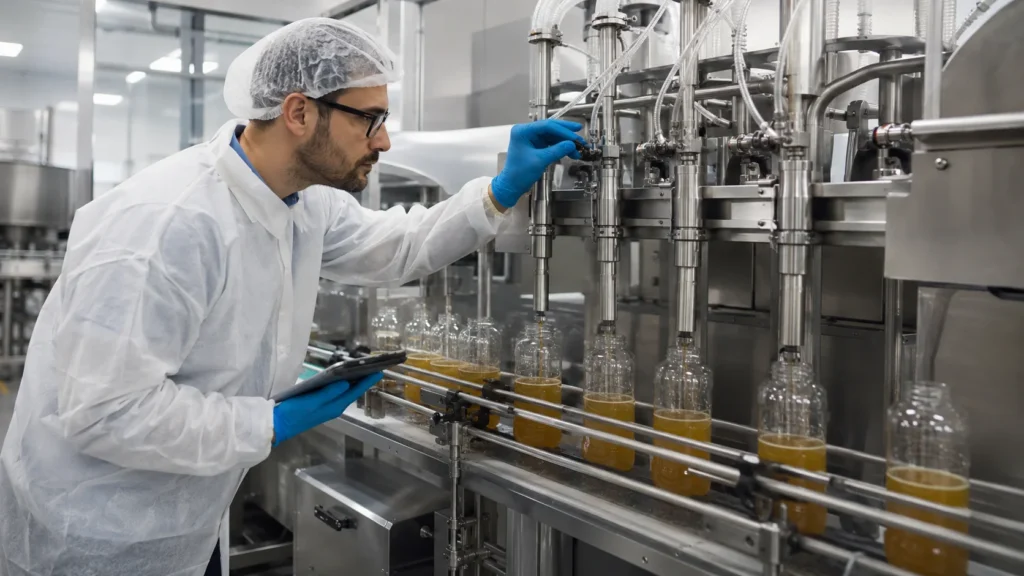
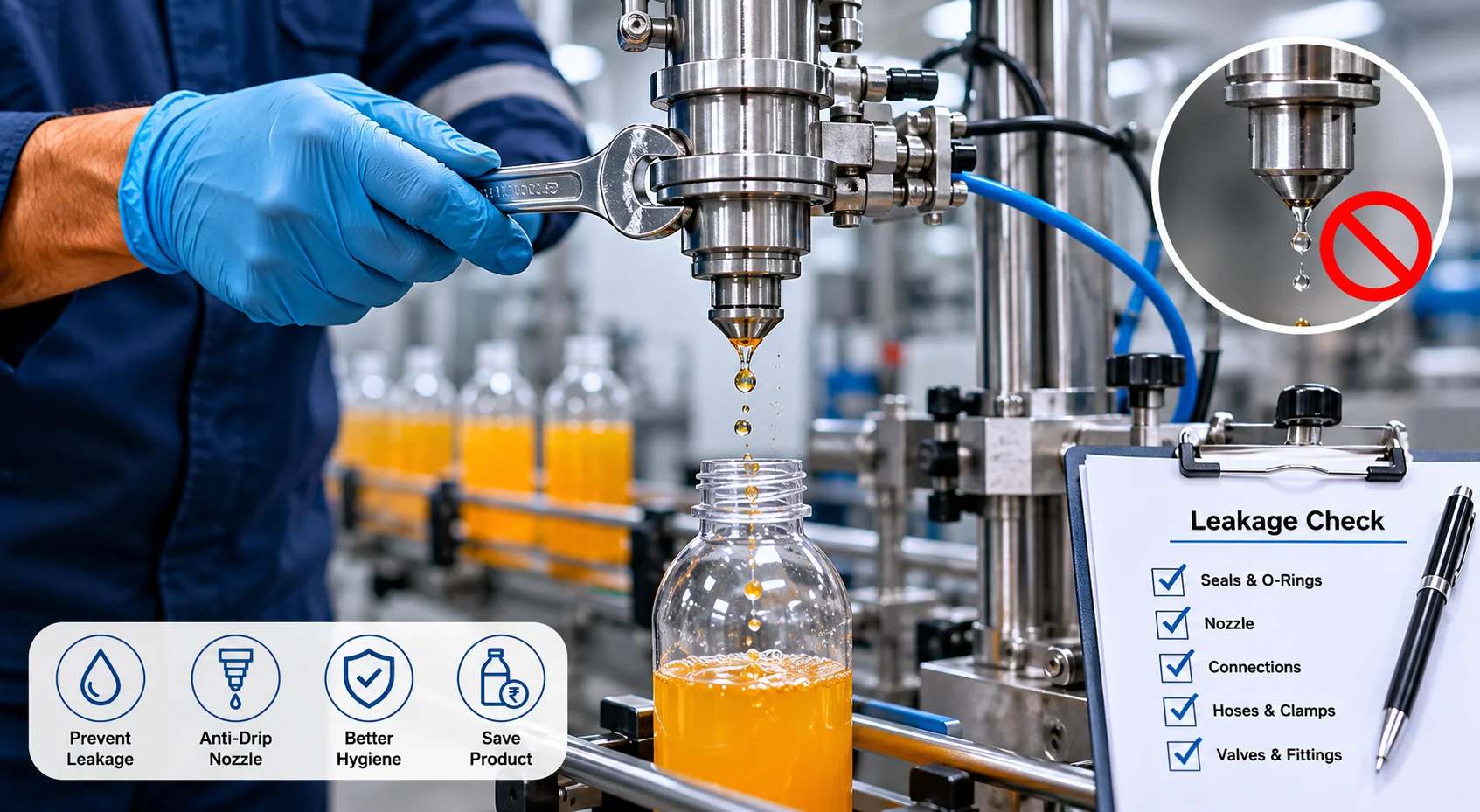
 A filling machine leakage problem can affect product accuracy, machine cleanliness, production efficiency, and overall packaging quality. For manufacturers operating liquid filling lines, finding the right filling machine leakage problem solution requires checking the product, filling system, seals, nozzles, pressure, and machine settings together. As a filling equipment manufacturer, FillingMachinePP develops filling machine solutions designed around different liquid characteristics and production requirements.
Why Does a Filling Machine Leak?
Leakage does not always come from one defective component. It can develop when several parts of the filling process are not properly matched or adjusted.
Common causes include:
- Worn or damaged seals
- Loose connections
- Incorrect nozzle positioning
- Excessive filling pressure
- Product buildup around the nozzle
- Incorrect filling speed
- Improper machine adjustment
- Damaged hoses or fittings
- Product viscosity changes
- Poor preventive maintenance
Identifying the location and timing of the leak is the first step toward selecting the correct solution.
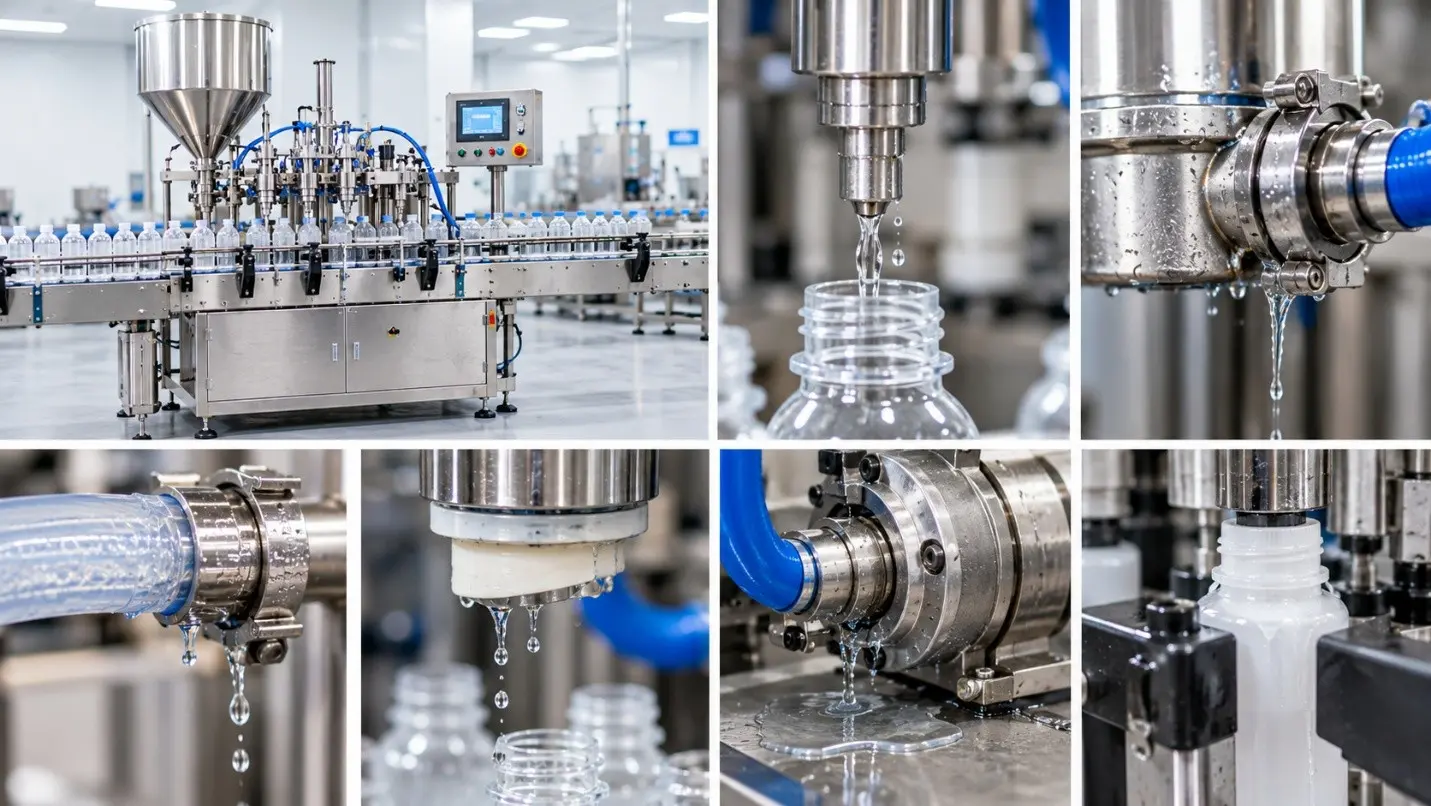
Common Types of Filling Machine Leakage
Nozzle Leakage
If product continues dripping from the filling nozzle after the filling cycle, the nozzle closing mechanism, product pressure, or filling settings may need inspection.
Product viscosity also matters. Thick liquids and thin liquids can behave differently at the nozzle.
For manufacturers handling different liquid products, our liquid filling machine solutions can be configured according to the application.
Seal and Gasket Leakage
Seals and gaskets are important for maintaining a secure connection between machine components.
Over time, repeated production cycles, cleaning, temperature changes, or chemical exposure can cause these components to wear.
A damaged seal may allow product to escape from connections or filling assemblies.
Solution: Inspect seals and gaskets regularly and replace damaged components with suitable parts.
Hose and Connection Leakage
Flexible hoses and fittings can develop leaks because of loose connections, mechanical stress, aging, or unsuitable components.
A small leak can gradually become a larger production issue if it is ignored.
Solution: Inspect product-contact connections, fittings, clamps, and hoses during routine maintenance. Make sure connections are secure without applying excessive force.
Filling Pressure Can Cause Leakage
Product pressure is another important factor.
If the pressure entering the filling system is too high for the product or machine configuration, it can increase the chance of dripping, splashing, or leakage around connections and nozzles.
Rather than simply reducing machine speed, manufacturers should evaluate the complete filling setup.
The pump, piping, nozzle, product viscosity, and required filling volume should work together as one system.
Check the Filling Nozzle Position
Incorrect nozzle positioning can create several filling problems.
If the nozzle is too high, product may splash or miss the intended filling area. If it is positioned incorrectly relative to the container opening, product can accumulate around the nozzle or container neck.
Solution: Check nozzle alignment and height according to the machine configuration and container format.
Stable container positioning is especially important on automatic production lines.
Product Buildup Can Lead to Leakage
Some products leave residue around filling nozzles after repeated production cycles.
Creamy, sticky, viscous, or fast-drying materials can create buildup that affects nozzle performance.
Over time, this buildup can interfere with proper product flow and create dripping or inconsistent filling.
Solution: Follow an appropriate cleaning schedule and inspect filling nozzles before production starts.
For manufacturers requiring broader equipment integration, our automatic filling machine solutions can be configured around different production applications.
Check Filling Speed and Timing
High filling speed is not always the best solution for production.
If product enters a container too aggressively, it can create turbulence, splashing, or pressure-related problems. At the same time, unsuitable timing can affect the opening and closing behavior of the filling system.
A filling machine should therefore be configured for the actual product and container rather than operating at maximum speed in every application.
Product Viscosity Can Change Machine Performance
Viscosity has a direct effect on product flow.
A low-viscosity liquid may move quickly through the filling system, while a thicker product may require different dosing conditions.
Changes in product temperature can also influence viscosity. This means that a machine setting that works well under one production condition may require adjustment when the product characteristics change.
Manufacturers should evaluate viscosity when investigating recurring leakage or inconsistent filling.
A Practical Leakage Troubleshooting Process
When leakage appears during production, follow a structured inspection instead of changing multiple settings at the same time.
Step 1: Identify the Leak Location
Determine whether the product is leaking from:
- Filling nozzle
- Hose connection
- Pump area
- Valve
- Tank connection
- Seal or gasket
- Container opening
Step 2: Stop and Inspect the Affected Component
Safely stop the relevant machine section and inspect the suspected component.
Look for visible wear, cracks, loose connections, product residue, or damaged sealing surfaces.
Step 3: Check Machine Settings
Review filling speed, pressure, timing, nozzle position, and other relevant settings.
Avoid making large adjustments without understanding the cause of the leakage.
Step 4: Inspect Wear Parts
Seals, gaskets, washers, hoses, and other wear components should be checked regularly.
If a component has reached the end of its service life, replacing it may be more effective than repeatedly adjusting the machine.
Step 5: Run a Controlled Test
After the suspected issue has been corrected, run a controlled filling cycle and check the result.
Look for continued dripping, product accumulation, inconsistent filling, or leakage around connections.
How Preventive Maintenance Reduces Leakage
Preventive maintenance is one of the most effective ways to reduce unexpected filling machine problems.
A maintenance program can include:
- Checking seals and gaskets
- Inspecting hoses and fittings
- Cleaning filling nozzles
- Checking pump performance
- Inspecting valves
- Verifying nozzle alignment
- Reviewing machine settings
- Checking moving components
- Replacing worn parts
Regular maintenance also helps manufacturers identify small problems before they develop into production downtime.
FillingMachinePP provides service and technical support for machine maintenance, troubleshooting, and production-related requirements.
When Should a Filling Machine Be Reconfigured?
Repeated leakage may indicate that the machine configuration does not fully match the production application.
This can happen when:
- A new product is introduced
- Product viscosity changes
- Container dimensions change
- Filling volume changes
- Production speed increases
- A different filling principle is required
In such cases, repeatedly adjusting the same component may not solve the underlying problem.
A machine manufacturer can evaluate the product and production requirements and recommend a more suitable configuration.
Why Machine Selection Matters
Leakage prevention begins before the machine enters production.
The filling principle, pump type, nozzle design, product-contact materials, control system, and machine configuration should be selected according to the application.
As an experienced manufacturer, FillingMachinePP focuses on developing equipment around specific filling requirements rather than treating every liquid product the same way.
You can learn more about our company through the About Us page.
Frequently Asked Questions
What is the most common cause of filling machine leakage?
Common causes include worn seals, loose connections, nozzle problems, excessive pressure, product buildup, and incorrect machine settings.
How can nozzle leakage be fixed?
Start by checking the nozzle, closing mechanism, product pressure, alignment, and product residue. If a seal or component is damaged, it may need replacement.
Can product viscosity cause filling machine leakage?
Yes. Changes in viscosity can affect product flow, filling pressure, and nozzle performance, particularly when processing thick or temperature-sensitive products.
Does filling speed affect leakage?
It can. Excessive filling speed may increase splashing or pressure-related issues depending on the product and machine configuration.
How can leakage be prevented?
Regular cleaning, inspection of seals and fittings, correct machine settings, preventive maintenance, and application-specific machine configuration can help reduce leakage.
Conclusion
A filling machine leakage problem should be approached systematically rather than solved through random adjustments. Checking the nozzle, seals, connections, pressure, product characteristics, machine settings, and maintenance condition can help identify the real cause.
For manufacturers experiencing recurring leakage, the long-term solution may involve adjusting or redesigning part of the filling system to match the product and production requirements.
Get the Right Filling Machine Solution
Experiencing leakage or inconsistent performance on your filling line? Share your product type, container format, filling volume, and production requirements with our engineering team.
Visit Contact Us to discuss a filling machine configuration designed for your application.