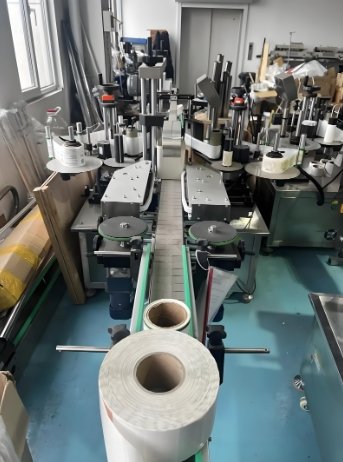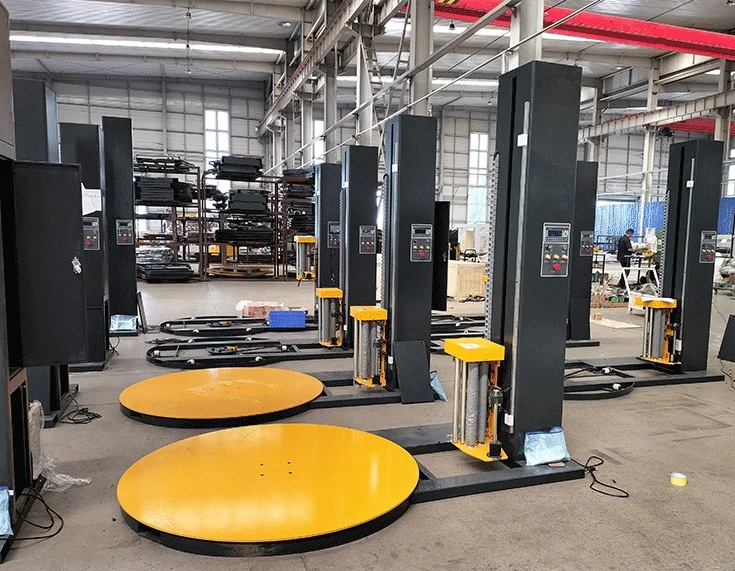
Sauce can expose the weaknesses of the wrong filling equipment. It can cling to nozzles, trap air, separate inside the hopper, and contain chunks that block fillers designed for thin liquids. The right sauce packaging machine handles these challenges with accurate dosing, wider product pathways, and clean cut-off, helping maintain consistent fill weights and clean container threads for reliable sealing.
At Foshan Popper, we manufacture sauce and paste filling machines for products such as ketchup, chili sauce, salsa, mayonnaise, mustard, curry paste, peanut butter, jam, and salad dressing. This guide explains why sauces can be difficult to package, which filler types are suitable for different products, and how the rest of the sauce packaging line should be configured around the filling machine.
You will also find a product-to-filler selection table, guidance for hot-fill applications, common filling problems and their solutions, and the key questions to answer before requesting a sauce packaging machine quotation.
What Does a Sauce Packaging Machine Do?
A sauce packaging machine fills thick food products into containers, seals them, and prepares them for sale. At the heart of the sauce packaging line is a filling system designed for products that do not flow easily by gravity. Instead of relying on free flow, it uses a piston or pump to move a measured amount of sauce through a wide nozzle and stop the flow cleanly to reduce dripping and stringing.
The complete line can also include a heated or agitated hopper, container handling equipment, capping and sealing systems, weight checking, labeling, and final packing. Similar equipment is often used for pastes, creams, dressings, jams, and chutneys, which is why these products are commonly grouped together.
Why Sauce Is Harder to Fill Than Water
Five product characteristics influence almost every decision when selecting and configuring a sauce packaging line:
Viscosity: Thin dressings may still flow easily, while ketchup, curry paste, and cheese sauce require greater pressure. Higher-viscosity products generally need wider product pathways and slower filling speeds.
Particulates: Salsa, chutney, and pizza sauce may contain chunks, seeds, herbs, or other solids. Particle size determines the minimum valve and nozzle diameter, while the wrong pump can damage or break down those pieces.
Entrapped air: Emulsified or whipped sauces such as mayonnaise can hold air within the product. If air is included in the measured dose, the container may appear underfilled once the product settles.
Temperature: Many sauces are hot-filled, while products such as chocolate or cheese sauce become thicker as they cool. These applications often require heated or jacketed product-contact components.
Separation: Oils, liquids, and solids can separate when product remains still in the hopper. Without proper agitation, the first containers filled after a pause may differ in appearance or weight.
Because of these factors, machine selection should not be based on rated speed alone. The more important question is how the filler performs with your specific sauce at the required filling temperature.
Filler Types for Sauce
Most sauce packaging machines use one of four main dosing methods, with piston and rotary lobe systems being the most common for thick and particulate sauces.
Piston Filler
A piston filler draws a measured volume of sauce from the hopper and pushes it into the container through a rotary or check valve. It is widely used for thick sauces because the piston creates positive pressure and delivers a consistent volume with each stroke. Servo-driven models can control filling speed at the beginning and end of the cycle, helping reduce splashing and improve accuracy. Our guide to piston filling machines explains the working principle in more detail.
Rotary Lobe Pump Filler
A rotary lobe pump uses two rotating lobes to move sauce through a wide chamber with minimal shear. This makes it suitable for chunky products such as salsa and fruit preserves, where pieces need to remain intact during filling. Its continuous pumping action also makes it useful for higher-speed production lines.
Progressive Cavity Pump Filler
A progressive cavity pump uses a rotating rotor inside a flexible stator to move product through sealed cavities. This design is suitable for very thick, sticky, or delicate pastes because it moves the product gently. However, it is generally more expensive and requires greater attention during cleaning and maintenance.
Gravity and Overflow Fillers
Gravity and overflow fillers are best suited to thin, free-flowing sauces such as light dressings, hot sauce, and soy-based sauces. They are usually not suitable for thicker products because filling accuracy can drop and dripping may increase. If your product range includes both thin and thick sauces, select the filling system based on the thickest product you plan to run.
| Product Example | Typical Texture | Best Filler | Why |
|---|---|---|---|
Hot sauce, soy sauce, thin dressing |
Thin, free-flowing |
Gravity or overflow |
Low cost, fast, level fill looks neat in clear bottles |
Ketchup, BBQ sauce, mayonnaise |
Thick, smooth |
Piston filler |
Positive dosing and accurate repeat volumes |
Salsa, chutney, pizza sauce |
Chunky |
Lobe pump or large-port piston |
Wide product path keeps pieces whole |
Curry paste, cheese sauce, chocolate |
Very thick or heat-sensitive |
Heated piston or progressive cavity filler |
Jacketed components help maintain temperature and keep the product flowing |
Nozzles and Cut-Off: Where Most Filling Problems Begin
What the Entry-Level Market Offers
Before requesting a custom sauce packaging line, it is useful to understand the typical specifications of off-the-shelf semi-automatic paste and sauce fillers. These published ranges provide a practical benchmark for comparing different quotations and machine options.
Typical Published Specs for Semi-Automatic Paste and Sauce Fillers
| Parameter | Typical Published Range |
|---|---|
Fill volume |
From about 10–100 ml on small models to 1,000–5,000 ml on larger machines |
Speed, single head |
Around 5–25 containers per minute |
Speed, double head |
Around 10–40 containers per minute |
Fill accuracy |
Approximately ±0.5% to ±2%, depending on product and fill volume |
Air pressure |
Typically 0.4–0.6 MPa using a separate air compressor |
Hopper |
Commonly around 30 litres, with heated and agitated versions available |
Contact parts |
Food-grade stainless steel, with 316 stainless steel often used for acidic or salty products |
These ranges are based on published specifications from commonly available machines rather than one specific model. Use them as a general benchmark when comparing equipment.
The filling nozzle plays a major role in keeping container rims clean. Sauce left on the rim can interfere with sealing and create problems later in the packaging process.
Three nozzle features are especially important:
Anti-drip or positive shut-off valves: These close the product flow at the end of each dose, helping prevent sauce from dripping onto the container or conveyor.
Diving nozzles: These move into the container and rise as it fills, helping reduce splashing and minimize trapped air.
Nozzle diameter: The opening must be large enough for the biggest particles in the sauce. A nozzle that is too narrow may look more precise but can cause frequent blockages and production delays.
For more information on choosing the right nozzle design, see our guide to filling machine nozzle types.
Hopper, Feed, and Temperature Control
A sauce filling system can only perform consistently when the product supply remains stable. A complete sauce packaging line commonly includes:
- An agitated hopper to keep solids evenly distributed and reduce separation between oil, water, and other ingredients.
- A jacketed hopper or heated filling head for products that become thicker as they cool, including cheese sauce, chocolate spread, and some curry pastes.
- A transfer pump from the mixing or cooking vessel to maintain a consistent hopper level and stable pressure at the filling point.
- Level sensors that trigger product supply before the hopper runs too low and air enters the filling system.
Hoppers are generally available in three configurations: ambient, insulated, and actively heated. The correct option should match the required filling temperature rather than simply the lowest-cost setup, because reheating sauce inside the hopper can affect product consistency and texture.
Seal materials are also important. Acidic or salty sauces containing ingredients such as vinegar, citrus, or salt can affect both metal and elastomer components. For warm acidic products, fluoroelastomer seals with silicone or PTFE gaskets are commonly used.
When sauces are mixed or emulsified in-house, the mixer and filling machine should be sized as one system. Our liquid mixers and homogenizers handle the blending stage before filling.
Hot Fill vs Cold Fill
Many shelf-stable sauces are hot-filled directly after cooking. The heat of the product helps treat the container and headspace, and after capping, jars may be briefly inverted so the hot sauce contacts the closure before cooling.
Hot filling affects equipment selection in three main ways. First, all product-contact parts and seals must tolerate the filling temperature. Second, the containers must be suitable for hot-fill applications, which is especially important with PET bottles. Third, the capping system must close the container quickly and securely because the vacuum created during cooling helps maintain the seal.
Cold filling is commonly used for acidified sauces preserved through pH control, as well as refrigerated or frozen products. It is generally simpler from a temperature-control standpoint, but it relies more heavily on strict hygiene and sanitation practices.
A Full Sauce Packaging Line, Station by Station
A filling machine is only one part of the complete packaging process. A typical sauce packaging line usually follows this sequence:
1. Cooking and mixing: The kettle or mixer prepares the sauce and transfers it to the filling hopper.
2. Container feeding: Bottles or jars are positioned upright on the conveyor and may be rinsed before filling.
3. Filling: A piston or pump delivers the measured dose, often through a diving nozzle to reduce splashing.
4. Capping and sealing: Capping machines place and tighten closures. Some lines also use induction sealing to create an airtight, tamper-evident seal.
5. Inspection: Checkweighers verify fill weight, while metal detection can help identify contamination from raw materials or processing equipment.
6. Labeling and coding: Labels are applied once containers are clean and dry, followed by batch, lot, or date coding.
7. Final packing: Finished containers are shrink wrapped or packed into cartons before palletizing.
Sachets, Stick Packs, and Pouches
Sauce is not always packed in jars or bottles. Single-serve ketchup, soy sauce, and chili sauce sachets, as well as stand-up pouches for pasta sauce and marinades, require different packaging systems.
Vertical form-fill-seal (VFFS): This machine forms bags from roll-fed film, fills them using a pump or piston, seals the package, and can add date coding in the same cycle. Different bag formats can often be produced by changing the forming set.
Multilane sachet machines: Several filling lanes operate at the same time, making them suitable for high-volume condiment sachets with small fill weights.
Premade pouch machines: These systems open, fill, and seal ready-made stand-up or spouted pouches, making them suitable for retail sauces sold in flexible packaging.
Flexible packaging machines require stable sealing temperatures because sauce contamination in the seal area can cause leakage. For this reason, the product is normally filled below the sealing zone using a drip-controlled filling system.
Cleaning, Changeover, and Food Safety
Sauce packaging machines often handle multiple recipes, while ingredients such as tomato and turmeric can leave strong color residues. Three equipment features make cleaning and changeover easier:
Tool-free disassembly: Pistons, valves, and nozzles can be removed quickly for thorough cleaning.
Clean-in-place capability: Automatic systems can circulate cleaning solution through the hopper, pump, and filling nozzles. On smaller machines, a similar cleaning cycle can be performed manually using hot water or approved cleaning solution.
316L stainless steel and food-grade seals: These materials are commonly used for acidic and salty sauces because ingredients such as vinegar, citric acid, and salt can affect lower-grade materials over time.
Allergen changeovers also require careful cleaning procedures. Ingredients such as dairy, nuts, sesame, and soy may remain even when visible product residue has been removed.
Semi-Automatic vs Automatic Sauce Packaging
Smaller producers often begin with a semi-automatic sauce packaging machine built around a semi-automatic sauce filling machine. The operator places each container beneath the nozzle and activates the filling cycle, typically with a foot pedal. This setup is simple, flexible, and well suited to small batches, product testing, and lower production volumes.
An automatic sauce packaging line connects filling, capping, and labeling equipment on a single conveyor, often using multiple filling heads at the same time. It becomes more practical when production volume increases, labor becomes a limitation, or consistent fill weights are required for larger retail orders.
Many manufacturers automate in stages, adding equipment such as cappers and labelers before moving to a fully automatic filling system.
Common Sauce Filling Problems and Fixes
Troubleshooting a Sauce Filler
| Problem | Likely Cause | What to Check |
|---|---|---|
Dripping or stringing around the jar rim |
Slow nozzle cut-off or worn seals |
Check the shut-off valve, nozzle condition, and filling speed near the end of the stroke |
Fill weights change during production |
Changing hopper level or product temperature |
Check level control, hopper temperature, and agitator speed |
Chunks block the valve or nozzle |
Product path is too narrow for the largest particles |
Check valve and nozzle diameter, pump type, and maximum particle size |
Air pockets or short fills |
Splashing or trapped air in the sauce |
Check the diving nozzle, reduce initial filling speed, and consider deaeration before filling |
First containers are off-spec after a pause |
Product has separated or cooled in the hopper |
Maintain agitation during idle periods, check the jacket temperature, and purge before restarting |
Caps leak after the product cools |
Sauce on the container threads or delayed capping |
Check nozzle cleanliness, time between filling and capping, and cap torque settings |
How to Choose the Right Sauce Packaging Machine
Before comparing quotations, answer these six questions:
1. How thick is the product, including when it cools?
Viscosity helps the supplier determine the correct piston, pump, product path, and filling speed. Providing a product sample can improve machine selection.
2. What is the largest particle in the recipe?
Chunk size can determine the required valve diameter, nozzle size, and suitable filling technology.
3. Will the product be filled hot or cold?
Hot filling affects product-contact materials, container requirements, temperature control, and the capping process.
4. Which containers and fill volumes will you use?
Glass jars, PET bottles, squeeze bottles, pouches, and larger containers may require different nozzles, guides, and handling systems.
5. What production output will you need in the future?
Choose an automation level that can support expected growth rather than only your current production volume.
6. How many products or flavors will run on the same line?
Frequent changeovers make features such as quick-release components and clean-in-place systems more valuable.
If your product range includes everything from thin dressings to thick pastes, our viscous liquid filling machine guide explains how different filling systems handle changing viscosity.
What Affects the Price?
The price of a sauce packaging machine depends heavily on its configuration. A compact single-head filler and a fully automatic sauce packaging line have very different specifications, so quotations should be compared based on what is included.
The main cost factors include:
- Number of filling heads and required production speed
- Filling technology, with rotary lobe and progressive cavity systems generally requiring more complex equipment than basic piston fillers
- Heating and jacketing for hoppers, filling heads, and product pipelines
- Material grade and hygienic design, including 316L stainless steel and clean-in-place capability
- Container sizes and changeover components included with the machine
- Downstream equipment, such as capping, induction sealing, checkweighing, labeling, and final packing
Build Your Sauce Packaging Line with Foshan Popper
Foshan Popper supplies sauce filling machines as standalone equipment or as part of complete lines that can include capping, sealing, labeling, and packing.
By configuring the filling and downstream equipment as one system, each station can be matched to the product, container, and required production output.
Before publishing, verify the exact factory acceptance testing process, installation support, training, spare-parts policy, after-sales terms, and supported service regions so these claims accurately reflect Foshan Popper’s current service offering.
Send us your sauce details, container specifications, fill volume, and target output, and we can recommend a suitable configuration. Request a quotation.
Frequently Asked Questions
Which sauce packaging machine is best for thick sauces?
A piston filler is suitable for most thick, smooth sauces such as ketchup, BBQ sauce, and mayonnaise because it pushes a measured volume under positive pressure. For chunky sauces, a rotary lobe pump or large-port piston filler helps keep solid pieces intact.
Can one machine fill both thin and thick sauces?
Often, yes. The machine should be selected based on the thickest product in your range. A piston filler with the correct valve and nozzle can handle both thinner dressings and thicker pastes, while a gravity filler designed for thin liquids is not suitable for highly viscous sauces.
How do you fill sauces with chunks?
The product path must be wide enough for the largest particles in the recipe. This may require larger valves and nozzles, a rotary lobe or progressive cavity pump, or a large-port piston filler. Slower filling speeds can also help reduce damage to the chunks.
What is hot filling, and does my sauce need it?
Hot filling means filling the sauce while it is still hot after cooking. The heat helps treat the container and closure before cooling. It is commonly used for some shelf-stable sauces, while refrigerated or frozen products may use different filling processes.
Why do sauce jars leak after cooling?
Common causes include sauce on the jar threads, delays between filling and capping, or incorrect cap torque. Improving nozzle cut-off, keeping the container rim clean, and capping promptly can help prevent leakage.
How do I stop sauce from dripping from the nozzle?
Use an anti-drip or positive shut-off nozzle, reduce filling speed near the end of the stroke, and inspect seals for wear. A diving nozzle can also help keep the filling process cleaner.
Final Thoughts
Choosing the right sauce packaging machine depends mainly on product viscosity, particle size, filling temperature, and container type. Matching the filler, nozzle, hopper, and downstream equipment to these requirements helps improve filling accuracy, reduce dripping and blockages, and create a more reliable sauce packaging line.