
Bottle Filling Machine
We manufacture bottle filling machines at our factory in Foshan, China, for water, juice, sauces, oils, cosmetics, chemicals, and pharmaceutical liquids. Tell us your product, bottle size, and target output, and our engineers will specify the right filling method and bottle filling machine for your production needs.
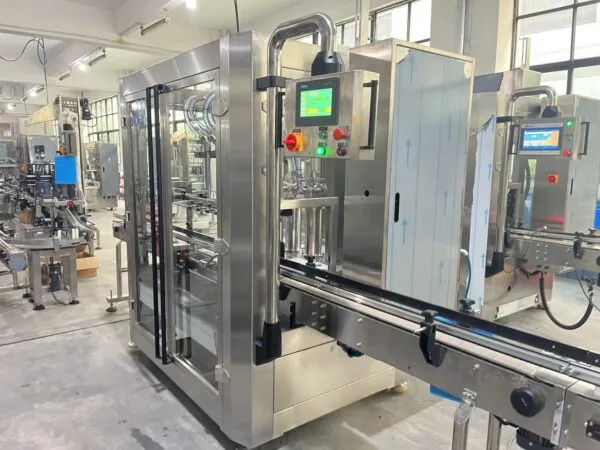
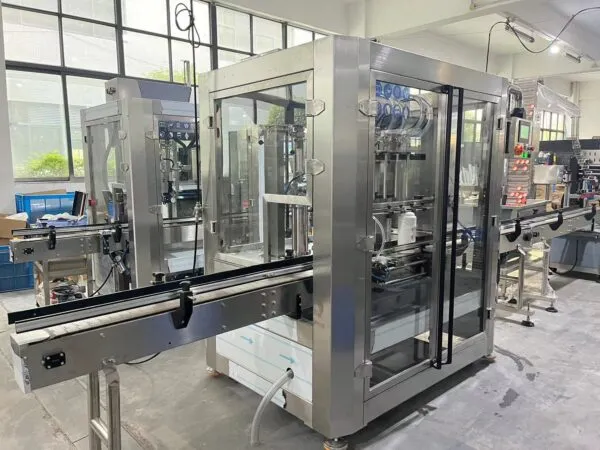
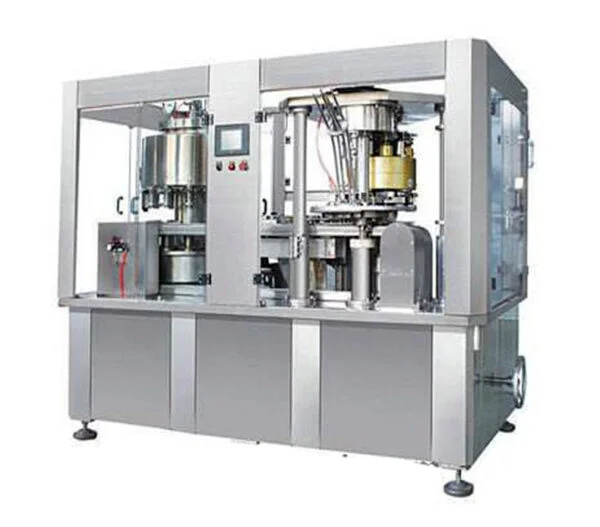
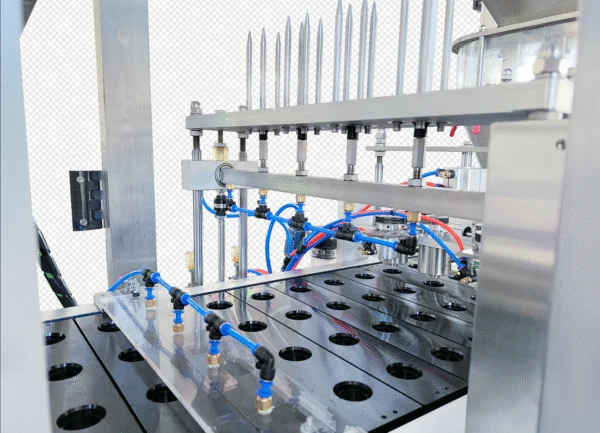
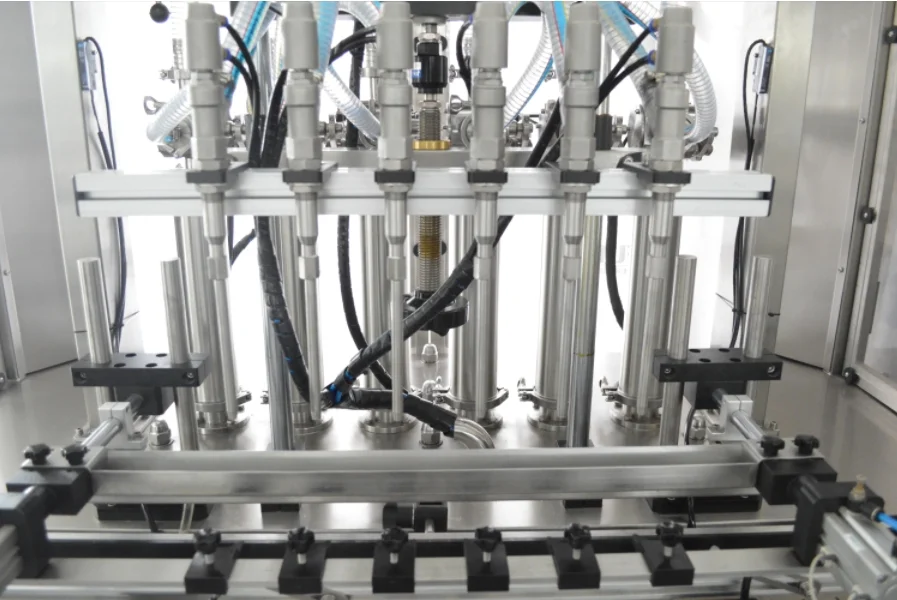
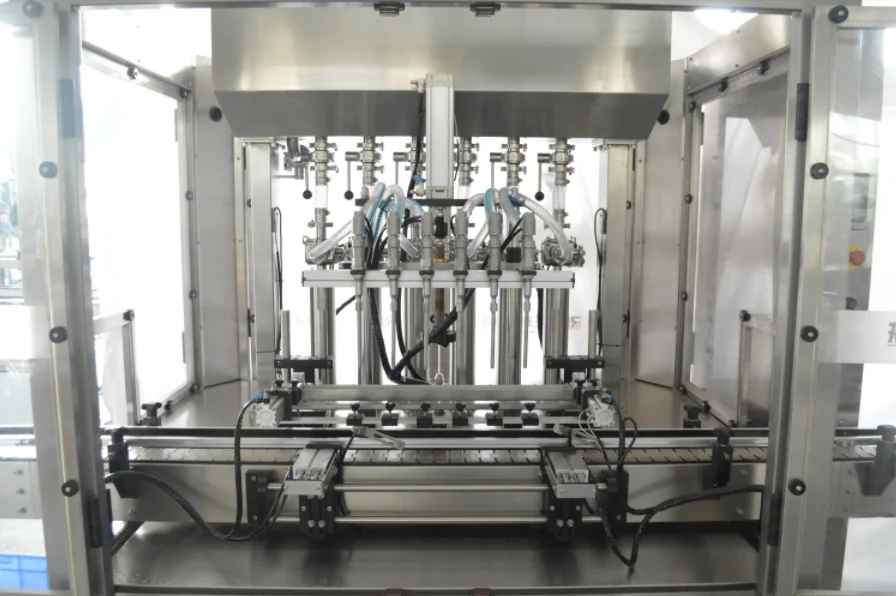

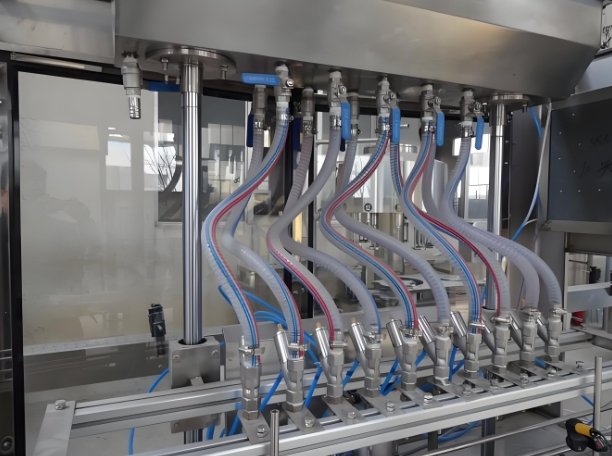
Bottle Filling Machines Built Around Your Liquid
A bottle filling machine doses a measured volume of liquid into each bottle, then passes it to capping and labeling. What determines the right bottle filling machine is not the bottle. It is the liquid.
Thin, free-flowing products fill differently from thick creams. Foaming products need a nozzle that fills from the bottom up rather than dropping liquid from above. Products with particulates need a piston rather than a pump. At Foshan Popper Technology, we select the filling method based on your product, then build the bottle filling machine around it.
Bottle Filling Machine
From Filling to Sealing
A filled bottle is not a finished bottle. It has to be sealed before it leaves the line, and on most of our bottle filling machine builds, the capper sits directly after the filler so bottles move from one to the next without being handled.
Running them together matters more than it sounds. Conveyor height, bottle pitch, and control signals have to match across both machines, which is straightforward when one supplier builds them and a negotiation when two do.
At Foshan Popper Technology, our capping machines apply screw caps and press-on caps and handle round and square bottles on the same frame. Tell us your closure type and bottle format at the enquiry stage, and we specify the bottle filler machine and capper together.
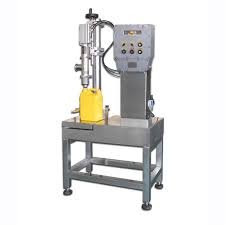
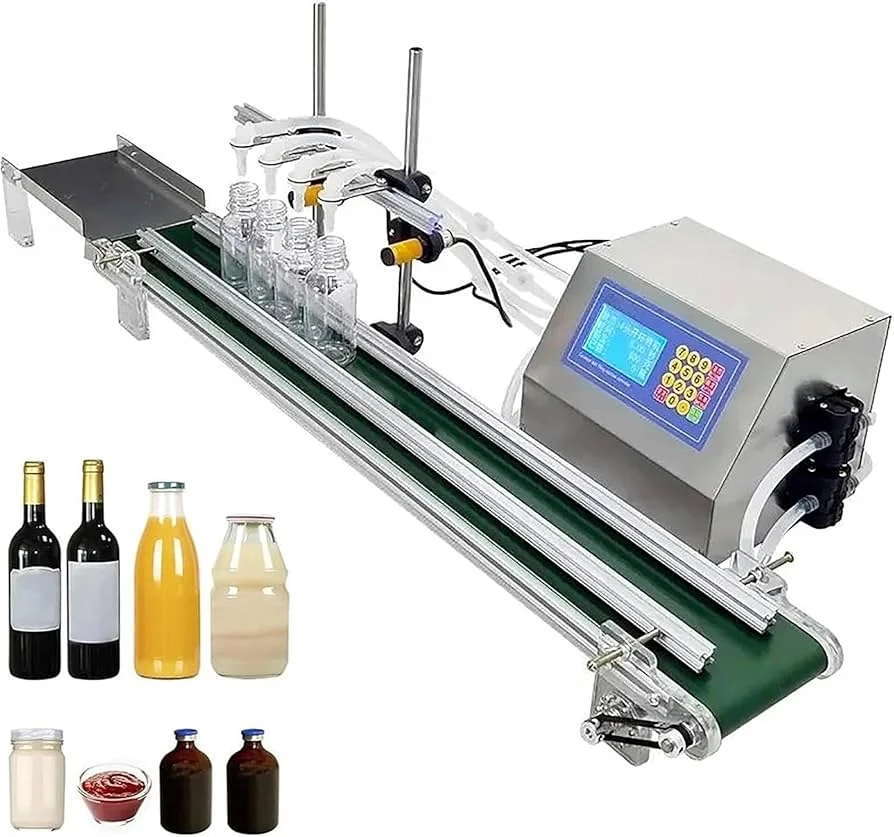
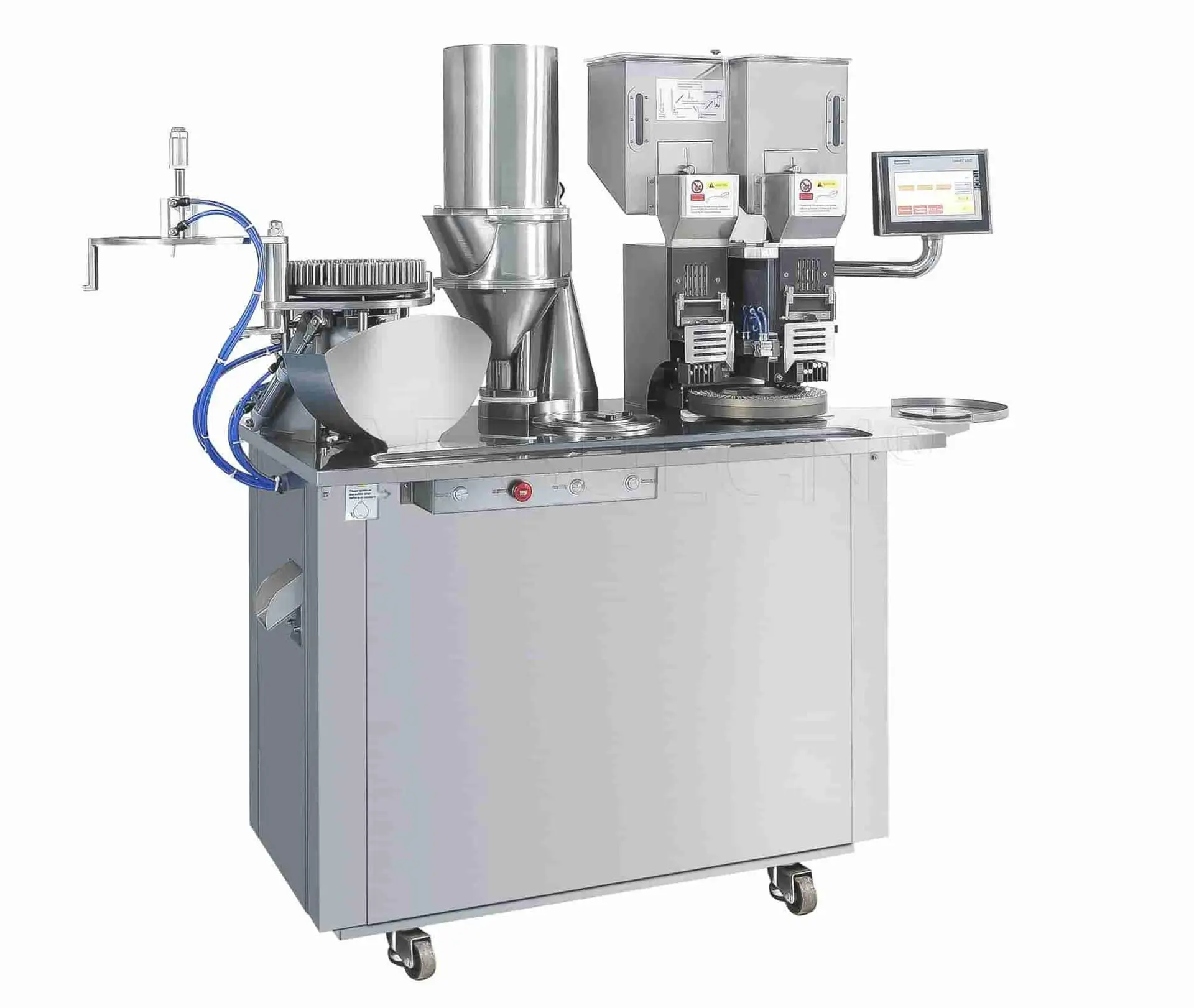
Which Filling Method Does Your Product Need?
Viscosity, foaming behaviour, and whether the product carries particles decide the filling method for your bottle filling machine. Get this wrong and no amount of machine quality will hold your fill accuracy.
| Method | Best for | How it doses | Watch for |
|---|---|---|---|
|
Gravity |
Thin, free-flowing, non-foaming liquids. Water, spirits, thin juice. |
Liquid falls from a tank by gravity for a timed period. |
Accuracy drifts if tank head pressure changes. |
|
Overflow |
Thin liquids in clear bottles where a level line matters. |
Fills to a set level and returns the excess to the tank. |
Fills to level, not to volume. Bottle volume variation shows. |
|
Piston |
Thick products and anything with particles. Sauces, creams, gels. |
A piston draws a set volume and pushes it through the nozzle. |
Slower than gravity. Tooling per volume range. |
|
Pump |
Medium-viscosity products across a wide range. Oils, shampoos, lotions. |
A pump moves a metered volume per cycle. |
Pump type must match the product chemistry. |
|
Pressure |
Carbonated products and fast lines. |
A pressurised tank forces liquid into the bottle. |
Needs a sealed fill point. |
|
Vacuum |
Fragile containers, hazardous or volatile liquids. |
Vacuum draws liquid in and returns overflow. |
Only suits rigid, sealed containers. |
Nozzle choice sits alongside the filling method of a bottle filling machine. Bottom-up diving nozzles reduce foaming, anti-drip nozzles stop product stringing between fills, and nozzle bore is sized to viscosity. Our guide to filling machine nozzle types covers the options, and how to stop foaming when filling liquids covers the most common cause of rejected bottles.
For thick products specifically, see our viscous liquid filling machine guide, and for a side-by-side comparison of the methods used in bottle filling machines, see comparing different types of liquid filling machines.
Automatic and Semi-Automatic Bottle Filling Machines
Choosing between a semi-automatic and automatic bottle filling machine depends mainly on production volume, bottle handling, product changeovers, and the level of line integration required.
| Best for | How it doses | |
|---|---|---|
|
Bottle handling |
Operator places and removes bottles |
Conveyor infeed and discharge, no manual handling |
|
Typical output |
Low to moderate |
Moderate to high |
|
Suits |
Small batch, frequent product changes, startups |
Continuous production, single or few SKUs |
|
Line integration |
Standalone |
Runs inline with capping, labeling, and packing |
|
Relative cost |
Entry |
Higher, with faster payback at volume |
Starting small? Our guide to the best automatic liquid filling machine for your production line covers what changes as volume grows. Where bottles arrive loose rather than upright, a bottle unscrambler feeds them to the bottle filling machine in the right orientation.
Flexibility for Round and Square Bottles
Our bottle filling machines run both round and square bottles. For round bottles, the centring guides hold the bottle under the nozzle. For square and rectangular bottles, the guides align the flat faces so the bottle cannot rotate and catch on the nozzle as it lifts.
Change parts are supplied for every bottle format you run, and settings are saved per format on the bottle filling machine control panel, so a changeover is a selection and guide adjustment rather than a recalibration.
- Increased Efficiency
- Faster Processing: Automation speeds up the process, boosting production output. Machines can complete repetitive tasks more quickly than manual methods, allowing more products to move through the line in less time.
- Reduced Delays: Automated systems help keep production moving by reducing slowdowns caused by repeated handwork. This supports a smoother workflow and helps teams maintain steady progress during daily operations.
- Higher Output: When tasks are completed faster, businesses can produce, package, or prepare more units within the same working period. This is useful for companies managing growing demand or regular high-volume schedules.
- Better Workflow Control: Automation helps each production stage stay more organized. Workers can monitor machines, check quality, prepare materials, and manage the line instead of handling every task manually.
- Consistent Performance: Because machines repeat the same action with controlled timing, production becomes more predictable. This consistency helps businesses improve output while maintaining stable process quality across regular production runs and busy working schedules. It also helps operators plan daily targets, reduce idle time, and keep production capacity aligned with customer requirements during every shift cycle more reliably overall.
Sauces, dressings, honey, oils and pastes. Thick products and anything carrying particulates need piston filling. See our sauce filling machine for that configuration specifically.
Shampoo, lotion, serum, hand wash and sanitiser. Medium viscosity products that foam readily, which makes nozzle selection more important here than filling method. Bottom-up diving nozzles are usually specified.
Cleaning products, agricultural chemicals, solvents and pharmaceutical liquids. Contact material grade and chemical compatibility drive the build here. For thin chemical liquids across a range of container types, see our liquid filling machine range.
Frequently Asked Questions
It depends on viscosity, whether the product foams, and whether it carries particles. Thin, non-foaming liquids suit gravity or overflow filling. Thick products and anything with particulates need piston filling, while medium-viscosity products suit a pump. Send us a product sample, and we confirm the right filling method for your bottle filling machine before quoting.
Gravity fills a set volume by letting liquid fall from a tank for a timed period. Overflow fills to a set level and returns the excess. Overflow is chosen when bottles are clear and every bottle must show the same fill line because bottle volume varies slightly even within one batch.
Yes, with piston or pump filling rather than gravity. Our viscous liquid filling machine guide covers what changes as viscosity rises.
On gravity fillers, it is usually changing tank head pressure as the tank empties. On piston fillers, it is usually air trapped in the cylinder. Our troubleshooting tips for liquid filling machines covers diagnosis in order.
Bottom-up diving nozzles descend into the bottle and fill from the base upward so the liquid does not drop through air. Fill speed is also reduced at the start and end of each cycle. Our guide on how to stop foaming when filling liquids covers the full set of causes.
Yes. Centring guides hold round bottles under the nozzle, and face guides align square and rectangular bottles so they cannot rotate. Change parts are supplied for each bottle format you run.
Nozzle choice follows the product, not the bottle filler machine. Diving nozzles are used for foaming liquids, anti-drip nozzles for products that string or drip between fills, and nozzle bore is sized to viscosity. Our guide to filling machine nozzle types explains the options.
With 10+ years of experience, Foshan Popper Technology manufactures reliable bottle filling machines for different liquids, bottle formats, and production requirements. From machine configuration and run-testing to installation support, training, and spare parts, we support your filling line from specification through production.
Need Help Choosing the Right Bottle Filling Machine?
Send us your product, bottle size, and target output. Our engineers confirm the right filling method for your bottle filling machine against a sample, then return a machine specification with pricing. Contact us or email info@fillingmachinepp.com.