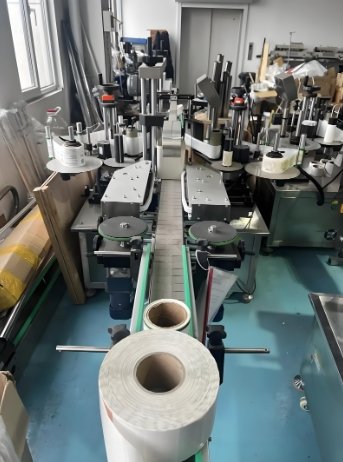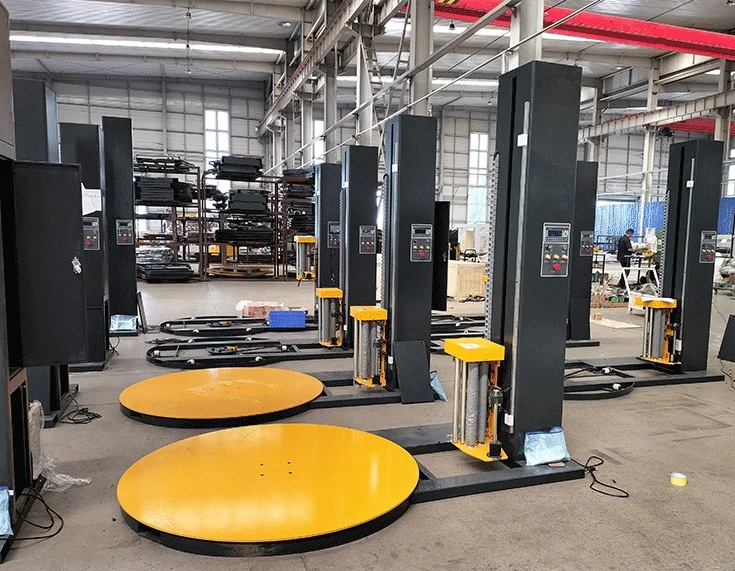
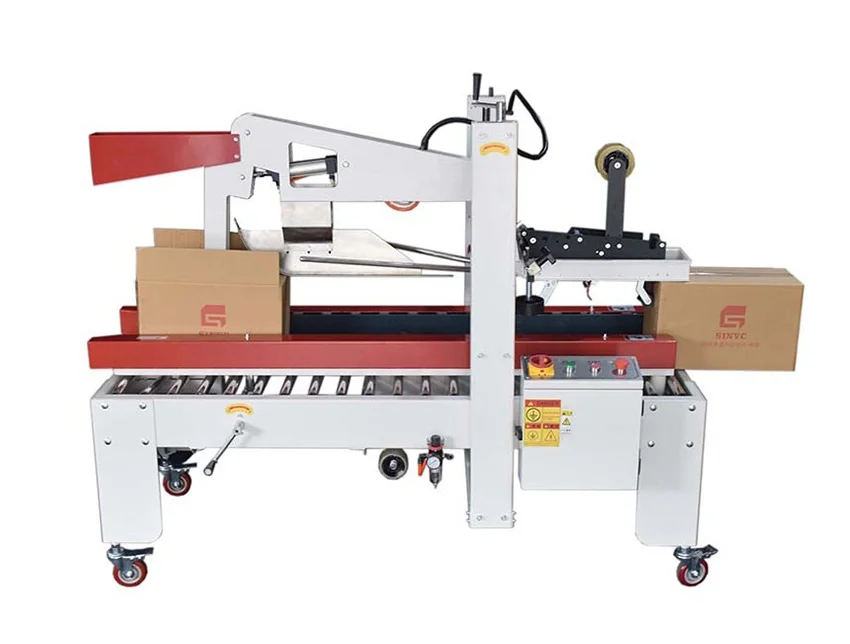
A carton packaging machines is an industrial packaging system that automatically forms, loads, closes, and seals corrugated or paperboard cartons around products protecting them for retail display, transit, and warehouse storage. Additionally, it is widely used across food, beverage, pharmaceutical, cosmetics, and FMCG manufacturing. Moreover, it acts as the final stage before palletizing and dispatch.
For any factory producing more than a few hundred cases per shift, manual carton packing is no longer viable. Labor costs are high, packing speed is inconsistent, and error rates wrong products, wrong quantities, damaged cartons create downstream problems at every step of the supply chain. An automatic carton packing machine eliminates all three problems simultaneously.
This guide covers every carton packaging machines type, the industries that rely on them, what drives price at each level, and exactly what to look for before you buy so you arrive at any supplier conversation fully prepared.
For a broader overview of how packaging machines integrate with filling and capping equipment on a shared production line, see our complete guide to automatic filling machine types.
How a Carton Packaging Machine Works
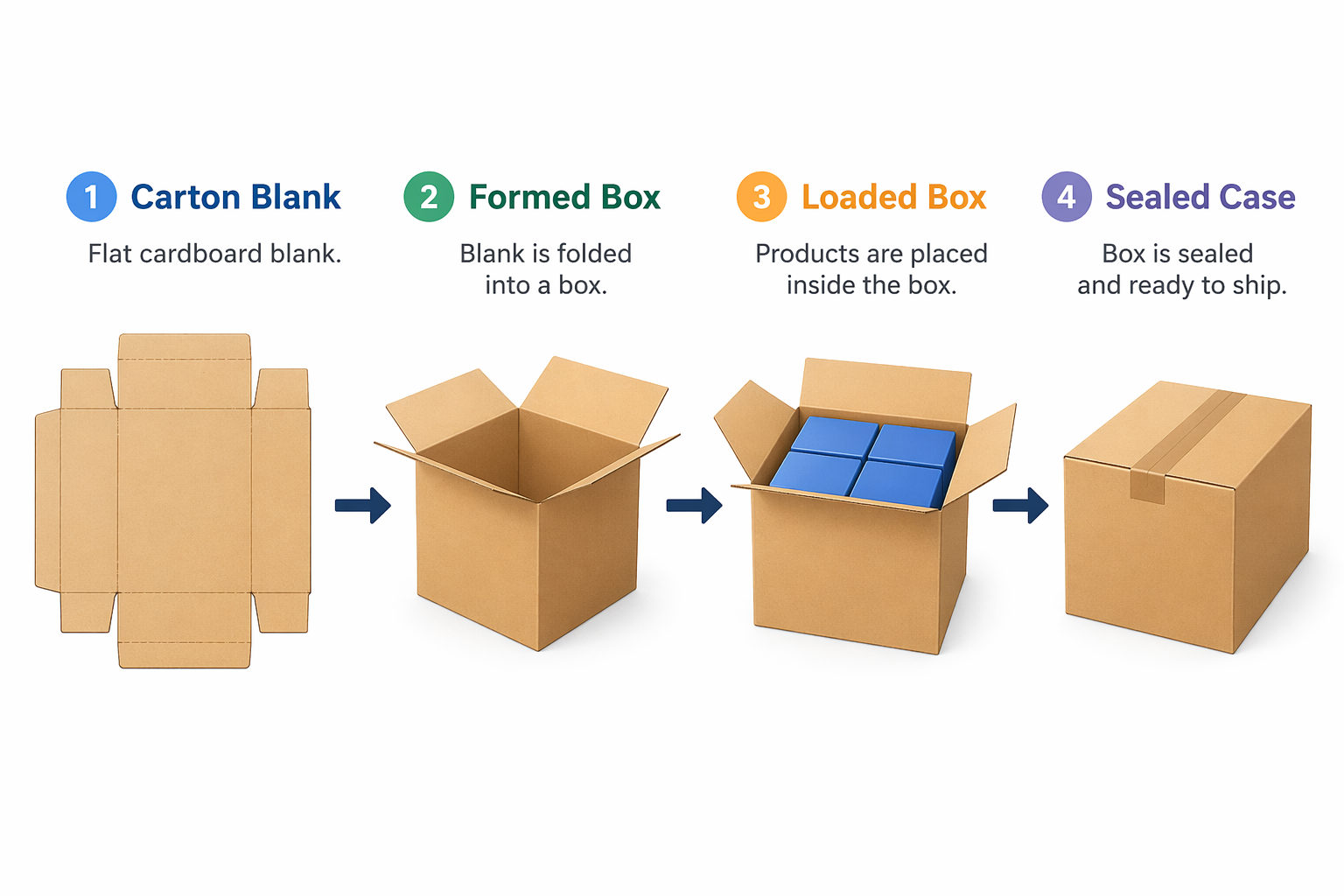
Every carton box packing machine regardless of configuration follows the same core sequence.
Step 1 Carton forming. A flat carton blank is picked from a magazine, opened, and squared into its box shape. Bottom flaps are folded and sealed using hot melt glue or pressure-sensitive tape.
Step 2 Product loading. Products are fed into the formed carton automatically by a robotic pick-and-place system, a side-load pusher, or a top-load drop system depending on product type.
Step 3 Carton closing and sealing. Top flaps are folded and sealed using a carton sealer machine integrated into the same line. Hot melt glue is the most common sealing method in high-speed applications. Tape sealing is used for heavier loads.
Step 4 Case discharge. Sealed cartons exit on a conveyor to the next stage labeling, coding, or palletizing.
The entire cycle from flat blank to sealed case takes 2 to 8 seconds on a modern automatic machine.
Types of Carton Packaging Machines
1. Top-load carton packaging machine
Products are loaded vertically from above into an open-top carton. Best for fragile, irregular, or mixed-product packs where robotic pick-and-place loading is used. Common in food, cosmetics, and pharmaceutical packaging where product orientation must be maintained.
Best for: Bottles, jars, bags, pouches, blister packs, and any product that cannot be pushed sideways without damage.
2. Side-load (horizontal) carton packaging machine
Products are pushed horizontally into a pre-formed carton from the side. Faster than top-load systems and better suited to regular, rigid products in consistent configurations. Output typically ranges from 20 to 80 cases per minute.
Best for: Beverage cans, tin cans, rigid boxes, bagged products, and any regular-shaped product running in high volume.
3. Wrap-around case packer
Instead of using pre-formed carton blanks, a wrap-around machine takes a flat blank and wraps it directly around the product group forming and sealing the carton in one motion. This reduces carton material cost significantly (no pre-formed box storage needed) and produces a tighter, stronger case.
Best for: Beverage multipacks, canned food, bottled water, and high-volume FMCG applications where material cost and case strength both matter.
4. Carton sealer machine (standalone)
A standalone carton sealer machine seals the top of pre-filled cartons using tape or hot melt glue. Used where the filling and loading operation is separate from the sealing stage common in semi-automatic packaging environments or where product loading is done manually.
Best for: Medium-volume operations, variable product mixes, and factories adding sealing automation without replacing the full packing line.
5. Case packing machine (RSC format)
A case packing machine for Regular Slotted Container (RSC) format is the standard workhorse of warehouse and transit packaging. It forms, loads, and seals the most common corrugated carton format used in logistics. Output ranges from 5 to 30 cases per minute depending on configuration.
Best for: Industrial goods, heavy products, transit-only packaging, warehouse dispatch, and any application where retail appearance is secondary to protective strength.
Industries That Use Carton Packaging Machines
Carton packaging machine for food industry applications represent the largest single demand segment. Breakfast cereals, snack foods, frozen meals, canned goods, and bottled sauces all move through carton packaging machines before they reach retail shelves. Speed, hygiene-compliant construction, and integration with upstream filling lines are the critical requirements. For a deeper look at how carton packaging connects with filling and labeling in food production, read our guide on how a food packaging machine improves efficiency and reduces waste.
Beverage factories use wrap-around case packers as the standard end-of-line solution grouping bottles, cans, or cartons into retail or transit cases at 30 to 80 cases per minute. A complete beverage line typically combines a liquid filling machine, capping machine, labeling machine, and case packer on a single shared conveyor.
Pharmaceutical manufacturers use top-load carton packers for boxing blister packs, bottles, and tubes with patient information leaflets. GMP-compatible construction stainless steel frames, easy cleaning, and documentation capability is required for pharmaceutical-grade machines.
Cosmetics and personal care brands use carton packaging for gift sets, product bundles, and retail display cases. The emphasis here is on gentle handling (to protect packaging aesthetics) and fast changeover (to accommodate frequent new product launches).
E-commerce fulfillment operations use case packing machines to pack mixed-SKU orders into standard RSC cartons at high speed reducing labor in fulfillment centers and improving case consistency for carrier compliance.
Carton Packaging Machine Price Guide 2026
| Machine Type | Semi-Automatic | Fully Automatic | High-Speed |
| Carton sealer (standalone) | $2,000 – $6,000 | $6,000 – $15,000 | — |
| Top-load carton packer | $8,000 – $18,000 | $18,000 – $45,000 | $45,000 – $80,000+ |
| Side-load carton packer | $6,000 – $15,000 | $15,000 – $40,000 | $40,000 – $70,000+ |
| Wrap-around case packer | $10,000 – $22,000 | $22,000 – $55,000 | $55,000 – $90,000+ |
| RSC case packing machine | $5,000 – $12,000 | $12,000 – $30,000 | $30,000 – $60,000+ |
All prices are ex-factory (FOB). Shipping, import duties, installation, and commissioning are additional costs.
According to PMMI The Association for Packaging and Processing Technologies, secondary packaging automation including case packing delivers average labor cost savings of 40 to 60% within the first two years of installation, making it one of the fastest-payback investments in any production facility.
Key factors that drive price within each range:
Output speed is the single biggest cost driver. A machine running 15 cases per minute costs significantly less than one running 60 cases per minute even within the same machine type category.
Loading method affects price significantly. Robotic pick-and-place top-load systems cost more than mechanical pusher side-load systems but handle fragile and irregular products that pushers cannot.
Sealing method hot melt glue systems cost more than tape sealers but produce faster cycle times and stronger seals at high speed.
PLC control with recipe storage adds cost but reduces changeover time between carton sizes from 45 minutes to under 10 minutes a difference that pays for itself quickly in multi-SKU operations.
Comparison: Carton Packaging vs Other Packaging Methods
| Factor | Carton Packaging | Shrink Wrap | Paper Box |
| Product protection | High rigid walls | Medium film only | Medium paperboard |
| Retail presentation | Good printable surface | High visible product | Premium printed finish |
| Material cost per unit | Medium | Low | Medium-high |
| Speed (cases/min) | 15–80+ | 20–150+ | 10–40 |
| Best for | Transit + retail | Retail multipacks | Premium / pharma |
| Integration with filling line | Yes direct conveyor | Yes end of line | Yes end of line |
For a direct comparison of shrink wrap vs carton packaging in secondary packaging applications, read our shrink wrap packaging machine guide. For paper box packaging the standard for cosmetics and pharmaceutical folding cartons see our paper box packaging machine guide.
How to Choose the Right Carton Packaging Machine
Define your product dimensions and pack configuration first
Before contacting any carton packaging machine manufacturer, document the exact dimensions of your product, the carton format you will use (RSC, wrap-around, display carton), and the pack configuration how many units per case, and in what arrangement. These three data points determine which machine type is physically capable of handling your application.
Calculate your required case output accurately.
Divide your daily production target by available shift minutes and add a 20% buffer. This is your minimum machine speed in cases per minute. In our experience supplying carton packaging machines to food and beverage factories across Southeast Asia and the Middle East, the most common buying mistake is specifying a machine at its maximum rated speed a machine running at 70–80% of rated capacity produces better seals, fewer jams, and a significantly longer service life.
Confirm hot melt glue or tape sealing against your carton specification
Hot melt glue requires carton blanks with the correct glue-contact surface not all carton grades are compatible. Tape sealing is more flexible across carton grades but slower at high speed. Confirm your carton supplier’s specification before locking in the sealing method.
Verify integration with your existing line
A case packing machine positioned downstream of your filling and labeling equipment must match the upstream output speed. Sourcing your carton packer from the same supplier as your filling line eliminates speed-mismatch problems and simplifies commissioning to a single site visit. You can explore our full packaging machine range to see all available configurations. If you are ready to discuss specifications, contact our engineering team for a free assessment.
Ask for a machine trial with your actual product
Any reputable carton packaging machine manufacturer will run a product trial before shipment. Request video evidence of your specific carton format and product running on the machine at rated speed this is the only reliable way to verify cycle time, seal quality, and changeover procedure before committing to a purchase. You can also visit our services page to learn about our commissioning and after-sales support.
Carton Packaging Machine vs Palletizing: Understanding End-of-Line Flow
A common question from buyers building a new packaging line is whether to invest in a carton packaging machine, a palletizing machine, or both and in what order.
The answer is always both, in sequence. The carton packaging machine forms and seals individual cases. The palletizing packaging machine stacks those sealed cases onto a pallet in a defined pattern for warehouse storage or dispatch. They serve different functions and together complete the end-of-line automation loop. For a detailed breakdown of palletizing options and ROI, read our palletizing packaging machine efficiency guide.
For factories also running wrapping packaging machines to stretch-wrap finished pallets, the full end-of-line sequence is: case packer → palletizer → pallet wrapper all on a shared conveyor managed by a single PLC system. Read our vertical wrapping packaging machine guide for more on how wrapping integrates at the final stage.
Frequently Asked Questions
What is a carton packaging machine?
A carton packaging machine is an industrial system that automatically forms, loads, closes, and seals corrugated or paperboard cartons around products for retail display or transit. It replaces manual case packing to deliver consistent seal quality, faster output, and lower labor cost per case. Explore our full range at Foshan Popper Machinery.
What is the difference between a carton packaging machine and a case packing machine?
Although the terms are often used interchangeably, technically a case packing machine refers specifically to machines handling corrugated RSC-format cases for transit and warehouse use. By contrast, a carton packaging machine is a broader term. In fact, it covers retail display cartons, wrap-around packs, and folding carton formats, as well as RSC cases.
How much does a carton packaging machine cost?
Carton packaging machine prices in 2026 range from $2,000 for a standalone carton sealer to over $90,000 for a high-speed fully automatic wrap-around case packer. The price is primarily driven by machine type, output speed (cases per minute), loading method, and sealing technology. See the price table above for a full breakdown by machine type and automation level.
What is an automatic carton packing machine used for?
An automatic carton packing machine is used to pack products into cartons without manual handling automatically forming the carton, loading the product, and sealing the top and bottom flaps in a continuous cycle. It is used in food, beverage, pharmaceutical, cosmetics, and e-commerce packaging lines wherever consistent, high-speed case packing is required.
Can a carton packaging machine handle multiple carton sizes?
Yes PLC-controlled machines with stored product recipes can switch between carton sizes in 5 to 15 minutes. Machines without PLC control require manual mechanical adjustment and typically take 30 to 60 minutes per changeover. For operations running 5 or more SKUs, PLC control with recipe storage is strongly recommended.
What is the best carton packaging machine for the food industry?
The best carton packaging machine for food industry applications depends on the product. Wrap-around case packers are preferred for high-speed beverage and canned food lines. Top-load systems are preferred for fragile food products like bottles, jars, and bags. All food-industry carton machines should use food-grade contact surfaces and support CIP or washdown cleaning.
How does a carton sealer machine work?
A carton sealer machine folds and seals the top flaps of a pre-filled carton using hot melt glue or pressure-sensitive tape. The carton passes through the machine on a conveyor, the top flaps are folded by guide rails, and the sealing head applies glue or tape in a continuous motion. Standalone carton sealers are used where product loading is done separately from sealing.
What is the difference between a carton packaging machine and a paper box packaging machine?
A carton packaging machine handles corrugated or heavy-duty cartons used for secondary or transit packaging grouping multiple products into a single case. A paper box packaging machine handles lighter folding carton blanks used for retail-facing primary packaging cosmetics, pharmaceutical products, and premium food items. The two machines serve different packaging levels and are not interchangeable.
Get a Quote for Your Carton Packaging Machine
Choosing the right carton packaging machine for your production line requires matching the machine type, speed, carton format, and sealing method to your specific product and output target. The fastest way to get the right specification is to work directly with a manufacturer who builds carton packaging machines for your industry.
At Foshan Popper Machinery, we manufacture automatic carton packing machines, case packing machines, carton sealer machines, and complete end-of-line packaging systems all engineered to integrate with your existing filling, capping, and labeling equipment on a shared production line. Our team supplies packaging machines to clients in 50+ countries across food, beverage, pharmaceutical, cosmetics, and industrial sectors.
Request a free carton packaging machine quote →
Explore our full packaging machine range:
Have questions about which machine type fits your production? Contact our engineering team today we will assess your requirements and recommend the right configuration with no obligation.