
Pallet Packaging Machine: Boosting Efficiency
A pallet packaging machine is essential for modern production lines, designed to automate the stacking and palletizing of products with high efficiency and precision. Widely used in industries such as food & beverage, pharmaceuticals, and manufacturing, this system significantly improves production speed while reducing manual labor and operational costs. Companies like Foshan Popper Machinery provide custom machinery and supply industrial solution machinery, helping businesses achieve reliable, scalable, and efficient pallet packaging operations.
How the Palletizing Packaging Machine Works
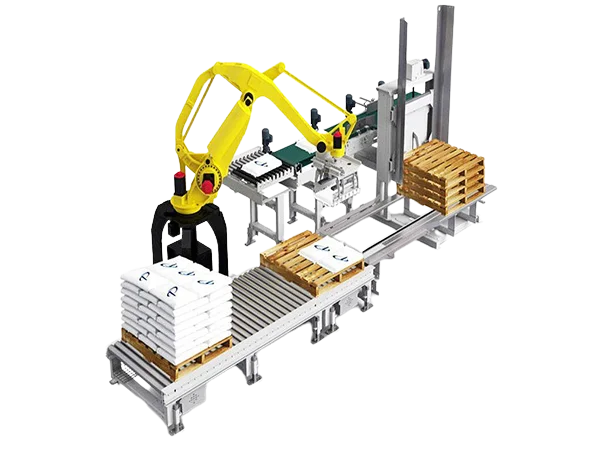
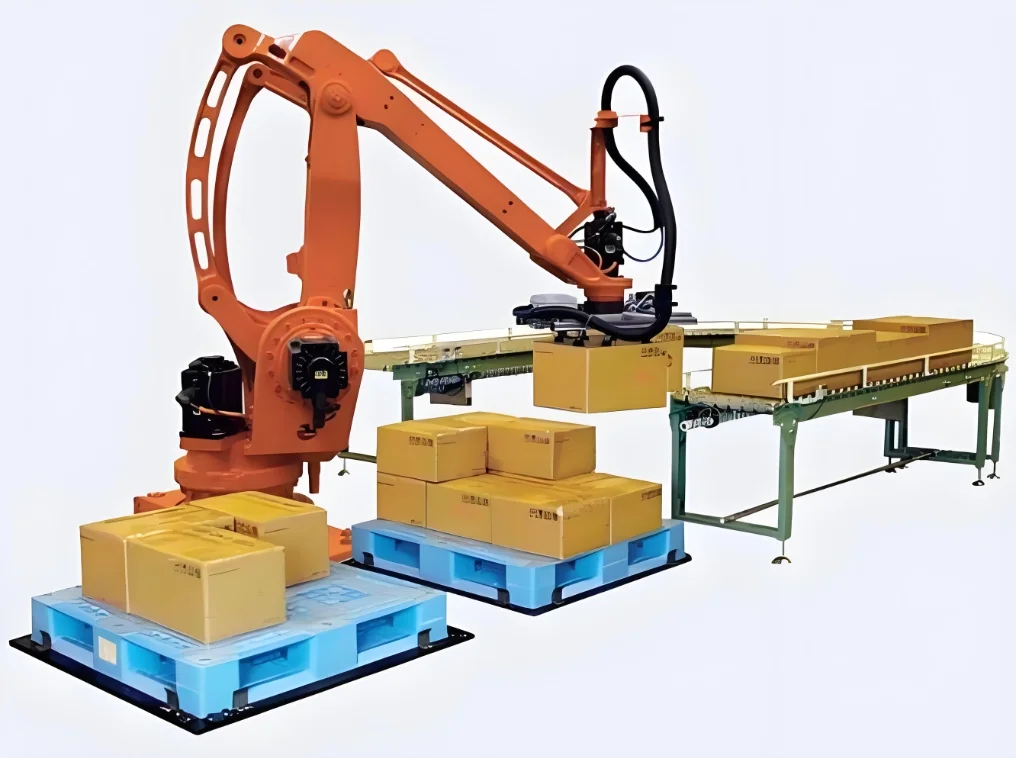
This pallet packaging machine utilizes an advanced robotic arm system to lift and position products with high precision. It arranges items into optimized pallet stacking patterns, ensuring load stability and reducing the risk of damage during transportation. The fully automated process minimizes human intervention, improving operational efficiency and consistency in high-volume production environments.
Palletizing Packaging Machine
Key Features of the Palletizing Packaging Machine
Handles Multiple Product Types: The machine can stack boxes, bags, containers, and various package shapes with ease.
Flexible Configuration: It adjusts automatically based on product size and stacking requirements.
High-Speed Operation: Designed for rapid palletizing to meet high production demands.
Applications of the Palletizing Packaging Machine
Discover how carton packaging machines improve efficiency, reduce costs, and support reliable packaging across multiple industries.
Applications of the Palletizing Packaging Machine
Food Industry: Manufacturers use this equipment for boxes of snacks, beverages, and packaged food items. Specifically, it ensures safe, stable stacking for transportation.
Chemical Sector: This system handles containers of oils, detergents, and cleaning agents. Furthermore, the machine ensures secure stacking to prevent spills.
Pharmaceutical Industry: These units stack medicine boxes and packaged medical supplies. In doing so, the technology reduces the risk of damage and improves handling efficiency.
Manufacturing Industry: Companies use these machines to palletize parts, components, and finished goods. Consequently, the system prepares items for shipment in an organized manner.
Agriculture Sector: This equipment stacks bags of seeds, grains, and fertilizers. Accordingly, it ensures the safe and easy transport of heavy agricultural materials.
Benefits of Using a Palletizing Packaging Machine
Higher Production Speed: Automation streamlines the stacking process, allowing for increased efficiency. Therefore, companies palletize more products in significantly less time.
Reduced Manual Labor: The system minimizes the need for heavy lifting. Moreover, it lowers workforce strain and reduces labor costs.
Consistent and Secure Stacking: The hardware ensures uniform placement of products. Thus, the technology reduces damage during storage and transport.
User-Friendly Operation: An intuitive control panel enables quick and easy adjustments. Specifically, operators can switch settings for different products with ease.
Low Maintenance: Simple cleaning and minimal upkeep keep the machine running efficiently. Finally, this reliability ensures less downtime for the production line.
Why Choose a Carton Packaging System?
Carton packaging machine models represent a valuable investment for improving any packaging line. Specifically, they save time, reduce labor requirements, and enhance overall production efficiency.
The machine integrates easily into existing production systems; consequently, it improves the overall workflow without requiring major structural changes. Because it offers a wide range of applications across the food, cosmetics, pharmaceutical, and retail sectors, it ensures that your staff packages products reliably, securely, and professionally.
Reduced Labor Costs: The system minimizes the need for manual intervention. Moreover, it lowers operational expenses while simultaneously improving workflow efficiency.
Consistent Packaging Quality: The machine forms and seals each carton with extreme accuracy. Thus, every product receives a professional and polished appearance.
Reduced Material Waste: This technology utilizes paperboard with high efficiency. Accordingly, it reduces waste and lowers packaging costs while supporting eco-friendly practices. Furthermore, many manufacturers follow to ensure their materials meet global recycling requirements.
Conclusion
A palletizing packaging machine is important for businesses that need organized, stable, and efficient handling after products are packed. Once cartons, boxes, or bundled goods are ready, they must be stacked properly for storage, shipping, or warehouse movement. Manual pallet stacking can take time, require more labor, and create uneven loads that may affect transport safety. A palletizing packaging machine helps solve these issues by arranging products in a controlled pattern and supporting better load stability. This makes the final packaging stage faster, safer, and easier to manage in busy production environments.
In conclusion, a palletizing packaging machine enhances productivity, reduces operational costs, and ensures safe, secure pallet stacking and load stability. It helps businesses move packed products from the production line to storage or shipping areas with better organization. By automating the stacking process, the machine reduces the need for repeated manual lifting and helps production teams complete pallet preparation more efficiently. This improved workflow can support faster dispatch, safer handling, and more consistent pallet formation.
As a result, it becomes an essential solution for businesses aiming to optimize packaging efficiency and logistics operations in modern production environments. The machine supports companies that need dependable stacking for cartons, boxes, cases, or finished packages. With stable pallet loads, products are easier to move, store, and transport. This helps reduce handling problems and supports better use of warehouse space. In modern facilities, where speed and safety are both important, a palletizing packaging machine provides a practical way to improve the final stage of packaging. It helps businesses maintain steady output, reduce manual pressure, and prepare products for distribution with greater confidence.
Need Help Choosing the Granule Filling Machine
Ready to work with us?