To lower the passive voice percentage, we need to change the sentence where the subject is being “acted upon” to one where the subject performs the action.
Specifically, the phrase “every item is accounted for” is passive. By switching the focus to how the system tracks the items, we make the writing more direct and energetic.
When paired with an Automatic Filling Machine, this smart system creates a powerful solution that fills, labels, and tracks products with minimal human input. This article explores how a Labeling Machine that works with RFID tags transforms packaging operations and why it is a smart investment across industries.
What is an RFID-Enabled Labeling Machine?
An RFID-enabled Labeling Machine is designed to print and apply labels embedded with RFID tags. These tags store digital information, which can be read or written remotely using radio waves. Unlike barcodes, RFID tags do not require a line of sight to be scanned. They offer real-time visibility into supply chains, product status, and logistics.
The RFID Labeling Machine performs two main functions:
- Encodes digital information into the RFID chip inside the label.
- Applies the encoded label to the product or packaging.
When used with an Automatic Filling Machine, it creates a seamless system that fills containers and tags them instantly with critical product data.
How Does It Work?
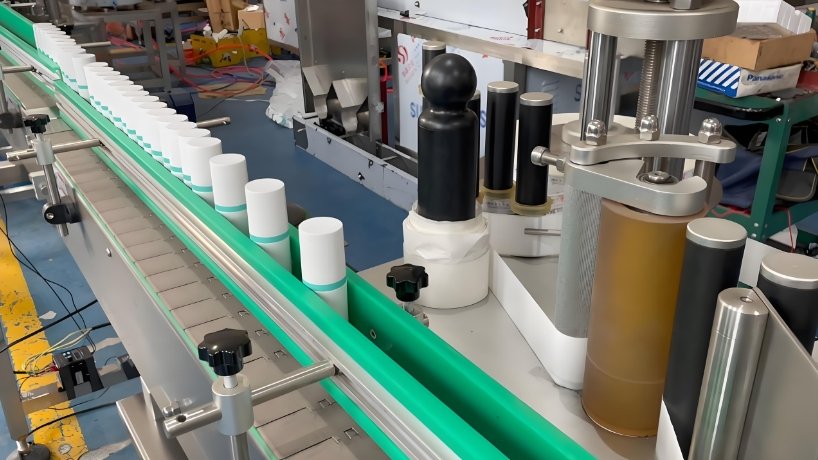
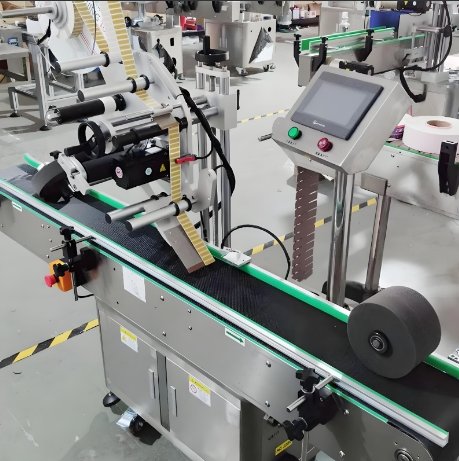
The RFID Labeling Machine starts with a roll of RFID labels. As each label passes through the machine:
- An RFID encoder writes the necessary information into the chip.
- The label is printed with visible data like product name, barcode, or batch number.
- The label is then applied to the product surface.
- An RFID reader verifies the data before the product moves along the production line.
When placed after the Automatic Filling Machine, the label matches exactly with the contents of the bottle, pouch, box, or can—ensuring complete accuracy.
Benefits of RFID Labeling Machines
Integrating RFID technology into your Labeling Machine brings several critical advantages:
1. Real-Time Tracking
Every labeled product offers instant traceability. Consequently, RFID empowers you to monitor location, stock levels, and movement from the warehouse all the way to the shelf.
2. Improved Accuracy
RFID labels reduce human error. Information is digitally encoded and verified automatically. When the Labeling Machine works in sync with an Automatic Filling Machine, both the label and fill volume are perfectly matched.
3. Increased Speed
No need to scan barcodes one by one. Multiple RFID tags can be read at once, speeding up logistics and inventory checks.
4. Tamper Detection
If a label is damaged or altered, the RFID chip can trigger an alert. Consequently, this feature is especially useful for maintaining the integrity of pharmaceuticals and high-value products.
5. Enhanced Automation
With data directly encoded during the labeling process, the Labeling Machine becomes part of a fully automated smart factory when connected to ERP systems.
Common Industries Using RFID-Labeling Machines
To see this in action, let’s explore which sectors benefit the most from RFID-enabled Labeling Machine technology:
1. Pharmaceutical Industry
Medicines must be traceable from production to patient. RFID labels offer secure identification for each vial or blister pack. The Labeling Machine applies this high-tech label right after the Automatic Filling Machine fills the medicine, ensuring 100% accuracy.
2. Logistics and Warehousing
Boxes, crates, and pallets in large warehouses are often labeled with RFID tags for efficient inventory scanning. Using a Labeling Machine, companies can label hundreds of packages per hour without scanning each one manually.
3. Retail and Apparel
Fashion brands use RFID labels for inventory control, anti-theft systems, and customer service. A Labeling Machine automates the process, and the Automatic Filling Machine (used here to fill boxes with garments or accessories) supports complete automation.
4. Automotive Parts
Each part must be identified and traced throughout the supply chain. The Labeling Machine ensures that labels are tamper-proof and readable, while RFID makes the data accessible instantly.
5. Electronics and High-Tech Manufacturing
Smartphones, laptops, and circuit boards need traceability. A Labeling Machine with RFID handles the job, and when used with an Automatic Filling Machine that fills kits or assembly trays, packaging becomes fast and traceable.
Choosing the Right Labeling Machine for RFID Tags
Not all Labeling Machines are built to handle RFID labels. When choosing your equipment, consider the following features:
1. RFID Encoding Capability
Furthermore, ensure the machine has a built-in encoder compatible with your RFID chip type (UHF, HF, etc.).
2. High-Precision Label Application
For RFID tags to work correctly, they must be positioned accurately. A good Labeling Machine ensures perfect placement every time.
3. Verification and Rejection System
Furthermore, the machine automatically verifies each label after encoding and rejects any faulty tags.
4. Integration with Filling Machines
The best systems work seamlessly with an Automatic Filling Machine, forming a continuous process from product fill to traceable labeling.
5. Software Compatibility
Your Labeling Machine should connect to inventory or ERP software for live data sharing.
Workflow: From Filling to RFID Labeling
Let’s look at a typical workflow using both an Automatic Filling Machine and an RFID-enabled Labeling Machine:
- Filling: The Automatic Filling Machine dispenses the product into containers (bottles, pouches, jars).
- Capping: Containers are sealed and moved by conveyor.
- RFID Labeling:
- The Labeling Machine encodes and prints the RFID label.
- The label is applied to the filled container.
- A reader verifies the tag.
- Inspection: Vision systems or RFID scanners check accuracy.
- Packaging: Products are boxed or palletized, ready for shipping.
This combination boosts output and adds traceability from the very start of the packaging process.
Final Thoughts
A smart Labeling Machine with RFID capabilities is a major upgrade for any production line. It adds intelligence, improves tracking, and reduces the chance of error. When used together with an Automatic Filling Machine, it completes an end-to-end packaging solution that is fast, precise, and future-ready.
Furthermore, whether you manage pharmaceuticals, logistics, electronics, or retail, you elevate your entire operation when you invest in RFID-based automation. Because you implement this technology, you increase traceability, compliance, and customer satisfaction. Consequently, your operational costs drop significantly as a direct result of these efficiencies.
Industry leaders increasingly rely on GS1 Standards to ensure global interoperability and seamless data exchange across these diverse sectors.
f your business needs high-volume, high-accuracy labeling, the combination of a modern Labeling Machine and Automatic Filling Machine provides your ideal solution. Furthermore, you do more than just label when you utilize RFID technology. Instead, you actively connect your products to a smarter supply chain. Consequently, this integration transforms your production line into a data-driven powerhouse.