A cigarette filling machine takes loose cut tobacco and fills it into pre-made cigarette tubes that already carry a paper wrapper and a filter. The equipment ranges from hand-cranked tube fillers and countertop electric injectors to automatic, often pneumatic, units built for continuous shifts. For a commercial buyer, the useful question is not which model is fastest on paper. It is how many acceptable cigarettes the machine sustains per hour with your tobacco, tubes, operators and compliance obligations.
This guide covers how the equipment works, how machine classes differ, and which specifications, tests and supplier questions matter before a commercial purchase.
Tube filling is a narrow branch of filling technology, but the evaluation logic is the same one used for industrial filling equipment in other sectors: define the material, define the container, define the output you need, and test against all three.
What Is a Cigarette Filling Machine?
A cigarette filling machine is a device that meters a portion of cut tobacco, compresses it into a cylinder, and pushes that cylinder into an empty filtered cigarette tube. Patent classification systems group this equipment under cigarette-filling machines, separate from machines that form a cigarette from a continuous paper web.
Tobacco, empty tubes and power (electric, pneumatic or both) go in. Filled cigarettes and rejects come out. Every evaluation comes back to how reliably those inputs become acceptable units.
Cigarette Filler, Tube Filler, Injector or Maker: What the Terms Mean
Search results and supplier listings use several names loosely. They do not always describe the same equipment:
- Cigarette filler machine / cigarette tube filler machine: usually a device that fills pre-made tubes. The term covers everything from a manual crank unit to a commercial automatic unit, so the name alone tells you little about capacity.
- Cigarette tube filling machine: the most precise description of the process. Supplier listings use it for electric, semi-automatic and automatic models.
- Cigarette injector: retail language for small electric or manual tube fillers aimed at personal use.
- Cigarette making machine: used in two very different ways. Retailers apply it to tube fillers. In the tobacco industry it means a maker that forms a continuous tobacco rod inside a paper web and cuts it into individual rods.
When a listing says “cigarette making machine,” check whether it fills tubes or forms rods. The two belong to different price bands, footprints and production models.
How a Cigarette Filling Machine Works
Designs vary, but most cigarette filling machine models follow the same sequence:
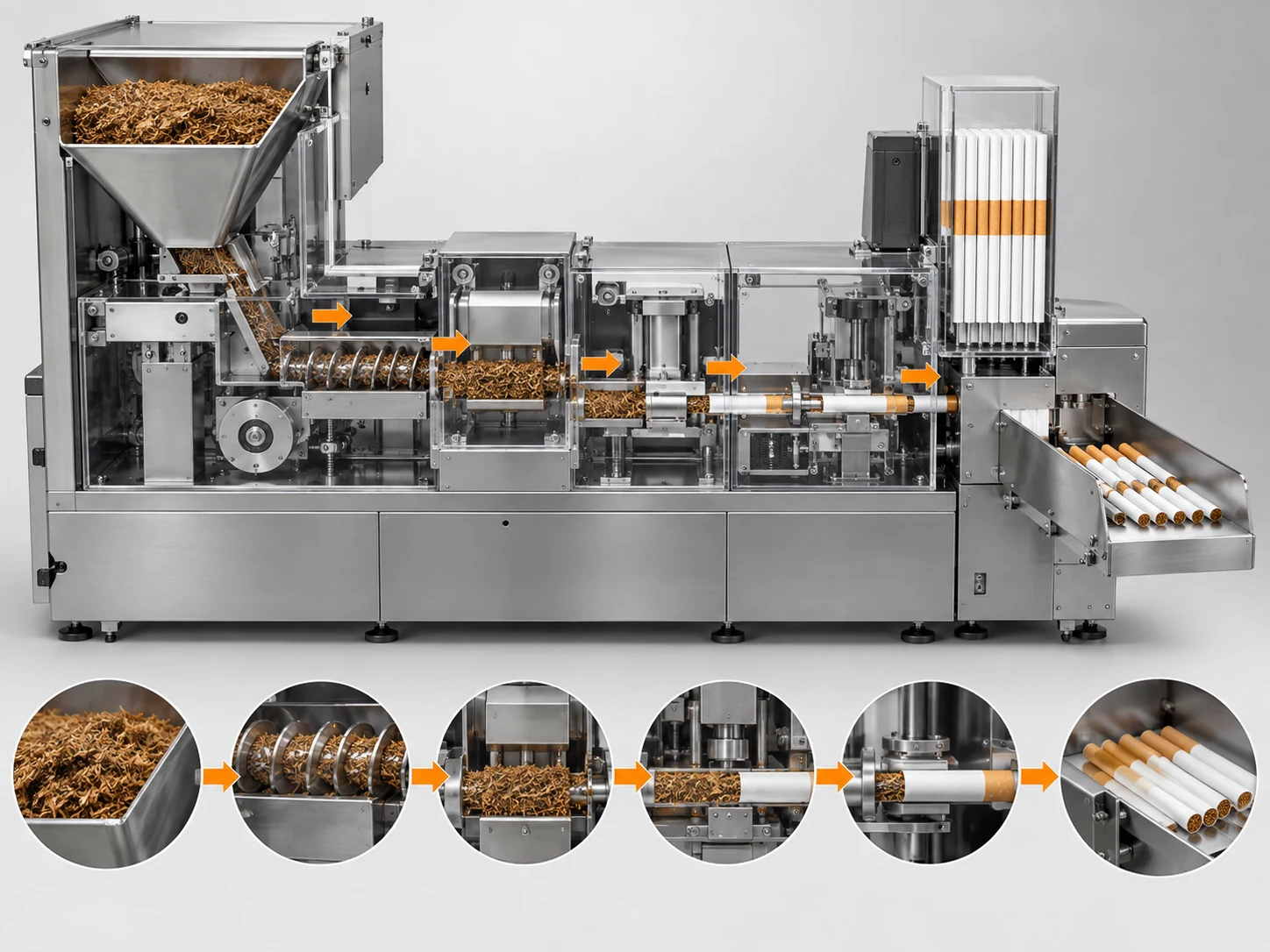
- Tobacco loading. Cut tobacco goes into a hopper or filling chamber. Larger machines add agitators or feed systems to keep tobacco flowing and prevent bridging.
- Metering. The machine sets the portion for each cigarette, either by chamber volume or by an adjustable density setting.
- Compression. A pusher, piston or spoon compresses the portion into a cylinder of consistent diameter.
- Tube positioning. The tube is placed on a nozzle by hand or fed from a magazine and aligned automatically.
- Injection. The compressed tobacco is pushed through the nozzle into the tube, from the filter end outward.
- Tip finishing. Some machines trim or clean excess tobacco from the open end.
- Discharge and collection. Filled cigarettes drop into a tray or bin, and tobacco waste is collected for reuse where the design allows.
The critical stages are compression and injection. If the portion is too large, too moist or too fine, it resists the push, jams the chamber or damages the tube. If it is too small or too dry, the result is loose fill or a void near the filter.
The Four Machine Classes Behind the Search Results
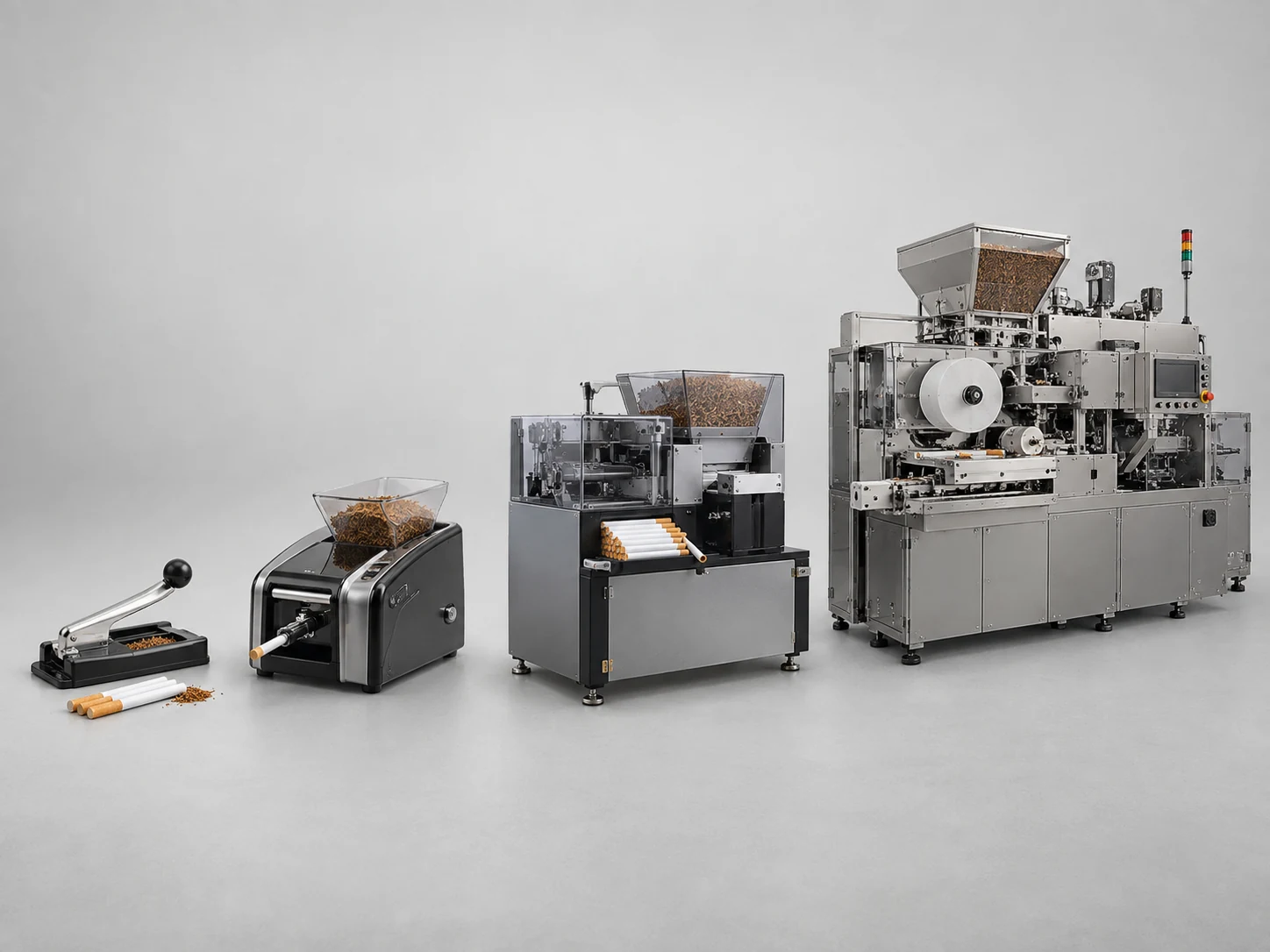
Manual cigarette tube fillers
A manual unit is the simplest cigarette filling machine: a crank or lever fills one tube per cycle. These units are inexpensive and portable, but output depends entirely on the operator, and fill consistency varies from cigarette to cigarette. They have no realistic role in commercial production.
Electric cigarette tube filling machine
An electric cigarette tube filling machine automates compression and injection with a motor, and many include a density adjustment and jam protection. The operator still loads tobacco and, on most models, places each tube by hand. Some newer units add a tube magazine for one tube format. These machines are sold mainly for personal use, and their duty cycle, warranty terms and parts support usually reflect that.
Automatic cigarette tube filling machine
An automatic cigarette tube filling machine feeds tubes from a magazine, meters and injects tobacco, and discharges finished cigarettes with little intervention per unit. Many commercial units run on compressed air, with the air supply driving the piston and pressing mechanism. Suppliers typically quote output in cigarettes per minute. The operator’s job shifts from handling each tube to refilling hoppers and magazines, clearing jams and checking quality.
Industrial cigarette makers
An industrial maker is not a cigarette filling machine in the tube-filling sense, because it does not use pre-made tubes. Instead, it lays tobacco onto a paper web, forms and seals a continuous rod, cuts it to length, and attaches filters on a linked tipping machine. Körber states that modern makers can produce 20,000 cigarettes per minute. This class sits far above any tube filler in capital cost, utilities and staffing, and it is a separate buying decision.
Manual vs Electric vs Automatic Cigarette Filling Machine Types
Speed ranges are left out deliberately: published figures vary greatly by design and are measured under different conditions.
Cigarette Tube Compatibility
The nozzle on a cigarette filling machine is sized for a tube diameter, and the chamber stroke is set for a tube length. That makes tube compatibility a hard constraint, not a preference. Confirm:
- Tube length: king size and 100 mm formats need different chamber and stroke settings. Some machines auto-feed only one length and handle others manually.
- Tube diameter: standard, slim and superslim tubes need different nozzles. Many machines support one diameter only.
- Filter length: it changes the tobacco column length and where the fill ends.
- Paper and tube quality: thin or weak paper tears more easily during injection, and crushed tubes misfeed from magazines.
- Change parts and setup: if you run more than one format, ask which parts change, how long a changeover takes, and whether auto-feed works on every format.
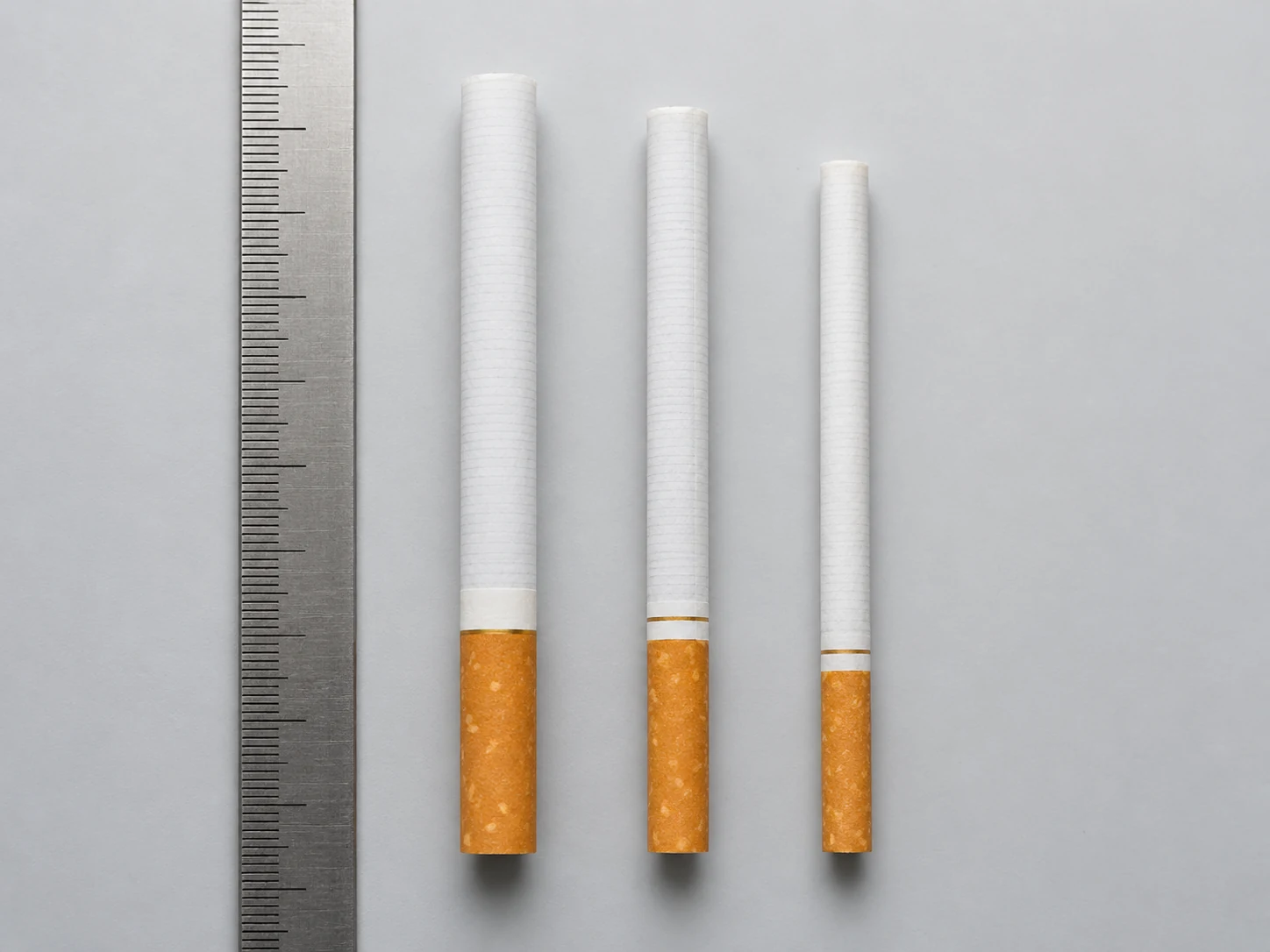
Do not rely on a supplier’s statement that a machine “fits standard tubes.” Send the exact tubes you plan to buy in volume and ask for a filling run on camera.
How Tobacco Characteristics Affect Filling
Tobacco condition is the most common cause of problems blamed on the cigarette filling machine itself. Equipment makers and troubleshooting guides point to the same variables:
- Moisture: tobacco that is too moist clumps, gums up the cutter and nozzle, and tends to jam or leave voids near the filter. Tobacco that is too dry crumbles, packs poorly and produces loose fill.
- Cut width and fines: very fine cut and the fines that settle at the bottom of a bag compact unpredictably and are a common jam trigger. Coarser, springier cuts are generally more forgiving.
- Consistency: a blend that varies in moisture or cut from batch to batch will vary in fill density even when machine settings stay the same.
- Tobacco type: pipe tobacco and heavily cased blends are frequently cited as incompatible with tube-filling mechanisms.
Published moisture guidance for tube fillers is not consistent. Sources express it in different units and ranges, so treat the correct value as machine-specific and ask the supplier for the tobacco specification their machine was tested with. The practical control is to specify, store and condition your tobacco consistently, then test the machine against that specification.
Production Capacity: Advertised Speed vs Acceptable Output
Capacity is where buyers of a cigarette filling machine are most often misled, usually without anyone intending it. Separate these figures:
- Mechanical or rated speed: the cycle rate the mechanism can achieve, often quoted per minute.
- Advertised output: the rated speed converted to an hourly figure, usually assuming continuous running.
- Sustained output: what the machine produces across a real shift, including hopper refills, magazine reloads, jam clearing, cleaning and operator breaks.
- Acceptable output: sustained output minus underfilled, overpacked, torn or otherwise rejected cigarettes.
Acceptable output is the only figure that matters for production planning. It depends on tobacco consistency, tube quality, how often the operator must intervene, hopper and magazine capacity, and how often the machine needs cleaning during a shift.
The question to put to any supplier is direct: how many acceptable cigarettes per hour will this cigarette filling machine sustain with my tobacco and my tubes, over a run long enough to include refills and cleaning? Ask for a video of that run, not a short burst at maximum speed.
Fill Quality, Rejects and Misfeeds
Common quality failures include:
- Loose or underfilled cigarettes: often linked to dry tobacco, too little tobacco per cycle, or a tube that slips on the nozzle.
- Voids near the filter: frequently associated with moist tobacco, overfilling, or a machine that releases the tube too early.
- Overpacked cigarettes: caused by too much tobacco or a density setting that is too high, and a common cause of torn tubes.
- Torn tubes and damaged filters: linked to weak tube paper, grip adjustment, or excessive compression force.
- Misfeeds: tubes that jam in or fall from the magazine, often because they are bent, crushed or out of tolerance.
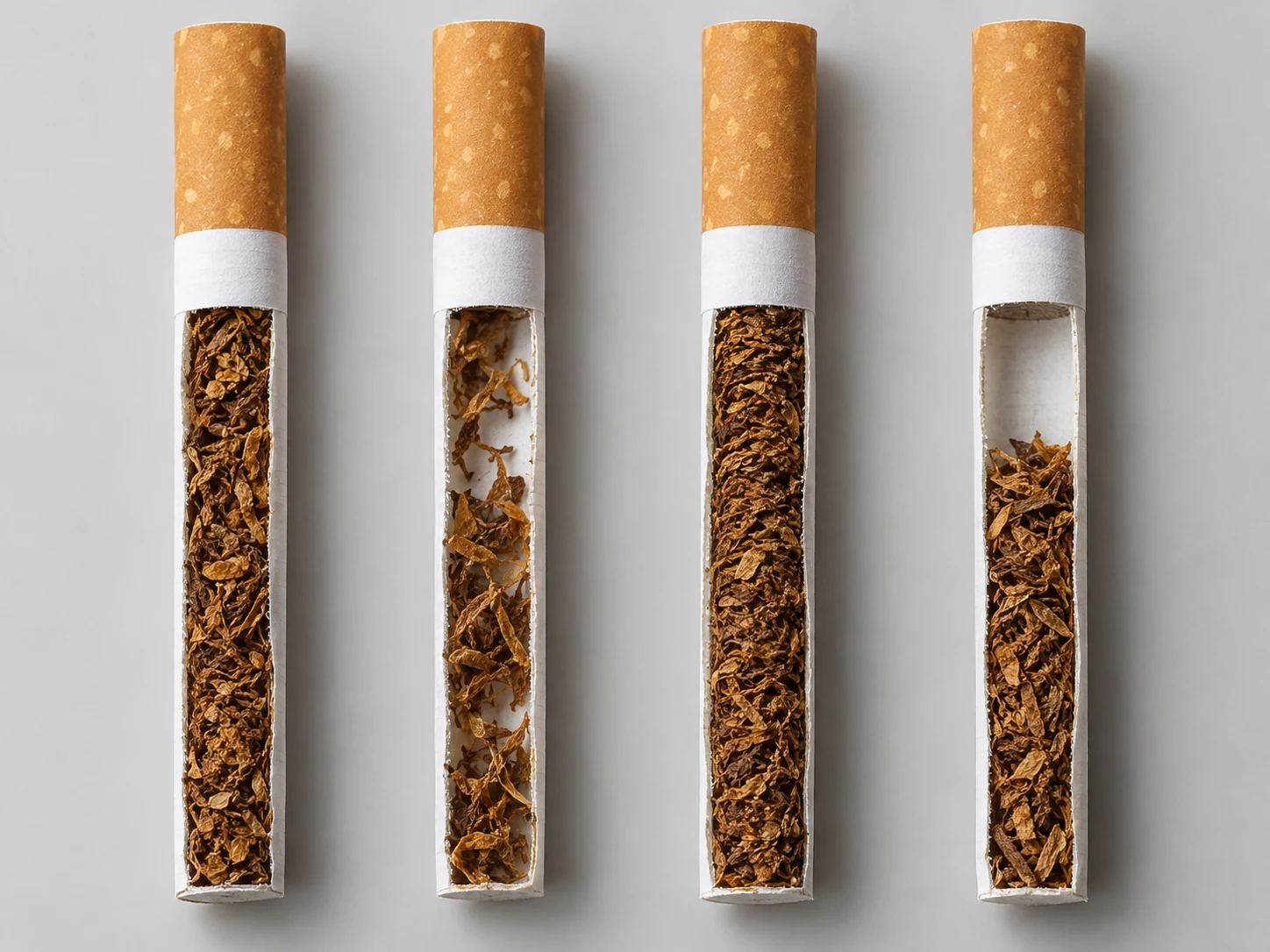
These faults interact. Moisture, portion size, tube quality and machine adjustment all push fill density in the same direction, which is why a cigarette filling machine demonstration with the supplier’s own tobacco and tubes proves very little. A test with your materials shows how the machine behaves with the inputs it will actually process.
US Compliance Before Commercial Operation
In the United States, owning a commercial tube-filling machine can carry regulatory consequences that do not apply to personal-use devices. Federal guidance from the Alcohol and Tobacco Tax and Trade Bureau (TTB) explains that a person who makes a cigarette-making machine available for consumer use for commercial purposes is treated as a manufacturer of tobacco products under the Internal Revenue Code, which brings permit and federal excise tax obligations. States can add their own requirements. New York guidance, for example, covers licensing and fire-safety compliance for cigarettes produced on such machines.
Confirm your federal, state and local obligations with qualified counsel before buying a cigarette filling machine for commercial use. Machine suppliers do not determine your compliance status.
Cigarette Filling Machine Specifications to Compare
Utilities, Operators and Floor Space
An automatic cigarette filling machine is compact compared with most packaging equipment, but it still needs planning. Pneumatic machines need a compressor sized for the machine’s pressure and air volume, plus clean, dry air, because moisture and oil in the air line shorten component life. Confirm voltage and frequency before shipment, especially if the machine is built for another market.
Plan operator roles realistically. Even with automatic tube feeding, someone must condition and load tobacco, reload tubes, clear jams, empty waste and inspect output. For a line with several machines, ask how many units one trained operator can reasonably run with your materials. Businesses moving from single machines toward a planned line can review how automatic filling solutions are specified around target output and operator count.
Maintenance and Wear Parts
Most downtime on a cigarette filling machine comes from residue and wear rather than major failures. Build these into your plan:
- Cleaning: tobacco residue on the nozzle, chamber and cutter is a leading cause of jams. Many makers recommend cleaning after every session on small machines, and commercial units need a defined cleaning interval per shift.
- Wear parts: pressing and cutting knives, pushers or pistons, nozzles, tube grips, seals and pneumatic components wear with volume. Ask for the wear-part list, expected replacement intervals and local stock availability.
- Warranty terms: some warranties are limited by time and by cigarette count. Read which one applies first at commercial volumes.
- Spares kit: agree a starter spares kit with the order, sized to how long replacement parts take to reach you.
Factory Acceptance Testing for a Cigarette Filling Machine
A factory acceptance test (FAT) is the last point at which a buyer has real bargaining power before shipment. Agree the criteria in writing when you place the order, then verify:
- The machine runs your specified tobacco and your actual tubes, not substitutes.
- A sustained run long enough to include hopper refills, magazine reloads and at least one cleaning cycle.
- Acceptable output per hour and reject count across that run, measured against the agreed criteria.
- Fill consistency, checked by weighing or firmness-testing a sample of finished cigarettes.
- Tube feeding reliability and how misfeeds are cleared.
- Alarms, jam protection, emergency stop and guarding.
- Changeover to every format included in the order.
- Operator procedures, manuals and the spares kit shipped with the machine.
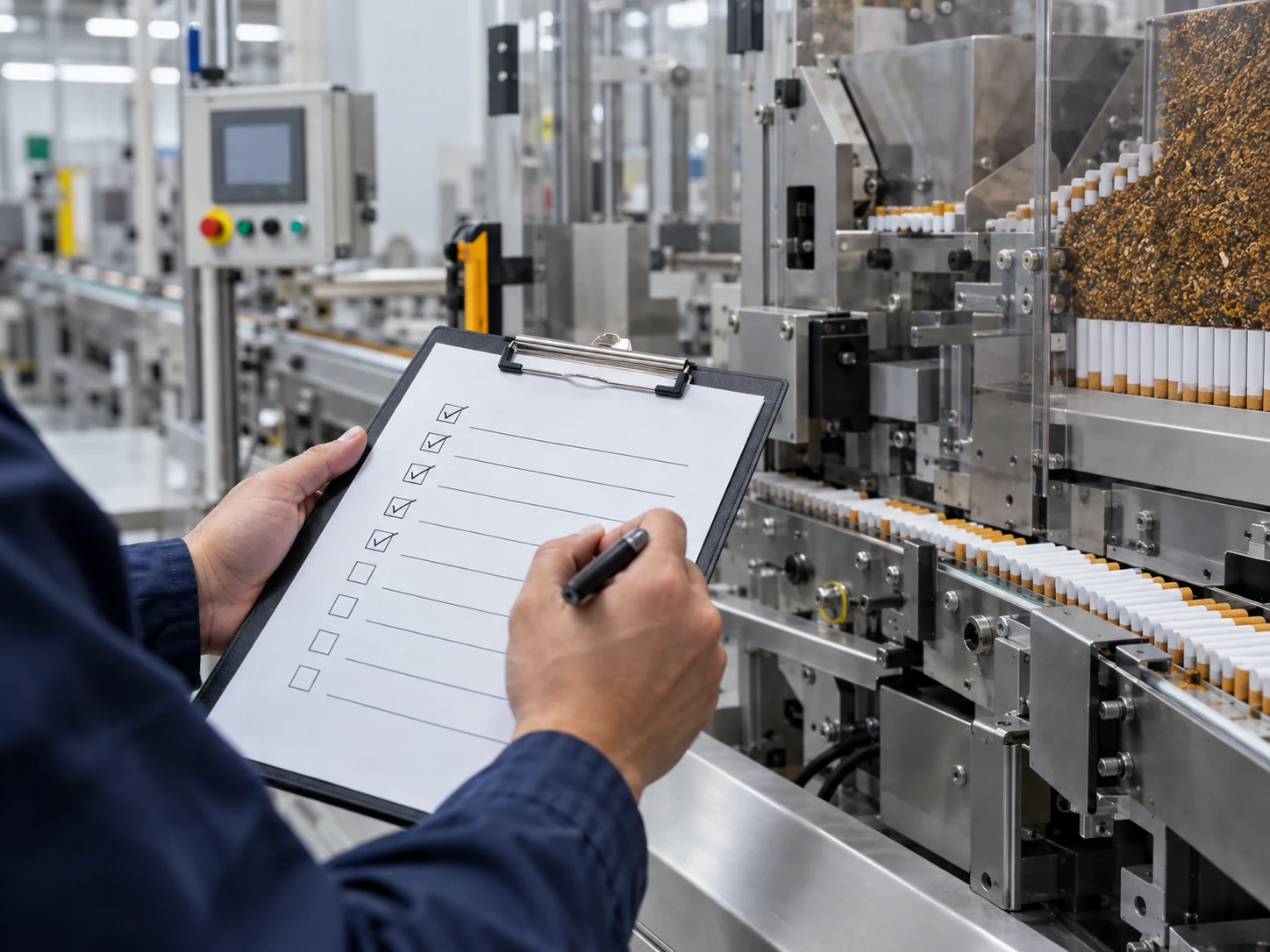
If you cannot attend in person, ask for a live video FAT with an unedited recording of the full run.
How to Choose a Cigarette Filling Machine for Commercial Production
Work through the decision in this order:
- Confirm your regulatory position and permits first.
- Fix your tube format and tobacco specification.
- Calculate the acceptable output you need per hour and per shift.
- Decide how much operator time each machine can have.
- Shortlist machines that auto-feed your exact tube format.
- Compare sustained acceptable output, not rated speed.
- Compare wear parts, spares availability and support response.
- Agree FAT criteria before paying the balance.
Working this way usually eliminates most options before price enters the discussion.
What to Send a Supplier Before Requesting a Quotation
A useful cigarette filling machine inquiry lets a supplier answer with specifics instead of a brochure. Include:
- Tobacco type, cut and typical moisture, plus a sample if they will test it
- Tube length, diameter, filter length and the tube brand you plan to use
- Target acceptable output per hour and shifts per day
- Desired automation level and planned operator count
- Voltage, frequency and available compressed air
- Destination country and any compliance documentation you need
- Your acceptable reject level and how you will inspect output
- Spare parts, training and commissioning expectations
Frequently Asked Questions
How many cigarettes per hour can an automatic cigarette filling machine actually produce?
It depends on the machine and, just as much, on your materials. Advertised figures usually assume continuous running at rated speed, while real shifts include refills, jam clearing and cleaning. Ask for a sustained run with your tobacco and tubes, and plan capacity on acceptable cigarettes per hour rather than the rated figure.
Can one cigarette filling machine handle different cigarette tube sizes?
Sometimes, but not automatically. Nozzles are sized for a tube diameter, and many machines auto-feed only one tube length while other lengths must be loaded by hand. Confirm which formats the machine feeds automatically and which change parts each extra format needs.
How do tobacco moisture and cut affect filling consistency?
Moist tobacco clumps, gums up the mechanism and tends to cause jams or voids near the filter, while dry tobacco crumbles and packs loosely. Very fine cut and bag fines compact unpredictably. Because published moisture guidance varies between machines, test the machine with your tobacco at the condition you will store it.
What causes cigarette tubes to misfeed, tear or leave a gap near the filter?
Common causes are bent or low-quality tubes, overfilling, moist tobacco, residue on the nozzle, and a grip that releases the tube too early. Several of these can occur together, which is why cleaning intervals and tube quality belong in your specification.
Does a commercial cigarette filling machine need a federal permit in the US?
TTB guidance treats a person who makes a cigarette-making machine available for consumer use for commercial purposes as a manufacturer of tobacco products, which carries permit and excise tax obligations. State rules can add further requirements. Confirm your position with qualified counsel before purchase.
What maintenance and spare parts should a commercial cigarette filling machine include?
Plan for regular cleaning of the nozzle, chamber and cutter, and for wear on knives, pushers, nozzles, tube grips and pneumatic seals. Ask for a wear-part list with replacement intervals, agree a starter spares kit with the order, and check whether the warranty is limited by time or by cigarette count.
Discuss Your Filling Requirements
Foshan Popper Machinery builds filling systems for liquids, powders and granules around the customer’s product, container and target speed. If you are planning a filling or packaging project and want to check whether it falls within our equipment range, contact our team with your material, container specification and target output.