Home » What Is an Aseptic Filling Machine? How It Works, Types, and How to Choose (2026 Guide)

What Is an Aseptic Filling Machine? How It Works, Types, and How to Choose (2026 Guide)

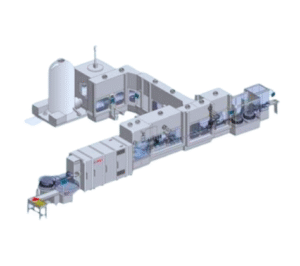
How aseptic filling works diagram: product and package sterilised separately

An aseptic filling machine fills a commercially sterile product into a separately sterilised package within a controlled sterile environment, then seals the package to prevent recontamination. This process allows packaged products to remain stable for months at room temperature without relying on preservatives or refrigeration.

This guide explains the aseptic filling machine itself, the wider system required to maintain sterility, each stage of the aseptic filling process, the standards and validation requirements involved, and the information buyers should prepare before requesting a quotation. If you are still evaluating different filling technologies, our guide to liquid filling machine types provides a useful starting point.

What Is an Aseptic Filling Machine?

An aseptic filling machine is a filling system designed to bring a commercially sterile product and a separately sterilised package together inside an enclosed sterile environment. The package is then sealed before it leaves that controlled environment, preventing microorganisms from recontaminating the product.

The equipment may also be described as an aseptic filler or aseptic packaging machine.

The key distinction is that the product and package are sterilised separately. With retort processing, the product is first packed and sealed, after which the entire package is subjected to heat. Aseptic filling treats the product and packaging independently before combining them in a protected sterile zone.

This approach helps preserve more of the product’s flavour, colour, and nutrients, but it also makes the system more complex than a conventional liquid filling machine.

What Does an Aseptic Filling System Include?

A buyer searching for an aseptic filling machine is usually specifying more than a single filler. The filler is only one part of the complete aseptic filling system, and sterility must be maintained through every relevant stage.

A typical system includes:

  • Product sterilisation: A UHT or HTST unit briefly heats the product and then rapidly cools it. Sterile filtration may be used instead for certain clear or heat-sensitive liquids.
  • Aseptic surge tank: Holds the sterilised product under sterile air or nitrogen and maintains supply to the filler when upstream flow changes.
  • Sterile product transfer: Product lines, pumps, and valves designed for cleaning and sterilisation in place, with steam barriers around relevant seals.
  • Package sterilisation: Depending on the packaging format and material, the system may use hydrogen peroxide, peracetic acid, steam, or radiation.
  • Aseptic filler: The enclosed filling chamber operates under positive pressure with sterile filtered air while the product is dosed into the package.
  • Sealing station: Packages are sealed immediately while they are still inside the controlled sterile environment.
  • CIP and SIP systems: Clean-in-place removes product residues, while sterilise-in-place restores sterile conditions to product-contact surfaces before production resumes.
  • Controls and monitoring: Parameters such as pressure, temperature, flow, and sterilant concentration are continuously recorded to demonstrate that required process conditions were maintained.

Once the sealed package leaves the aseptic section, conventional downstream operations can resume, including coding, labeling, packing, and capping where the package requires it.

Our bottle filling machine range provides a useful comparison with conventional non-aseptic bottle filling layouts.

The three zones and how each is controlled

 
Zone How It Is Sterilised What Goes Wrong If It Fails
Sterile product UHT, HTST, or sterile filtration, followed by cooling before filling Spoilage organisms can survive into the package, causing the product to sour or the pack to blow
Sterile package Hydrogen peroxide, peracetic acid, steam, radiation, or sterile web Contamination can enter through the container or closure
Sterile environment Enclosed chamber with positive pressure, sterile filtered air, and sterilised contact surfaces Airborne contamination can reach the product during filling

The important point is that aseptic performance does not depend on the filler alone. The product, packaging, and environment must all remain under control until the package has been sealed.

How Does the Aseptic Filling Process Work?

Specific machine designs vary according to package format, but the basic aseptic filling process follows the same overall sequence.

  1. Sterilise the product.
    A UHT system heats the liquid to a high temperature for a short period before cooling it rapidly. The brief heat exposure destroys microorganisms while limiting the effect on flavour and nutrients.
  2. Hold the product under sterile conditions.
    After sterilisation, the product is transferred to a sterilised aseptic tank. Sterile air or nitrogen protects it until the filler requires product.
  3. Sterilise the packaging.
    At the same time, the machine sterilises the containers and closures. Common methods include hydrogen peroxide followed by hot sterile air or the use of steam, depending on the packaging format.
  4. Fill within the sterile zone.
    The sterilised product is dosed into the sterilised package inside the enclosed filling chamber. Positive pressure and filtered air prevent non-sterile air from entering the controlled area.
  5. Seal immediately.
    The filled package is closed while it is still inside the sterile chamber. This prevents contamination from entering between the filling and sealing stages.
  6. Discharge and inspect.
    Once sealed, packages leave the sterile zone for coding, secondary packaging, and quality-control procedures, including incubation testing of samples.

The principle behind the process is straightforward: once the product has been sterilised, it is not exposed to uncontrolled open air before the package is sealed. The system is designed to remove the route through which contamination could re-enter.

How the Machine Sterilises the Package

Product sterilisation follows relatively established methods. Package sterilisation varies more significantly because the correct approach depends on the container material, closure, and format.

Package sterilisation methods by format

Method How It Works Typical Use
Hydrogen peroxide bath or spray Containers pass through heated peroxide before hot sterile air removes the residue Paperboard cartons, PET and HDPE bottles
Peracetic acid Chemical sterilant is applied at a controlled concentration and for a controlled contact time Bottles, caps, and closures on wet systems
Saturated steam High-temperature steam treats the surface for a controlled time and temperature Heat-resistant containers and valves
Sterile filtration Removes microorganisms from the product rather than sterilising the package Clear, heat-sensitive liquids
Electron beam or UV Provides surface sterilisation without heat Caps, films, and closures

Types of Aseptic Filling Machines

Aseptic fillers are generally categorised according to the type of package they handle. For buyers, package format is therefore one of the first specifications to establish.

  • Carton fillers: Form or feed paperboard cartons before sterilising, filling, and sealing them. They are commonly used for long-life milk, plant-based beverages, and juice.
  • Bottle fillers: Designed for PET and HDPE bottles, often using peroxide or peracetic sterilisation and configured as blow-fill-seal or rinser-filler-capper systems.
  • Pouch and bag-in-box fillers: Fill flexible pouches or larger bags using welded spouts or fitments. Typical products include sauces, purees, and dairy bases.
  • Cup and tray fillers: Fill and seal portion cups and trays used for dairy products and desserts.
  • Pharmaceutical fillers: Handle sterile vials, syringes, and ampoules under more stringent conditions because the finished products are injected rather than consumed orally.

Within these categories, aseptic equipment may use rotary, inline, or blow-fill-seal configurations. Production speed depends not only on the filler design but also on the package being processed.

Aseptic Filling vs Hot Fill, Retort, and ESL

Aseptic processing is one method of producing shelf-stable products, but it is not the only option. Compared with other processes, it reduces the amount of heat applied to the finished product, while requiring a more complex and costly installation.

Comparing the four routes to a stable product

Method How It Sterilises Effect on Product Best For
Aseptic filling Product and package are sterilised separately and combined under sterile conditions Gentle treatment that helps retain flavour and nutrients Sensitive liquids requiring ambient shelf life
Hot fill Hot product sterilises the container during filling Some heat-related effect on flavour Acidic juices and sauces
Retort Filled and sealed packages are processed under heat and pressure Greater heat exposure with potential texture and colour changes Cans, pouches, and ready meals
ESL Uses gentler heat or filtration under hygienic rather than fully sterile conditions Helps maintain fresh taste but provides a shorter shelf life Chilled dairy products and juice

The appropriate process depends on the product, required shelf life, package, storage conditions, and acceptable level of heat exposure.

Standards, Registration, and Validation

Aseptic processing is highly regulated within food and beverage manufacturing. For buyers, regulatory documentation and process validation therefore need to be considered as part of the equipment specification rather than after the machine has been installed.

United States: Registration and Process Filing

According to the supplied article, a processor of low-acid foods in hermetically sealed containers registers each plant with the FDA using Form FDA 2541 within 10 days of first processing under 21 CFR 108.35.

The scheduled process must then be filed before a new product is packed. Low-acid aseptic systems have a dedicated form, FDA 2541g. Processing falls under 21 CFR 113, while acidified foods are addressed under 21 CFR 114.

A qualified process authority establishes the scheduled process, after which the plant must operate at or above those requirements and maintain supporting records. For dairy products sold across state lines, the Grade “A” Pasteurized Milk Ordinance also applies.

Validation on the Line

Equipment validation generally proceeds through three stages:

  • Installation qualification
  • Operational qualification
  • Performance qualification

These stages may then be followed by media fills or water runs designed to challenge the system before commercial product is committed.

During normal production, supporting evidence comes from parameters and records such as sterilant concentration and contact time, sterile chamber pressure, sterile air filter integrity testing, CIP and SIP cycle records, and incubation testing of finished packages.

Pharmaceutical applications involve additional GMP requirements. Our guide to filling machines and regulatory standards covers that area in more detail, while our guide to food industry compliance standards explains the wider requirements relevant to food processing equipment.

Which Products Use Aseptic Filling?

Aseptic filling is used across several product categories where extended shelf life, product quality, or sterile processing is important.

  • Dairy and dairy alternatives: UHT milk, cream, oat milk, soy milk, almond milk, and other plant-based beverages.
  • Juices and nectars: Including coconut water, tea, nutritional beverages, and functional drinks.
  • Liquid foods: Soups, sauces, broths, purees, and liquid eggs.
  • Sterile pharmaceuticals: Injectable products, vaccines, eye drops, and other liquid pharmaceuticals requiring sterile filling conditions.

What these products have in common is either sensitivity to more severe heat processing or a requirement to maintain sterility for safety.

Advantages and Limitations of Aseptic Filling

Advantages

Aseptic processing can provide months of ambient shelf life without requiring preservatives or a refrigerated cold chain. That can reduce logistics requirements and make distribution over longer distances more practical.

Because the product receives less severe heat treatment than it would during retort processing, flavour, colour, and nutrients can also be better preserved.

The packaging itself can be relatively lightweight because it does not need to withstand the same pressure conditions required during retort processing.

Limitations

The main trade-off is complexity. An aseptic filling system involves higher capital investment, more sophisticated equipment, and greater operator training requirements.

Packaging options are also more restricted because every package format must be compatible with the selected sterilisation method.

Changeovers can take longer, and unplanned downtime can be particularly costly because restarting production may require another complete CIP and SIP cycle.

How to Choose an Aseptic Filling Machine

For buyers comparing aseptic filling equipment, the specification should begin with the product and package rather than the machine itself.

  1. 1fine your product and its heat sensitivity.
    Establish what is being filled and how it responds to heat. This determines the sterilisation approach and may establish whether aseptic processing is appropriate in the first place.
  2. Confirm the package format and size range.
    Specify whether you are filling cartons, bottles, pouches, cups, or vials, together with the required sizes. Package format determines the appropriate machine family.
  3. Set a realistic production output.
    Specify the required packs per hour based on expected production over the coming years rather than simply today’s peak demand. Include the expected operating hours per day.
  4. Confirm the machine build.
    Review product-contact material grades, surface finish, and the design used to enclose, control, and monitor the sterile zone.
  5. Plan cleaning and validation.
    Ask how the machine performs CIP and SIP, how long each cycle requires, and which qualification documents the supplier provides.
  6. Calculate operating costs.
    Consider sterilant consumption, energy requirements, filters, spare parts, and the labour needed to operate each shift.

Providing these details with your quotation request allows the supplier to size the system around actual production requirements rather than assumptions.

For products with lower processing risk, buyers should also consider whether hot filling with a conventional liquid filling machine could provide the required shelf life with a lower initial investment.

Talk to Foshan Popper Technology

Foshan Popper builds filling and packaging equipment for food, beverage, and pharmaceutical producers.

If your project requires aseptic conditions, provide the product type, package format, and required production output. This information allows the project requirements to be assessed against an aseptic filling system or a simpler hot-fill or liquid filling line, depending on what you are producing.

Send your product details, package format, and target output for a specification review. Request a quotation.

Frequently Asked Questions

What is an aseptic filling machine?

An aseptic filling machine fills a commercially sterile product into a separately sterilised package inside a sterile, filtered environment and then seals the package. Because the product and packaging have already been sterilised, the sealed contents can remain stable at room temperature for months without preservatives or refrigeration.

What is the difference between an aseptic filling machine and an aseptic filling system?

The aseptic filling machine is the filler and its controlled sterile chamber. The complete aseptic filling system includes everything required to maintain sterility around that machine, including product sterilisation, the aseptic tank, sterile transfer lines, package sterilisation, sealing, and CIP and SIP systems.

Is an aseptic filler the same as a UHT system?

No. A UHT system sterilises the product, while the aseptic filler manages the package and sterile filling environment before filling and sealing. A complete aseptic filling process requires both functions, and the source article states that they are usually purchased together.

How does the aseptic filling process sterilise packaging?

Food-processing systems commonly use hydrogen peroxide as a bath or spray, followed by hot sterile air to remove the residue. Depending on the packaging format, other methods can include peracetic acid, saturated steam, electron beam, and UV treatment.

What approvals does aseptic production need in the United States?

According to the supplied article, processors register the plant with the FDA using Form FDA 2541 under 21 CFR 108.35. For low-acid aseptic systems, the scheduled process is filed using Form FDA 2541g before a new product is packed. Processing is covered by 21 CFR 113, while dairy production is also subject to the Pasteurized Milk Ordinance.

Why does aseptic packaging not need refrigeration?

The product and package are sterilised separately and then combined and hermetically sealed under sterile conditions. This prevents microorganisms from being introduced into the sealed package, allowing the product to remain stable at ambient temperature until opened.

Final Thoughts

Aseptic filling provides extended shelf life while reducing the heat exposure applied to the product, but achieving that benefit requires greater equipment complexity and capital investment.

When evaluating an aseptic filling machine, look beyond the filler itself. Assess how the complete system sterilises the product, sterilises the packaging, maintains and monitors the sterile filling environment, and cleans and re-establishes sterile conditions between production runs. Those elements work together to determine whether the complete aseptic filling process performs as intended.

If you are planning a new aseptic or liquid filling project, send your product, packaging format, and required output to Foshan Popper for review. Request a quotation.

Leave a Comment

Your email address will not be published. Required fields are marked *

Scroll to Top